Krakow
After a few days in Poland, in many ways it didn't seem much different than the US. There are more similarities than Steph thought, and surprisingly, the Poles look like some of our relatives. We had heard that the women of Krakow were the prettiest in Europe. We agree.
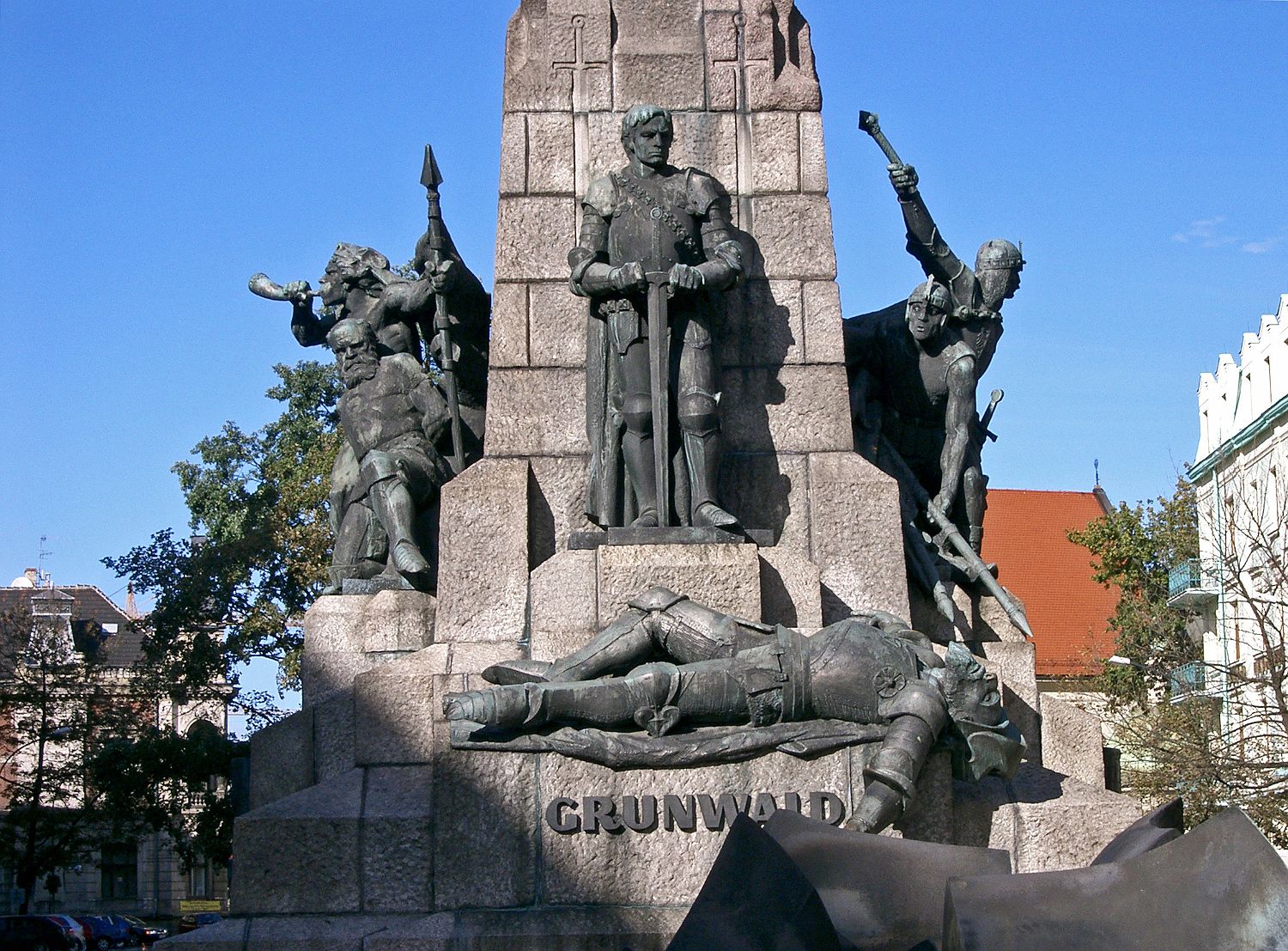 On our first venture out, we passed this statue commemorating the Battle of Grunwald in 1410, a great Polish victory. It became our landmark from our Mistia hotel to the main square. The hotel was the upper floors of a "democratic organization" that rented the simple but nice rooms. Breakfast consisted of meats, cheeses, bread (like Mom's homemade bread), and yogurt. Both here and at the farm, the juice was mixed 50% with water. The napkins were small and transparently thin. Our room towels were adaquate but after applying our limited knowledge of Polish on the cleaning crew, we got a big one. We laughed at the little things that made us excited, like bigger towels and napkins! |
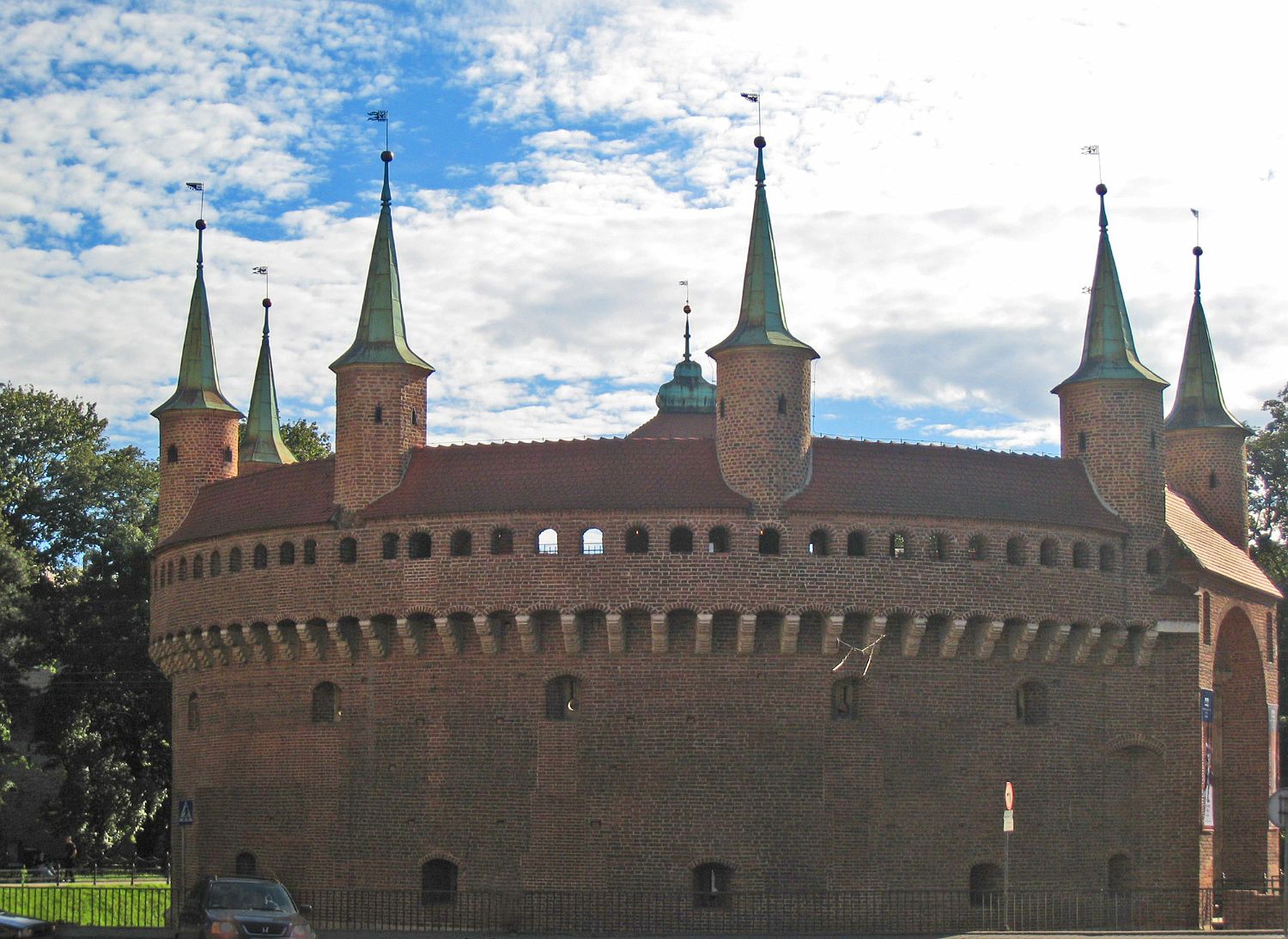 A fortess outside the main square (Rynek Glowny). |
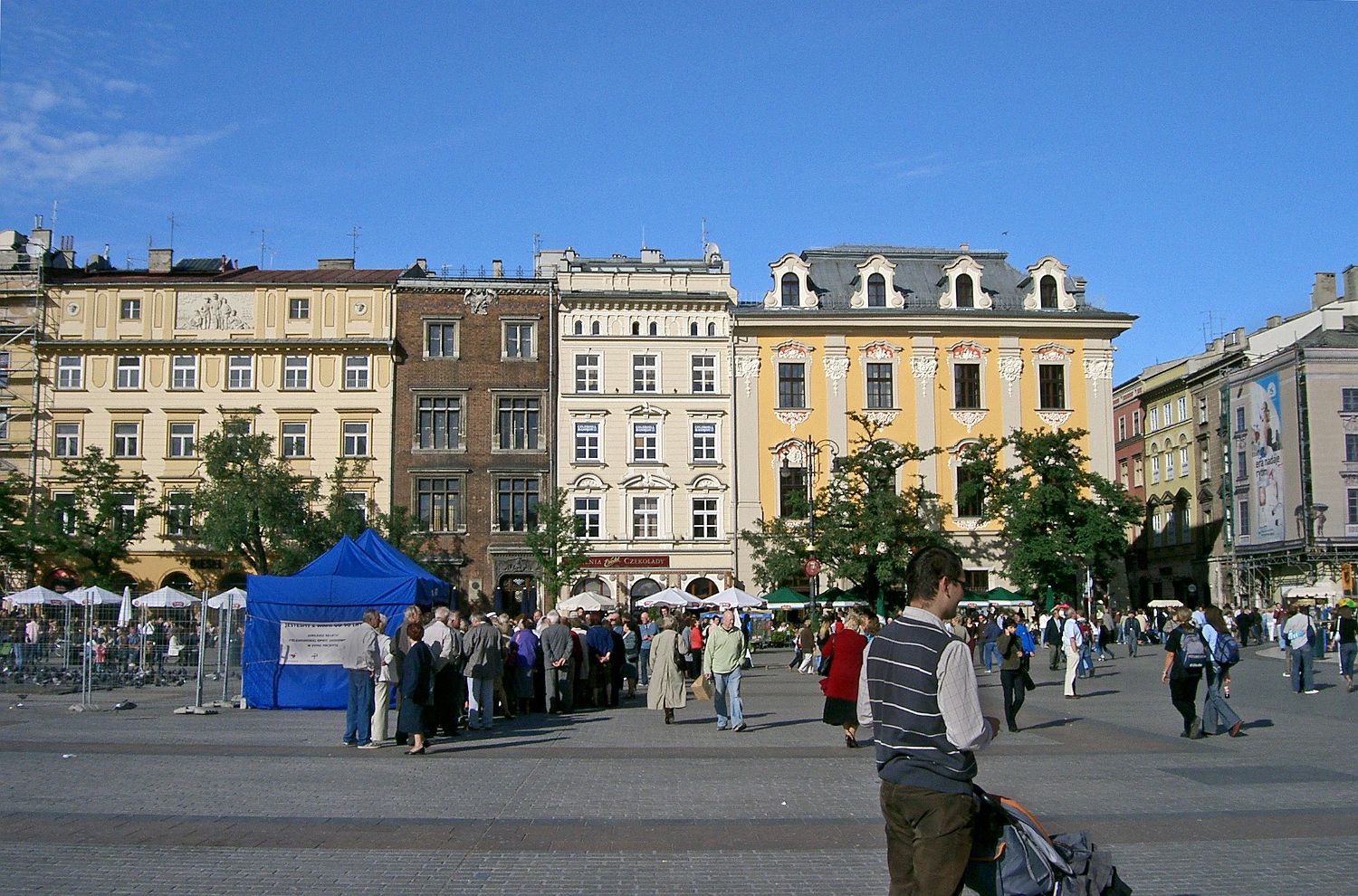
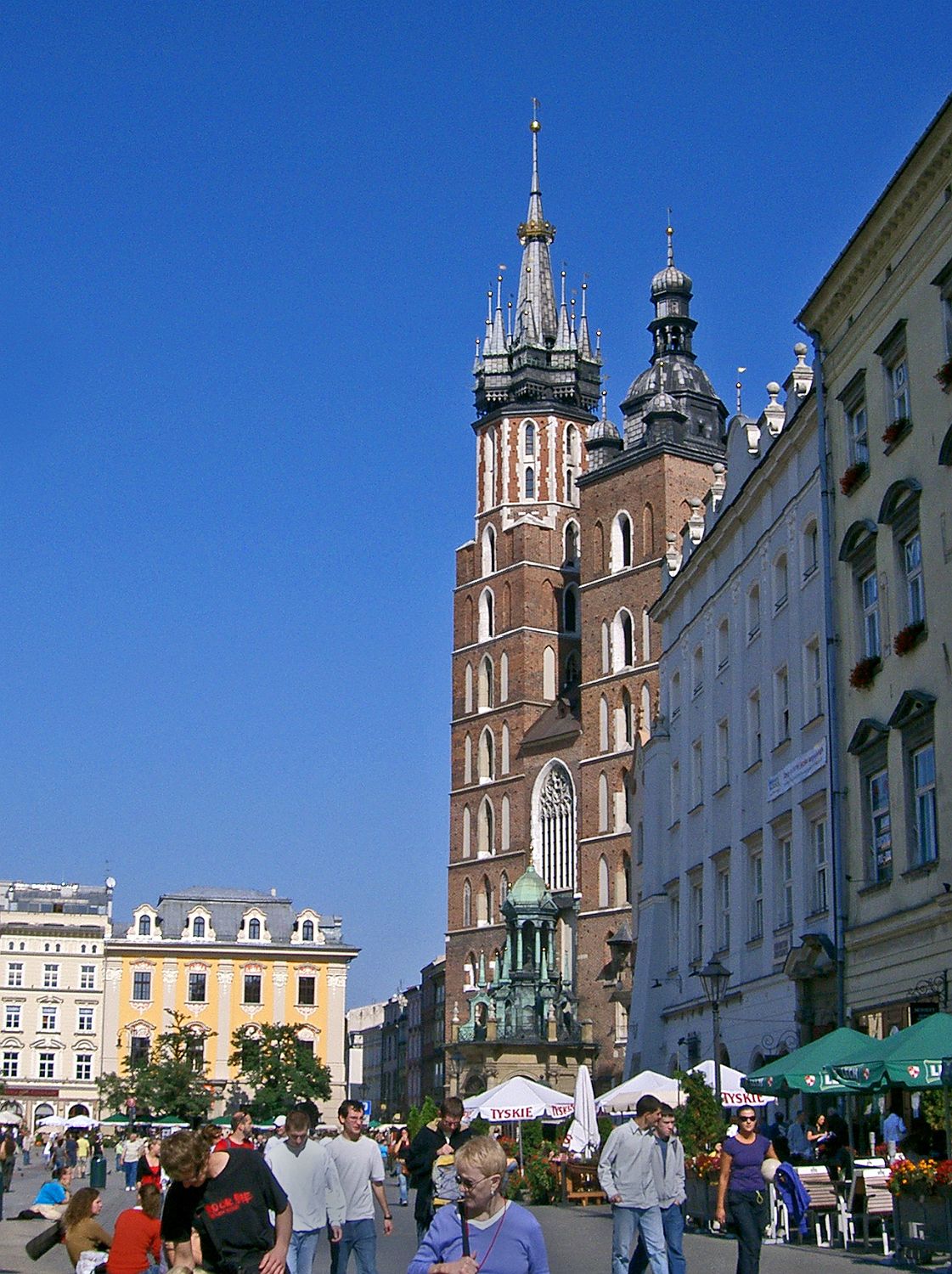 We come to the largest main square (Rynek Glowny) in Europe with lots of outdoor cafes. On most days we caught a group breakdancing to American songs. We knew we picked an authentic milk bar (cafeteria) when they showed up for lunch. St. Mary's Basilica is on the square. |
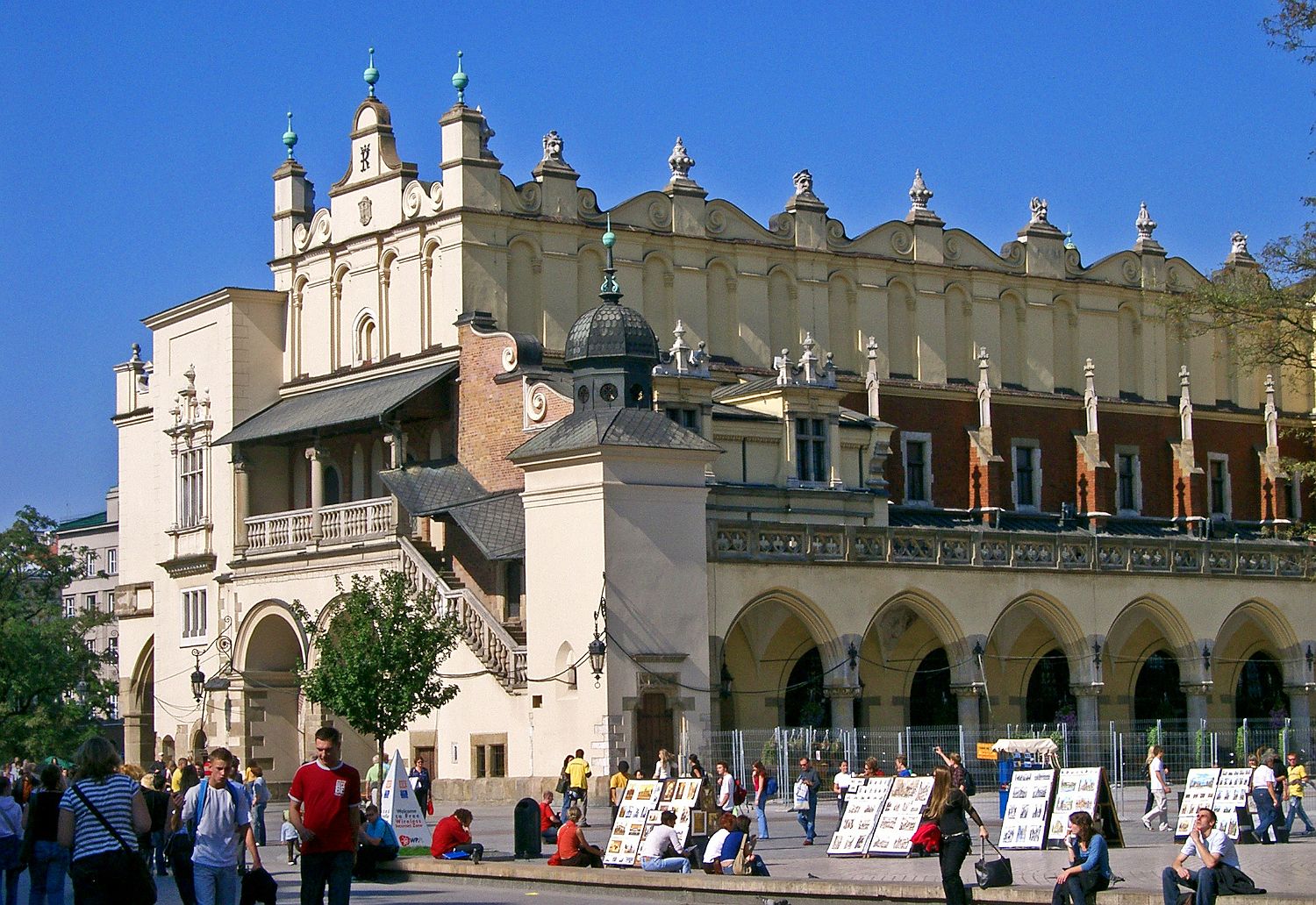 Cloth Hall on the main square is the place for souvenirs, including amber which is native to the Baltic Sea region of Poland. |
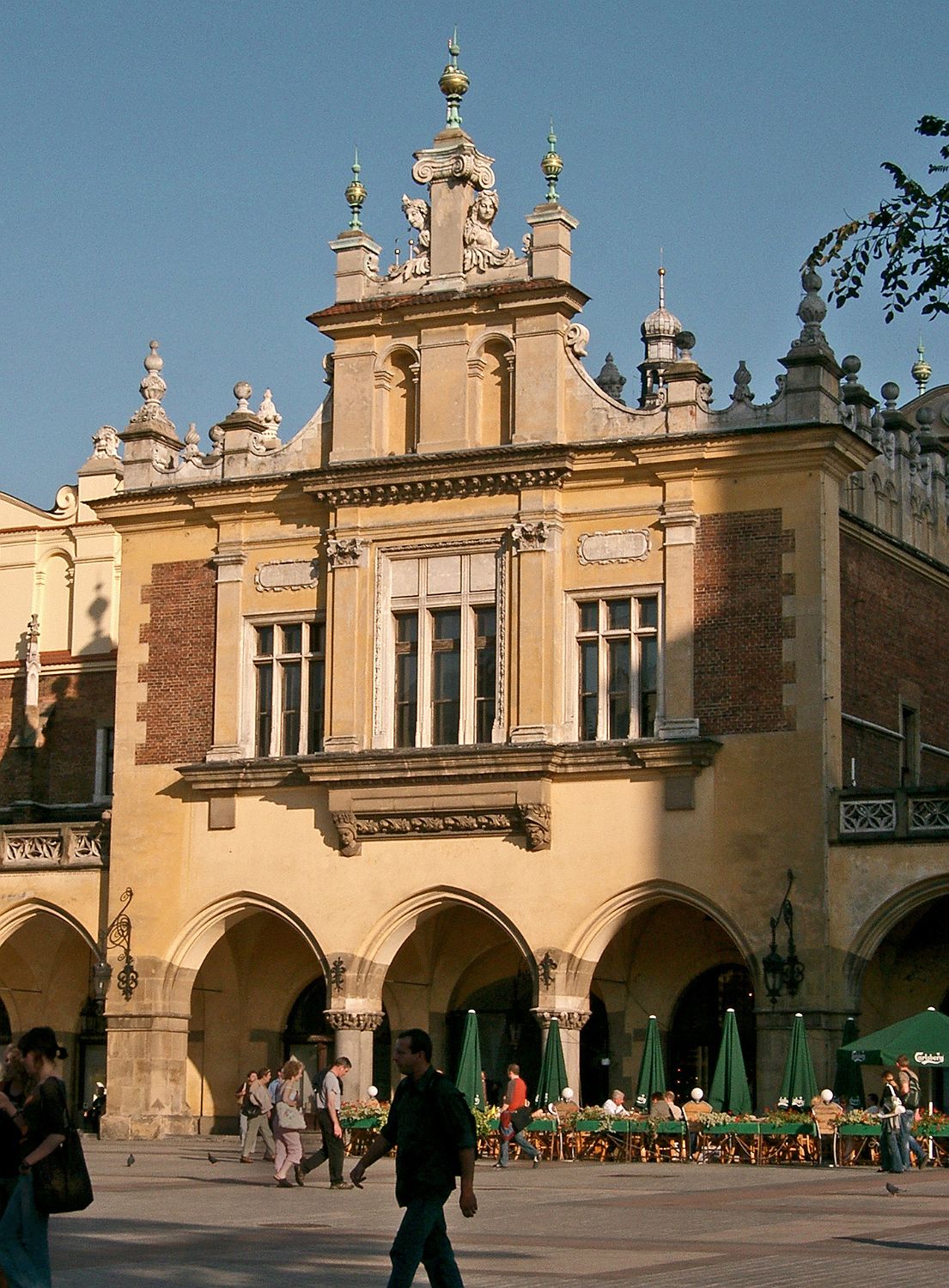 Another view of Cloth Hall. |
 |
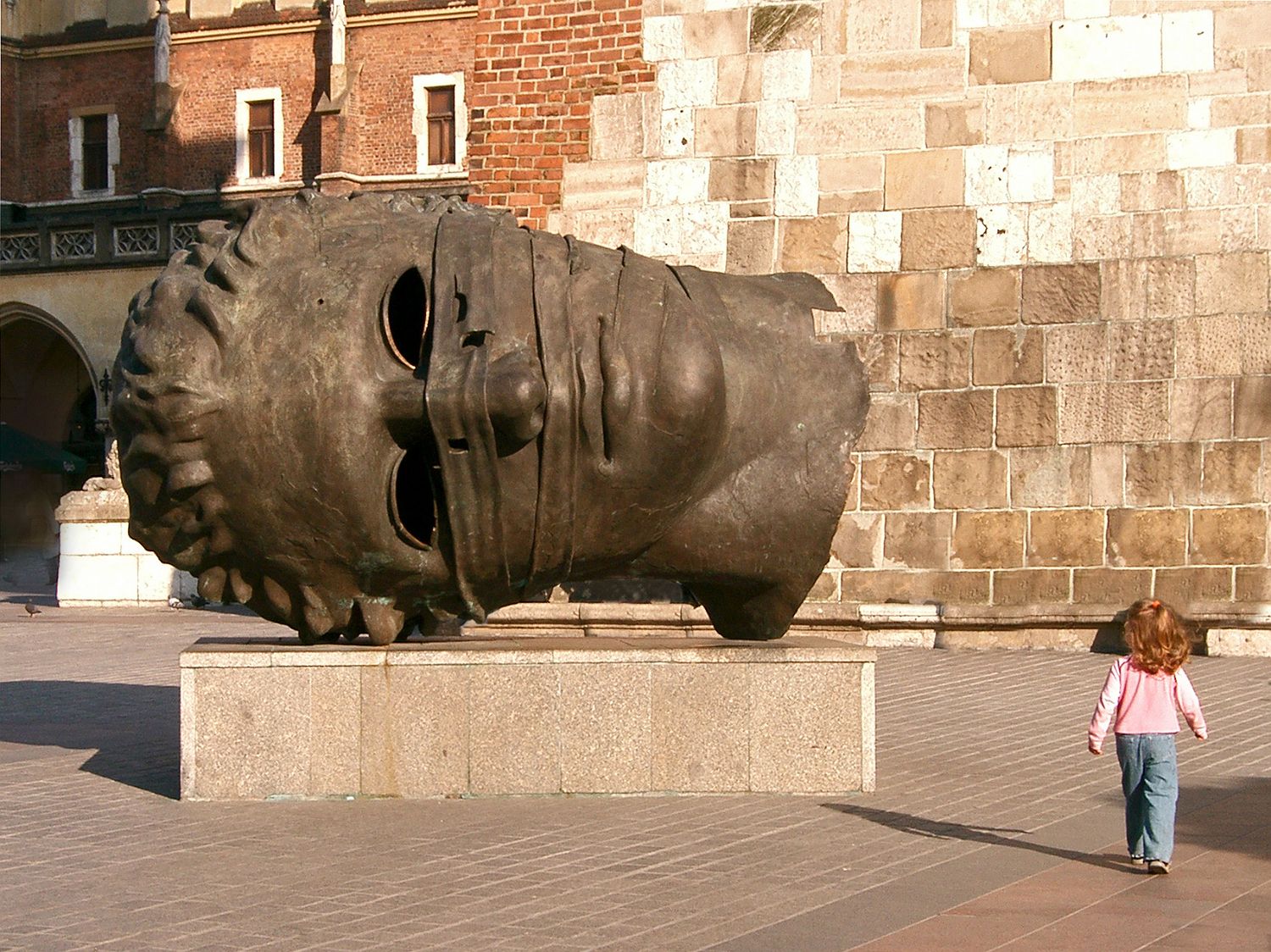 You can even see modern art on the square. Children climb inside this piece called "The Head" peering out the eyes. |
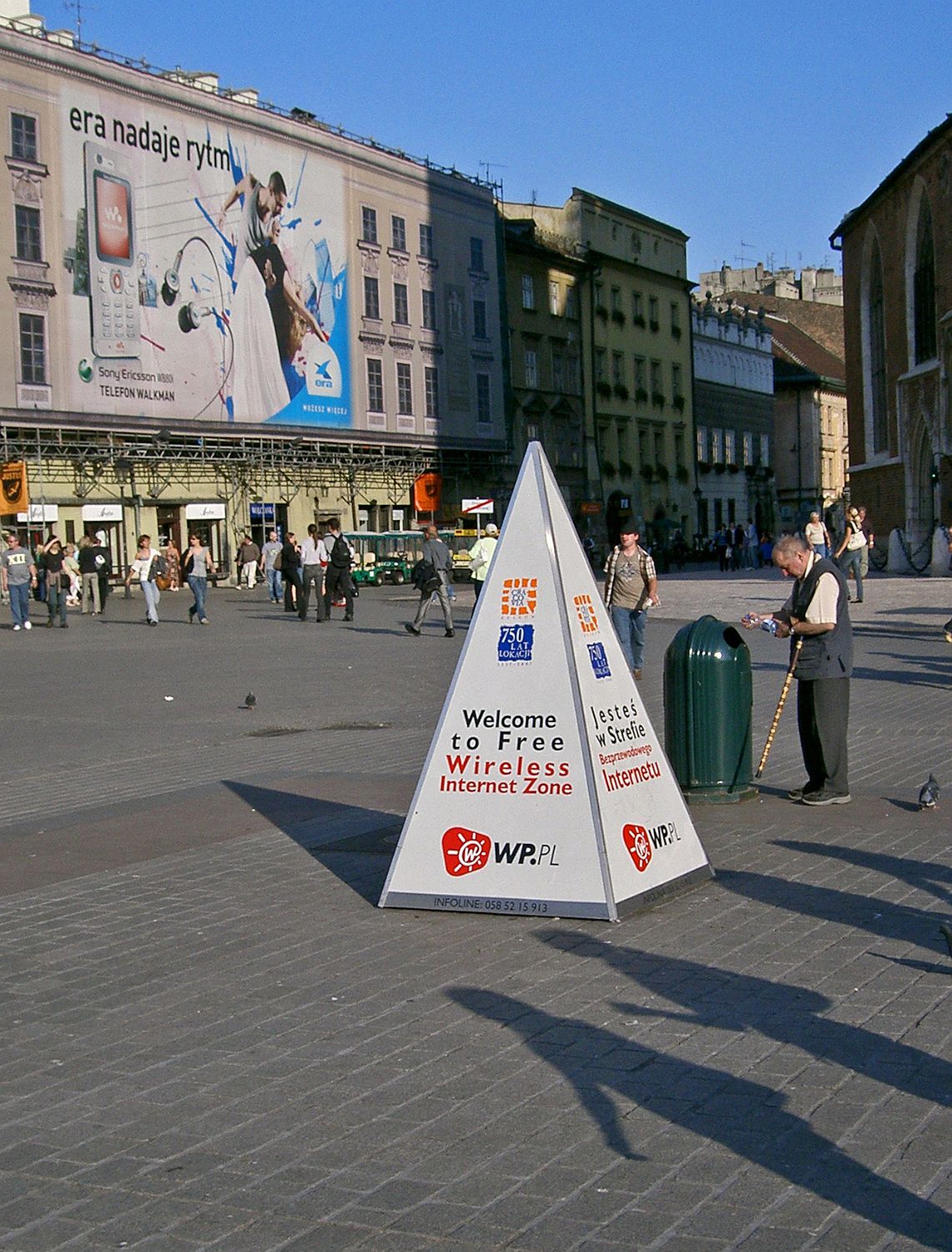 You can stay "connected" if you want to. |
 |
 |
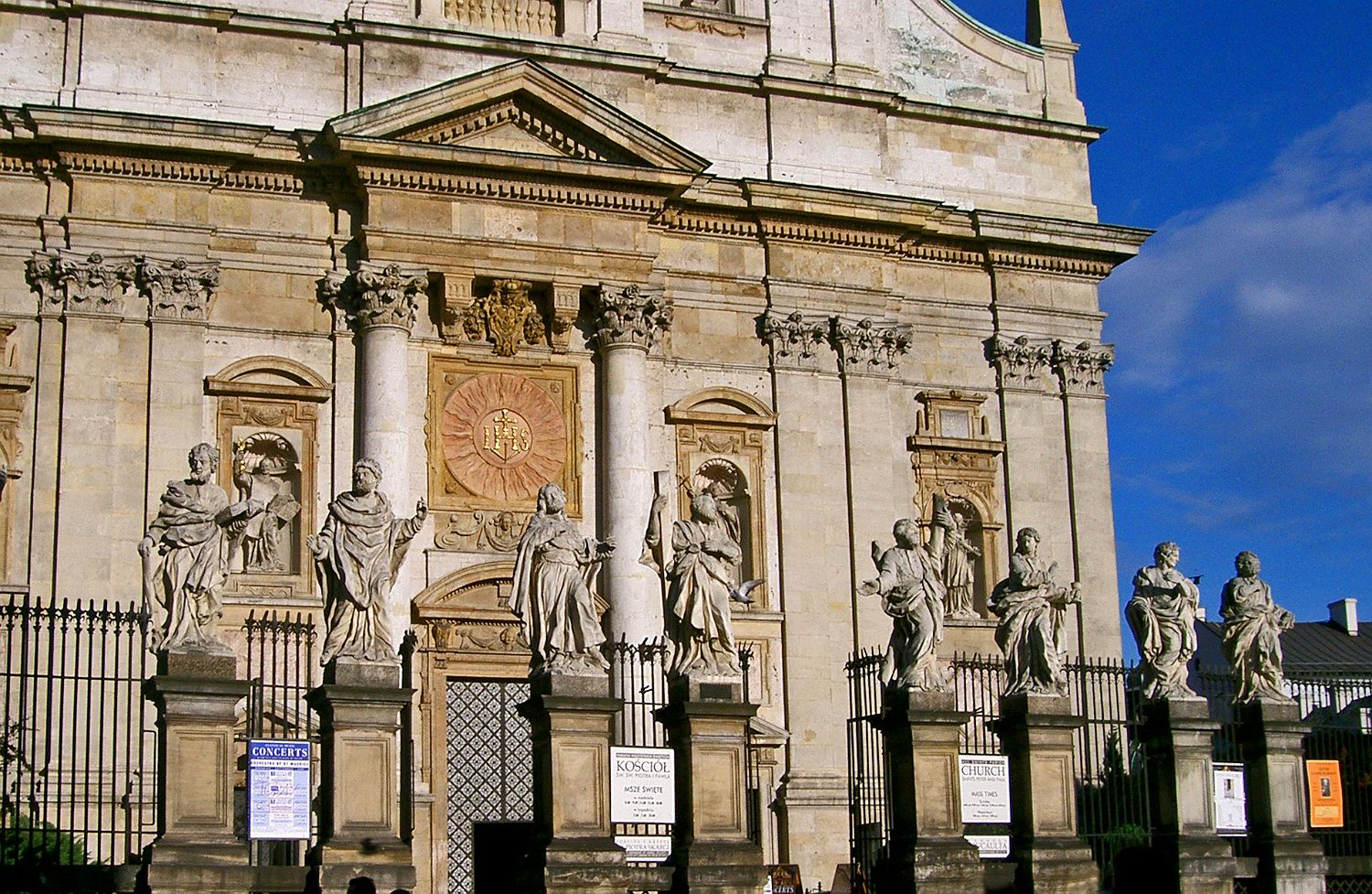 We were almost ready to head back when we come across All Saints Parish Church. These twelve apostle statues are huge! |
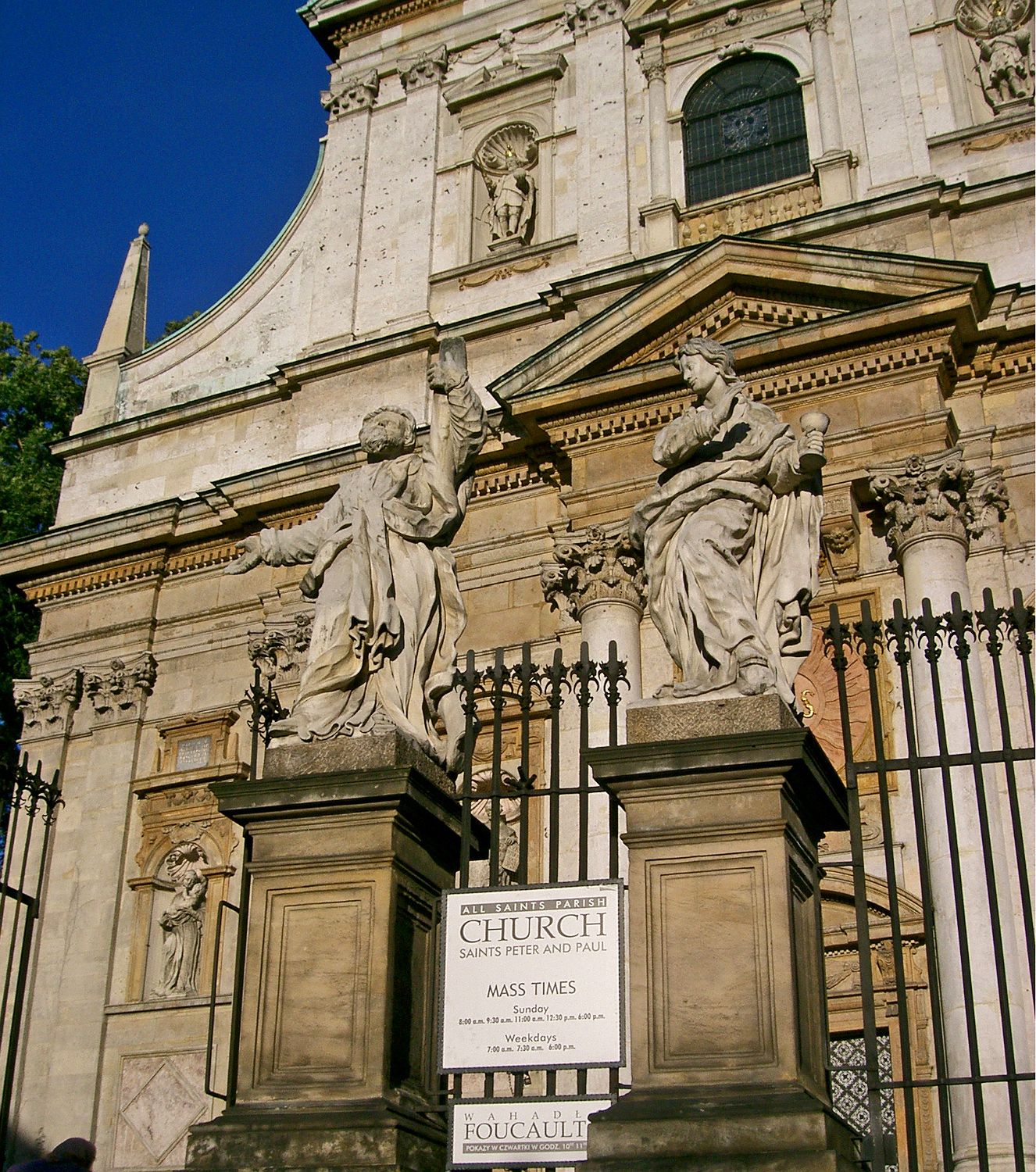 Mass is about to start so we go in. Young and old are in attendance. We notice most young families have only one or two children. That's typical in the city because child care is expensive and hard to find. |
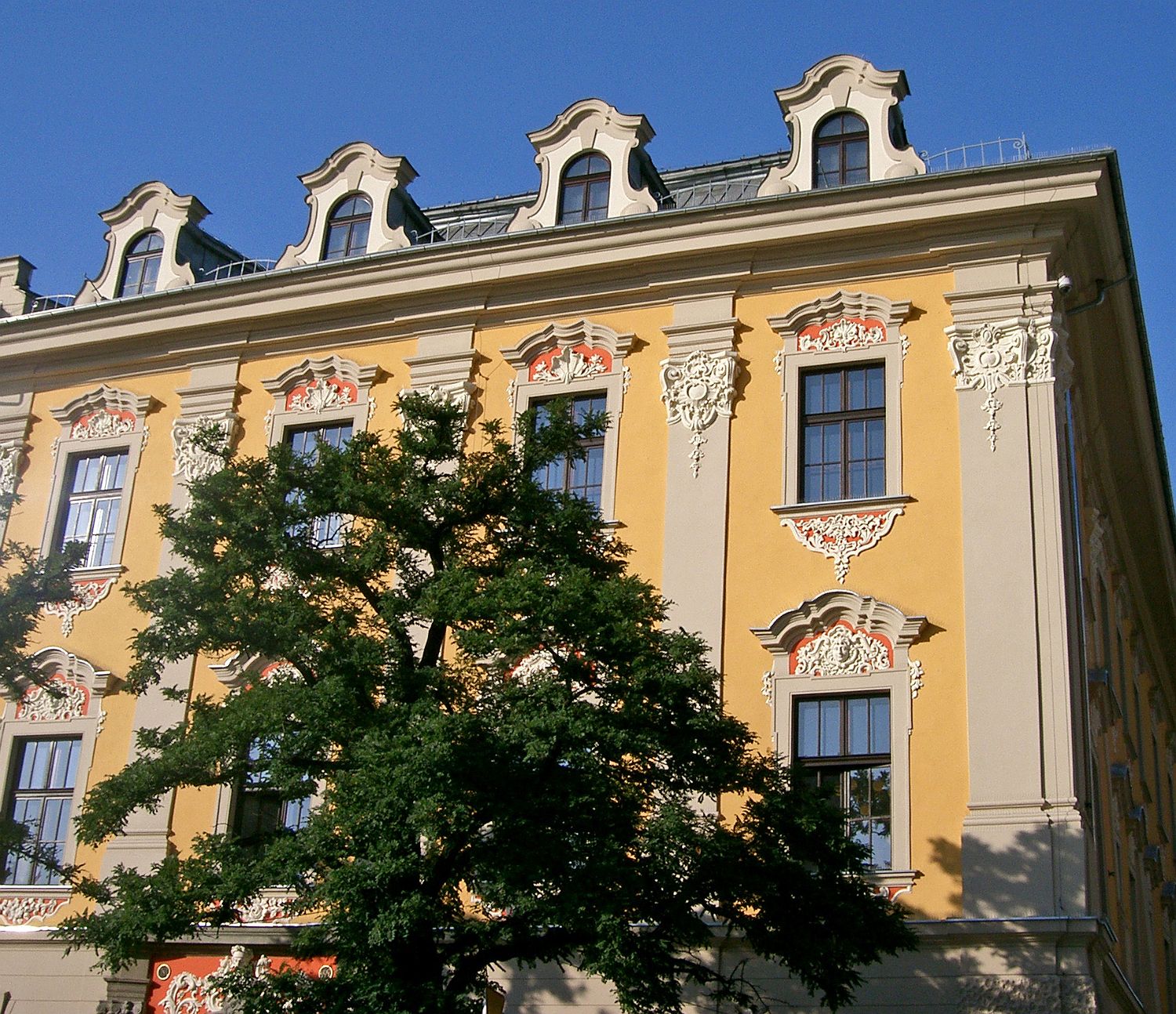 The architechture here is fantastic. While Innsbruck felt a bit like Disneyworld, Krakow felt like a true city. |
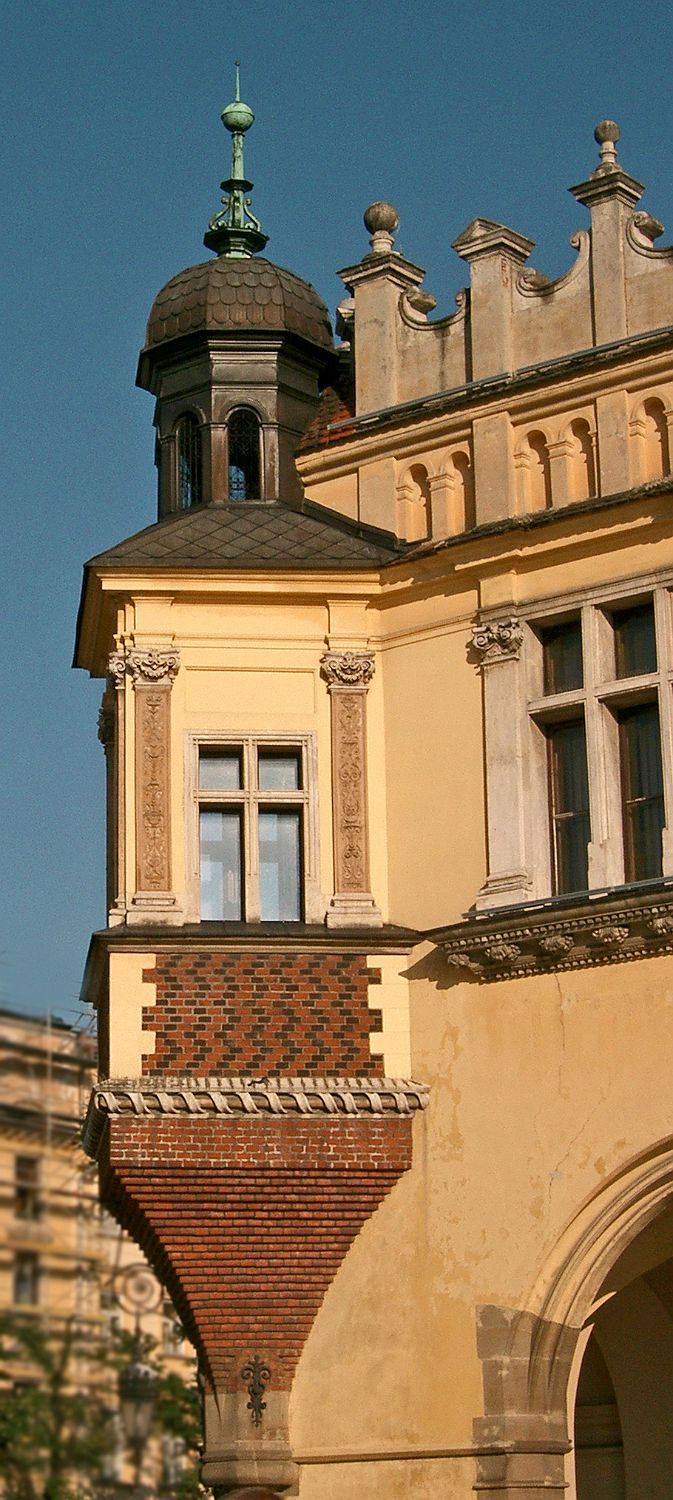
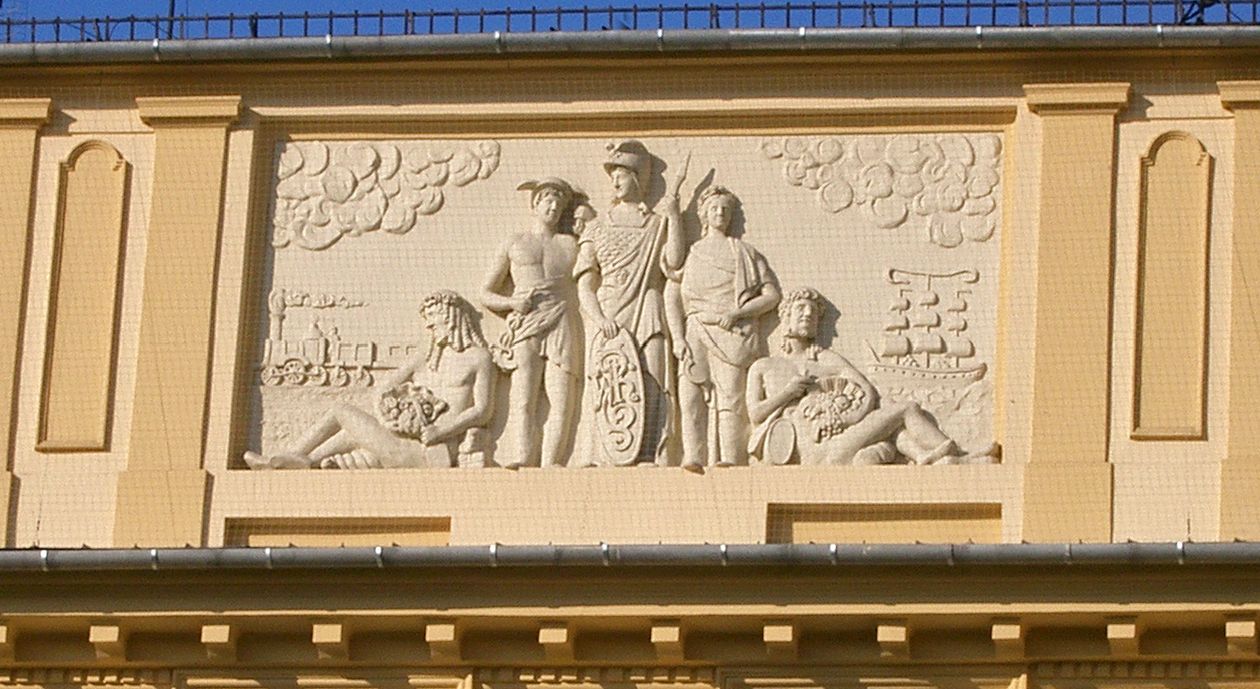 Atop a building on the main square. |
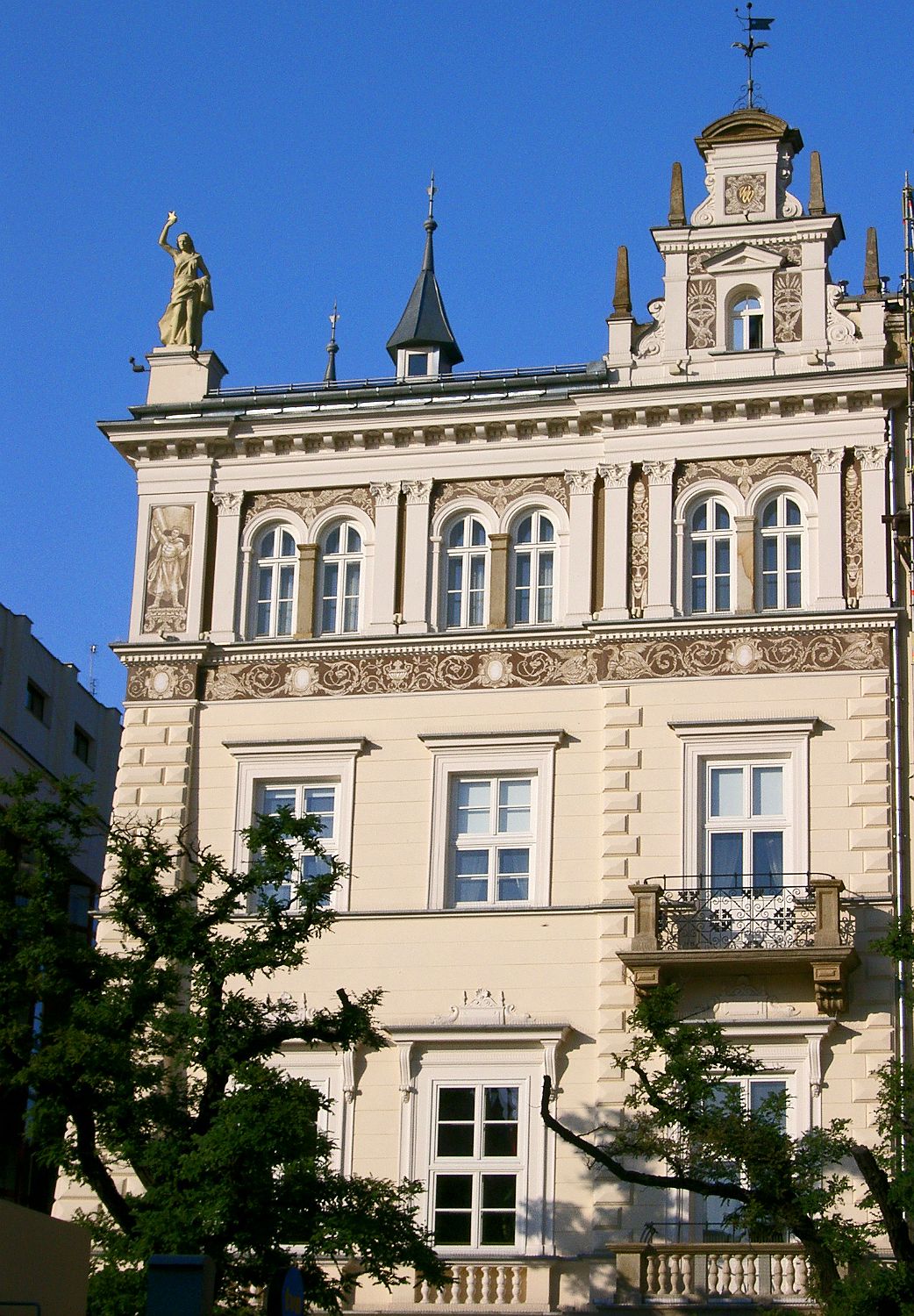 |
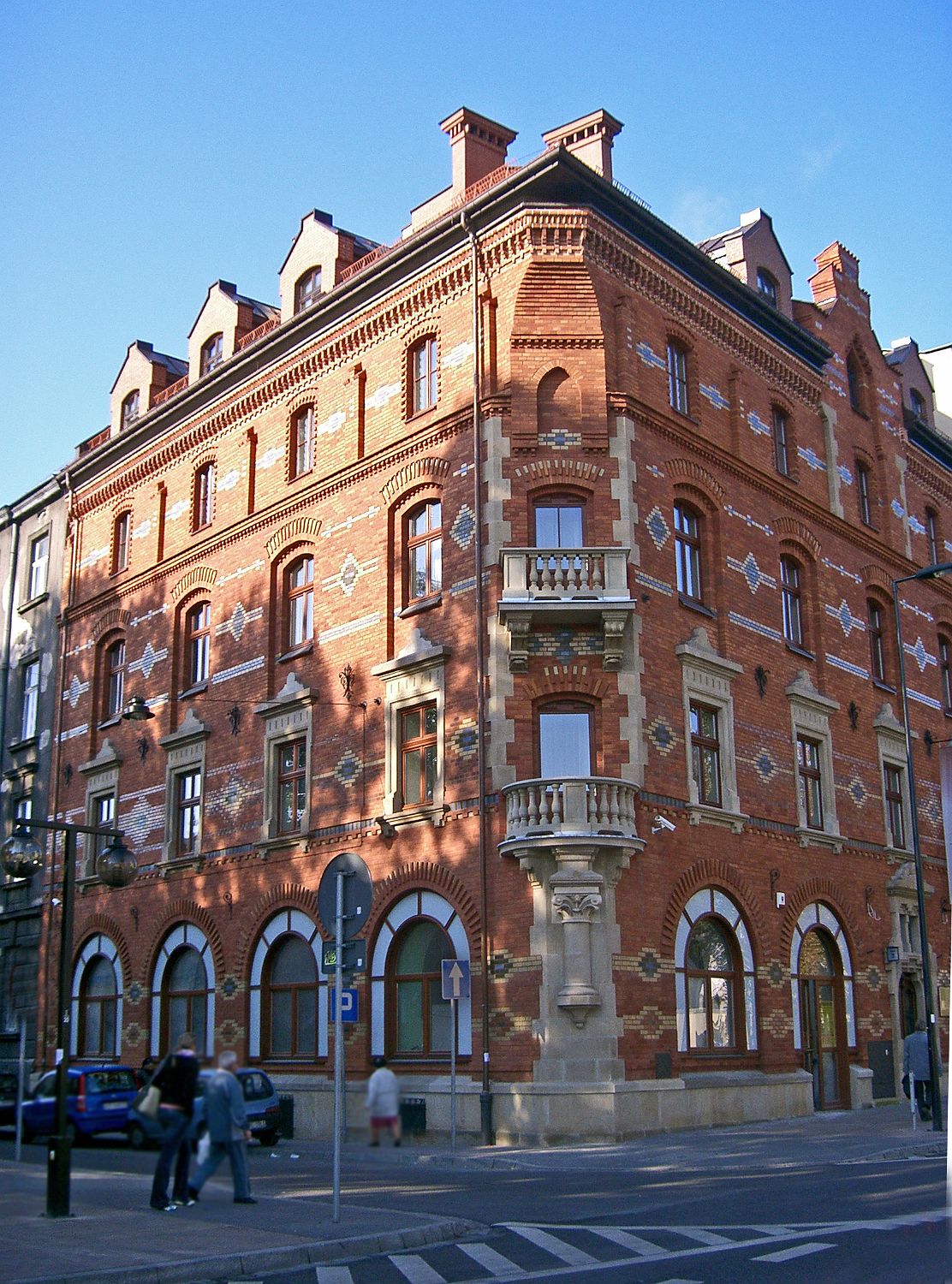 Now renting, Red Brick Apartments. |
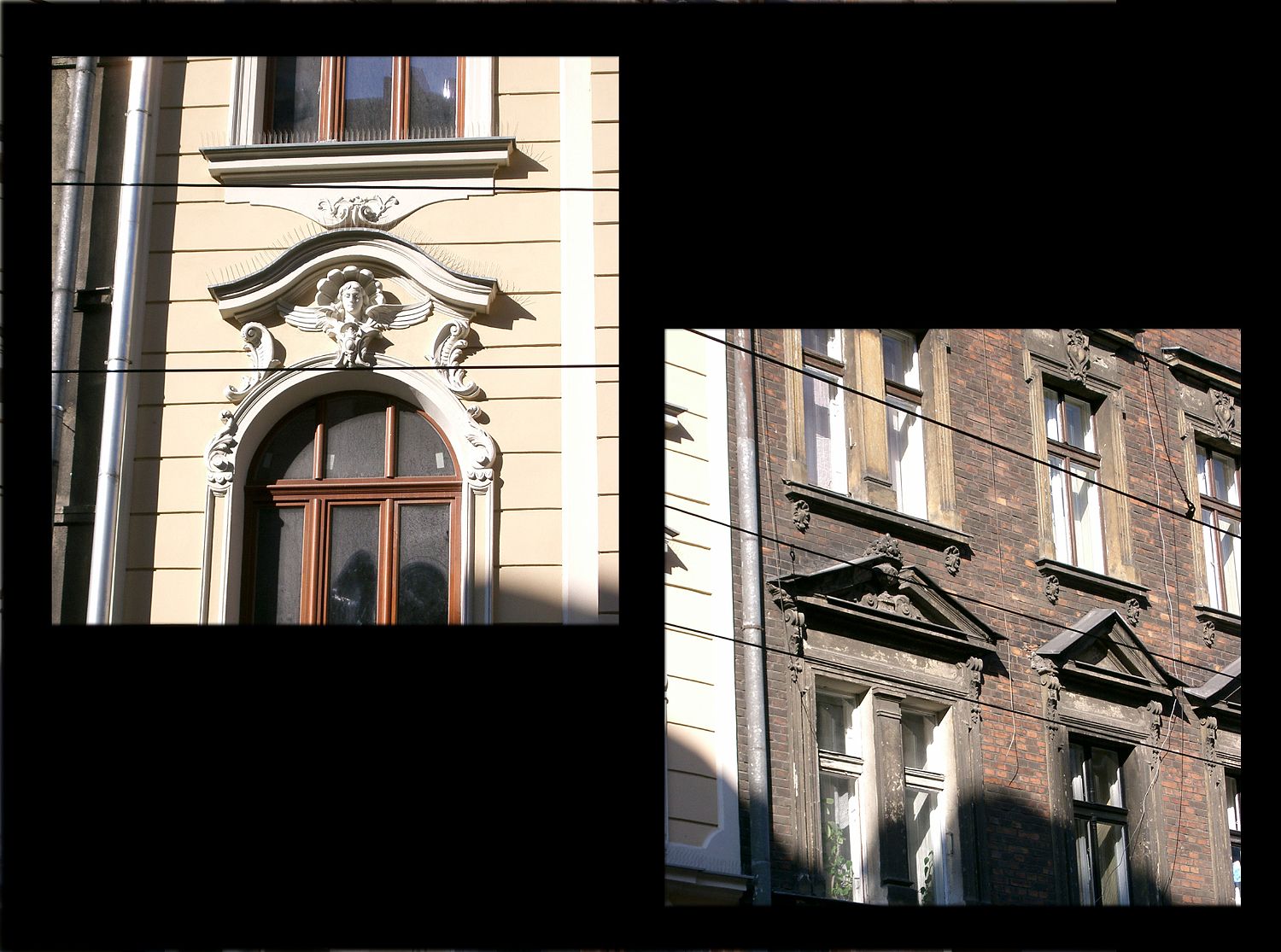 These adjacent buildings typify renovation throughout Krakow. . . |
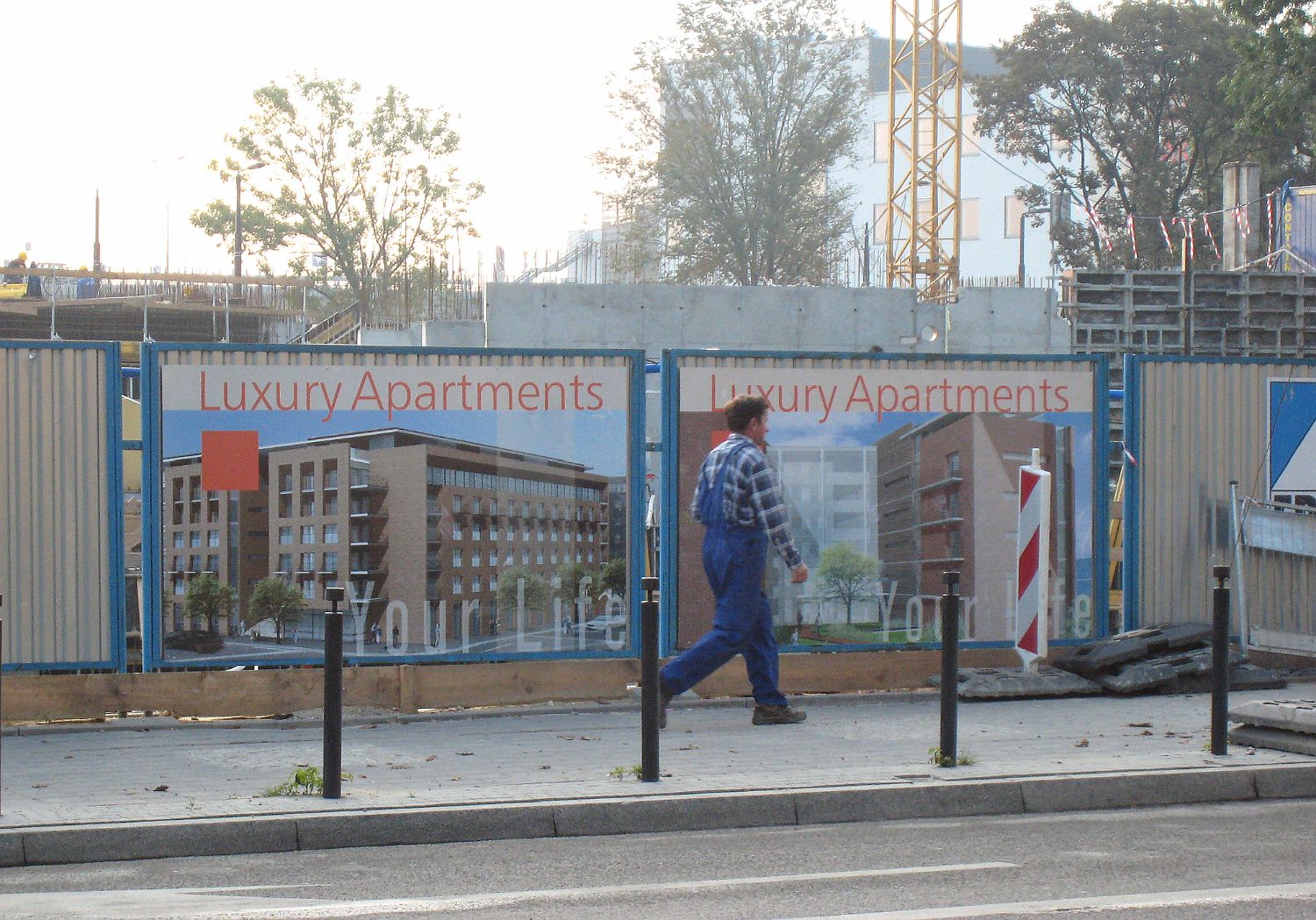 . . .including demolition for upscale apartments, all signs of a recovering economy. (Note the English signs.) |
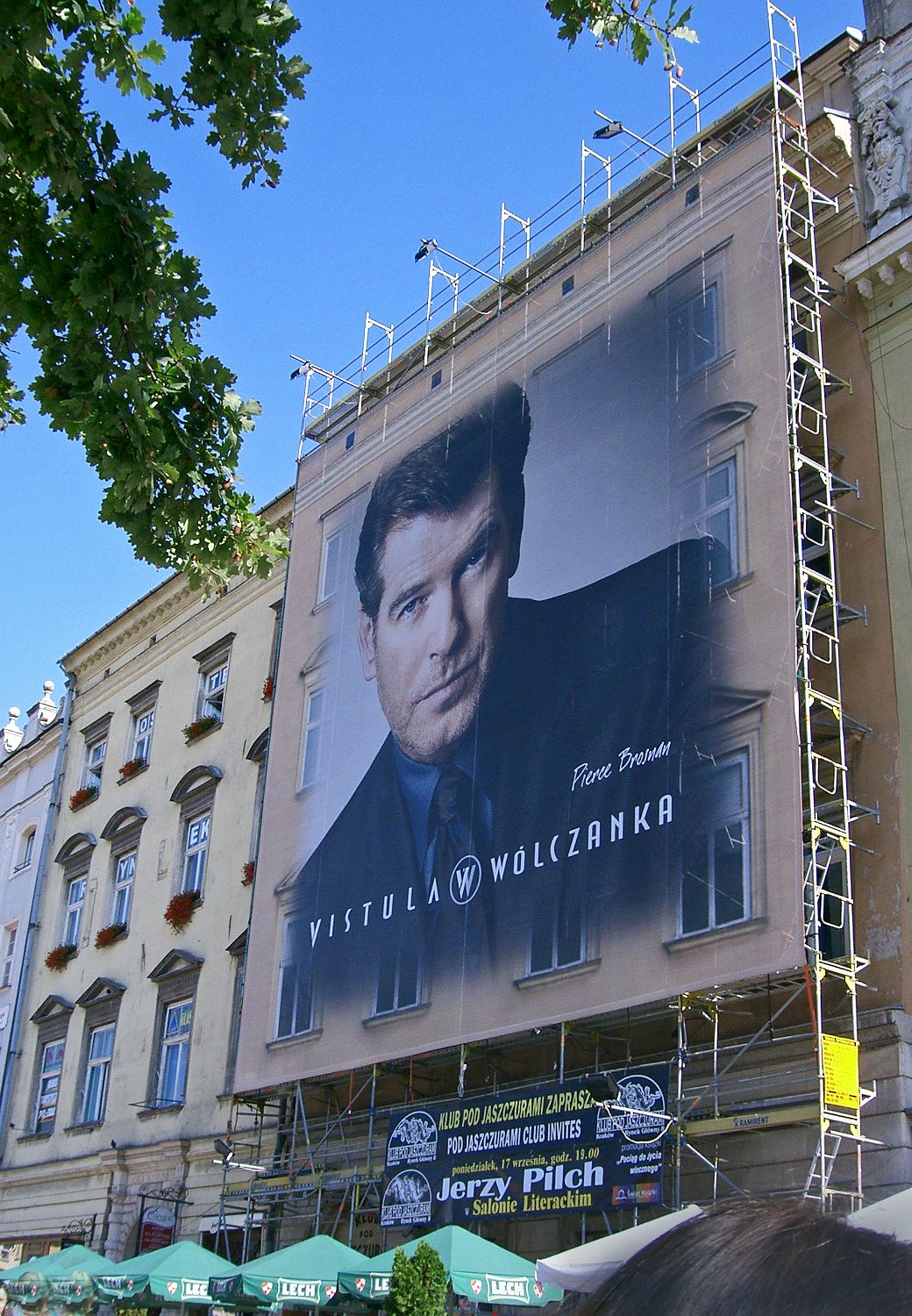 Pierce Brosan covers restoration work. |
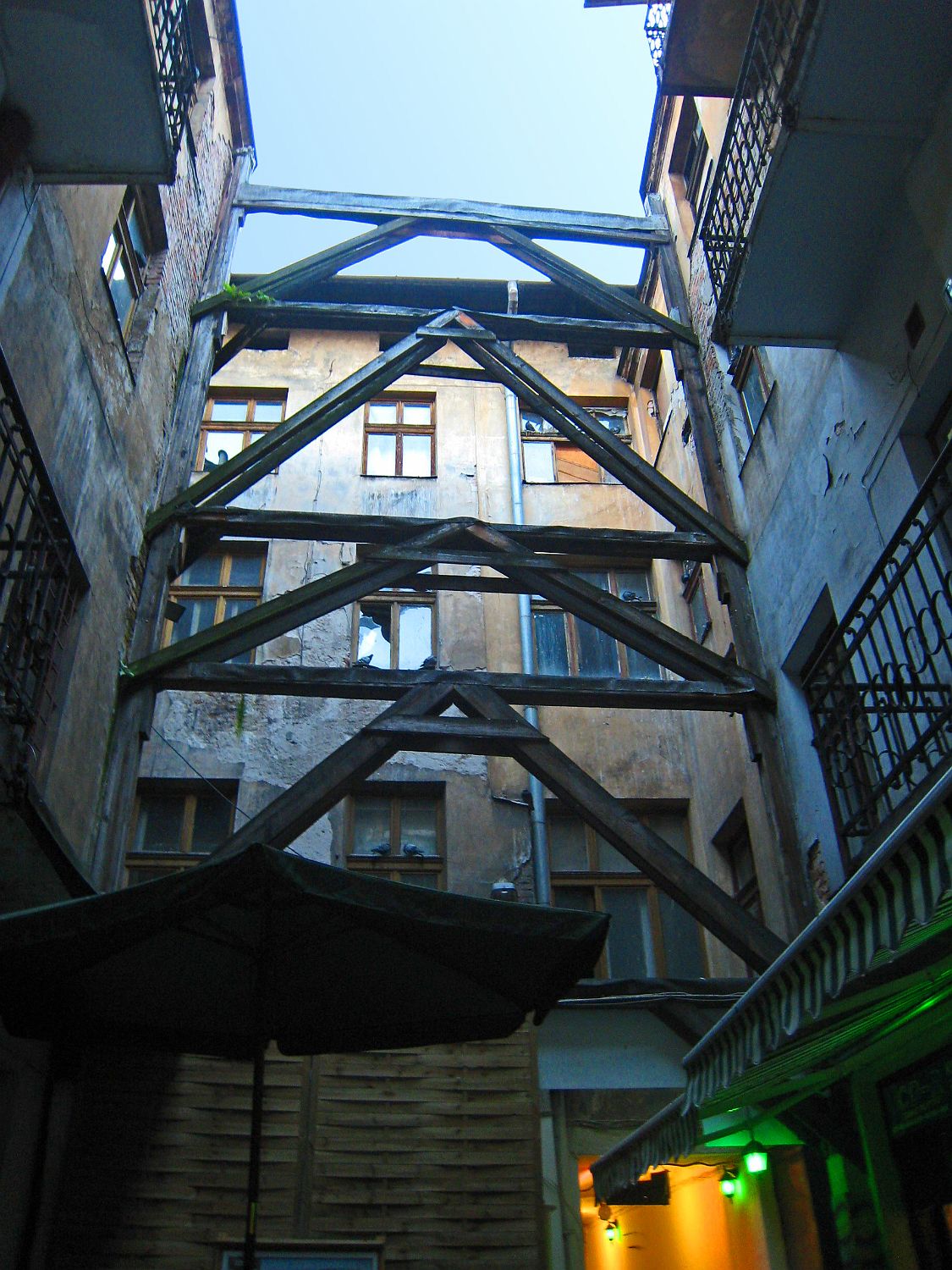 Much work needs to be done on the interior and back of the buildings. |
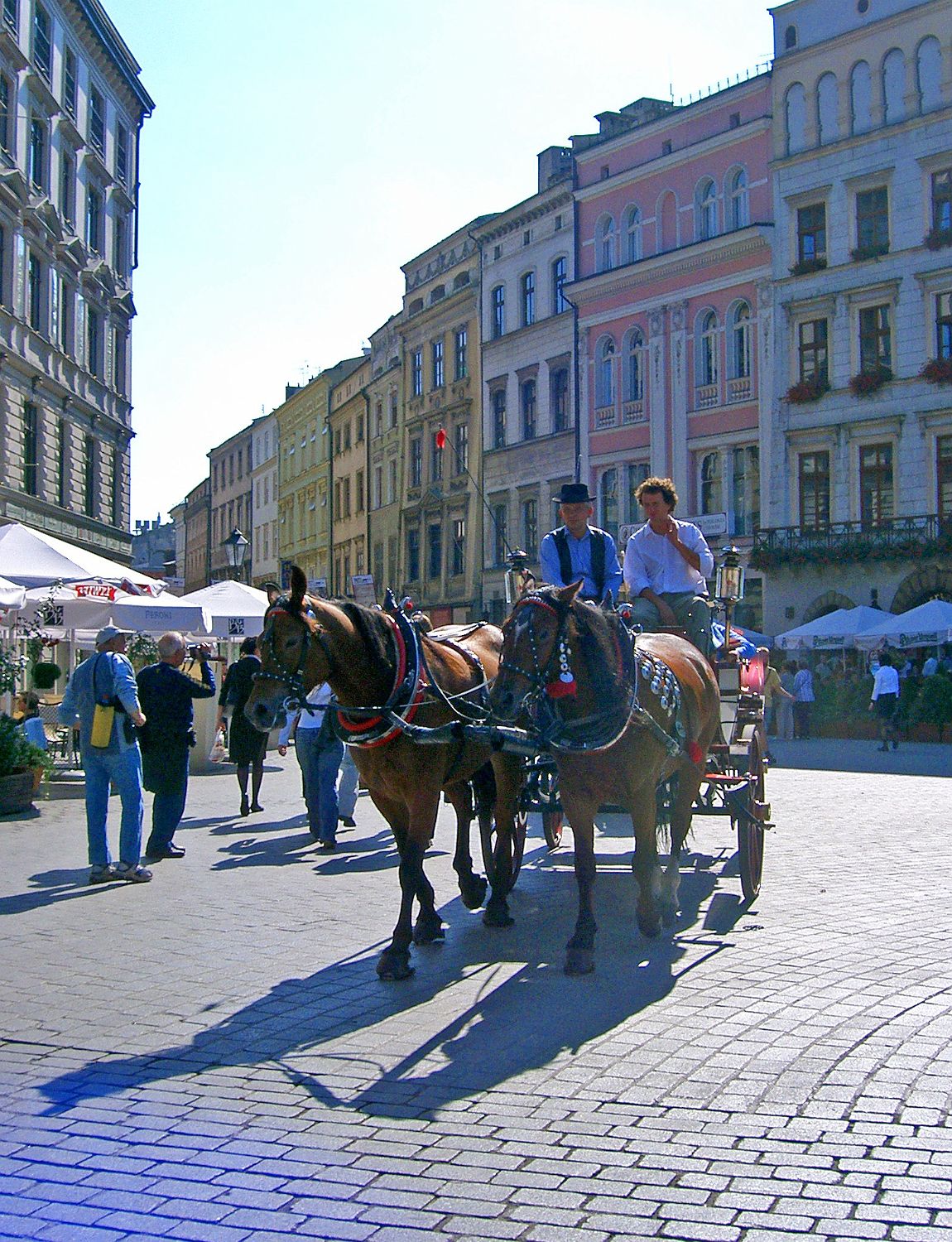
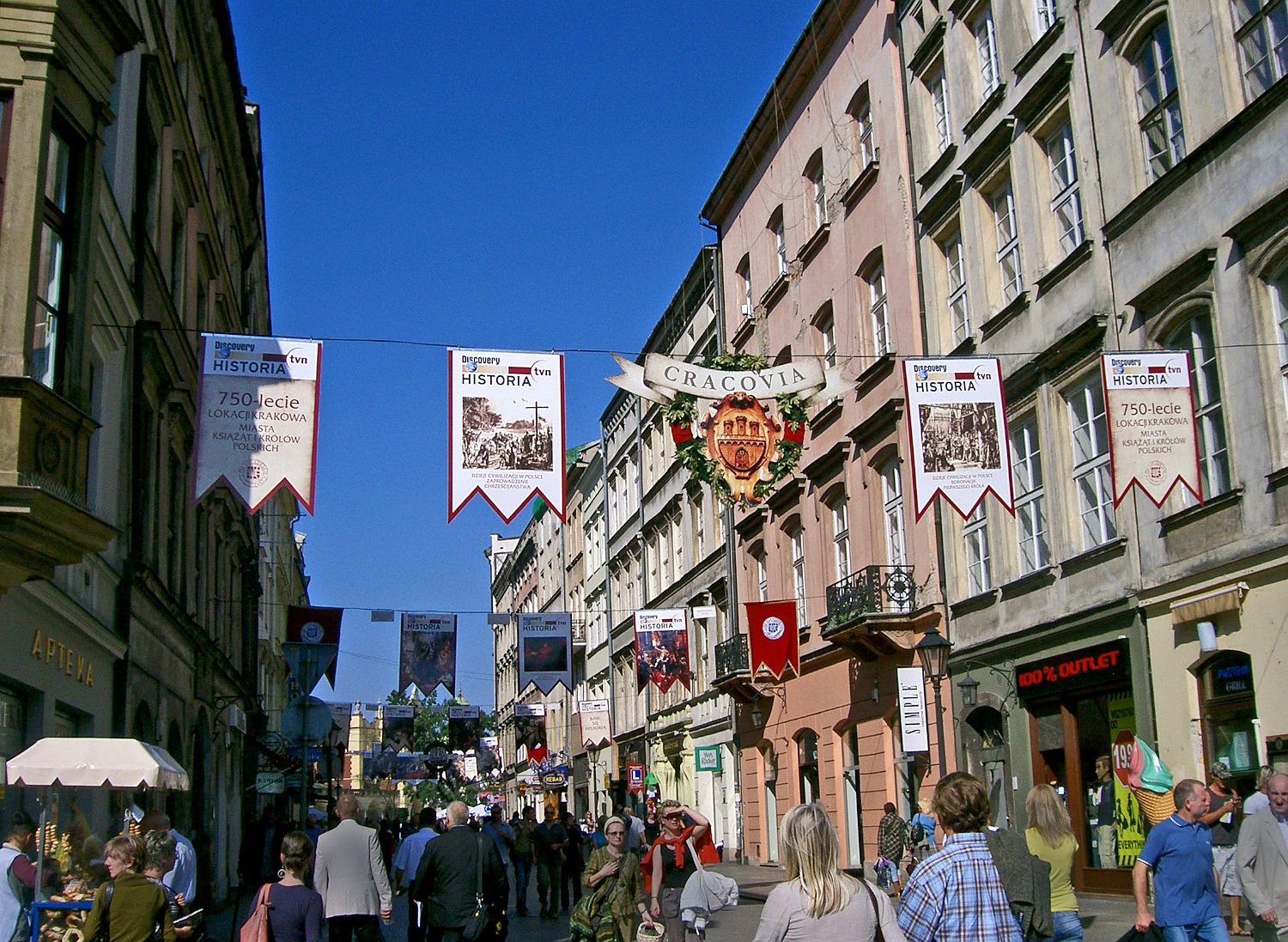 One of the main streets in Old Towne that was always crowded. Flags promote a Discovery Channel show highlighting Krakow. |
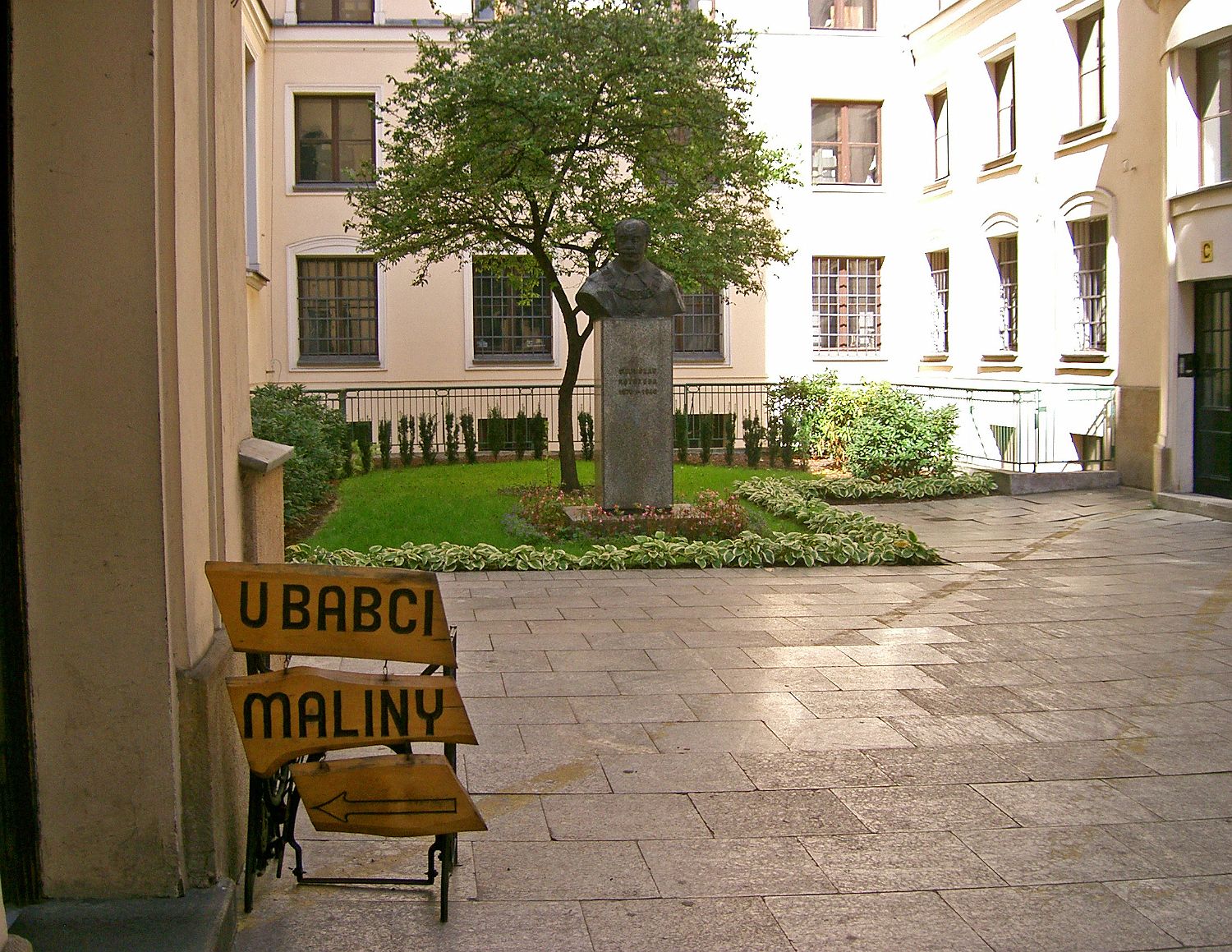 The entrance to one of the milk bars (cafeterias) where you can get yummy Polish cuisine for very little $$ is in this quaint courtyard. |
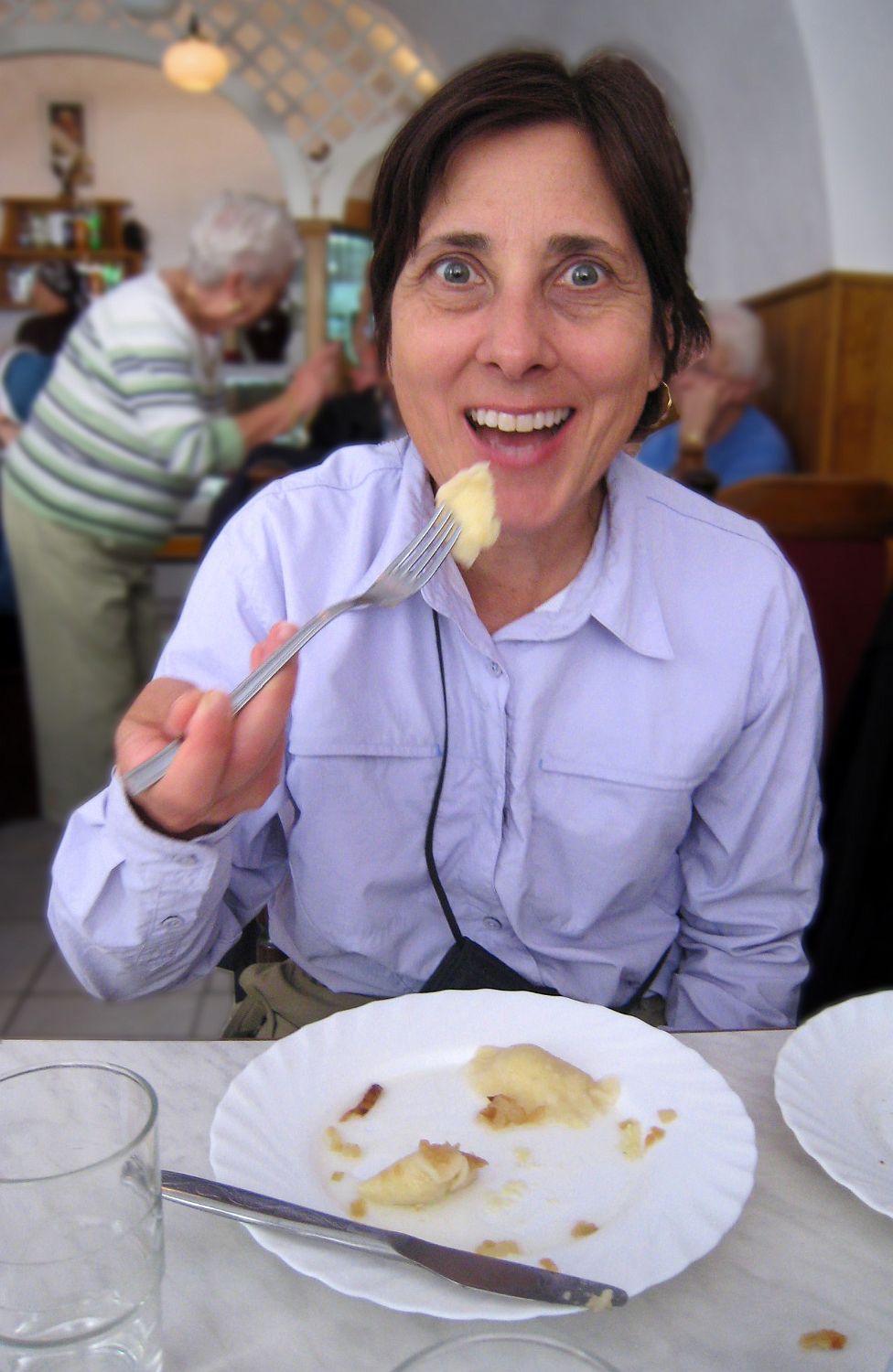 PIEROGIES!!! |
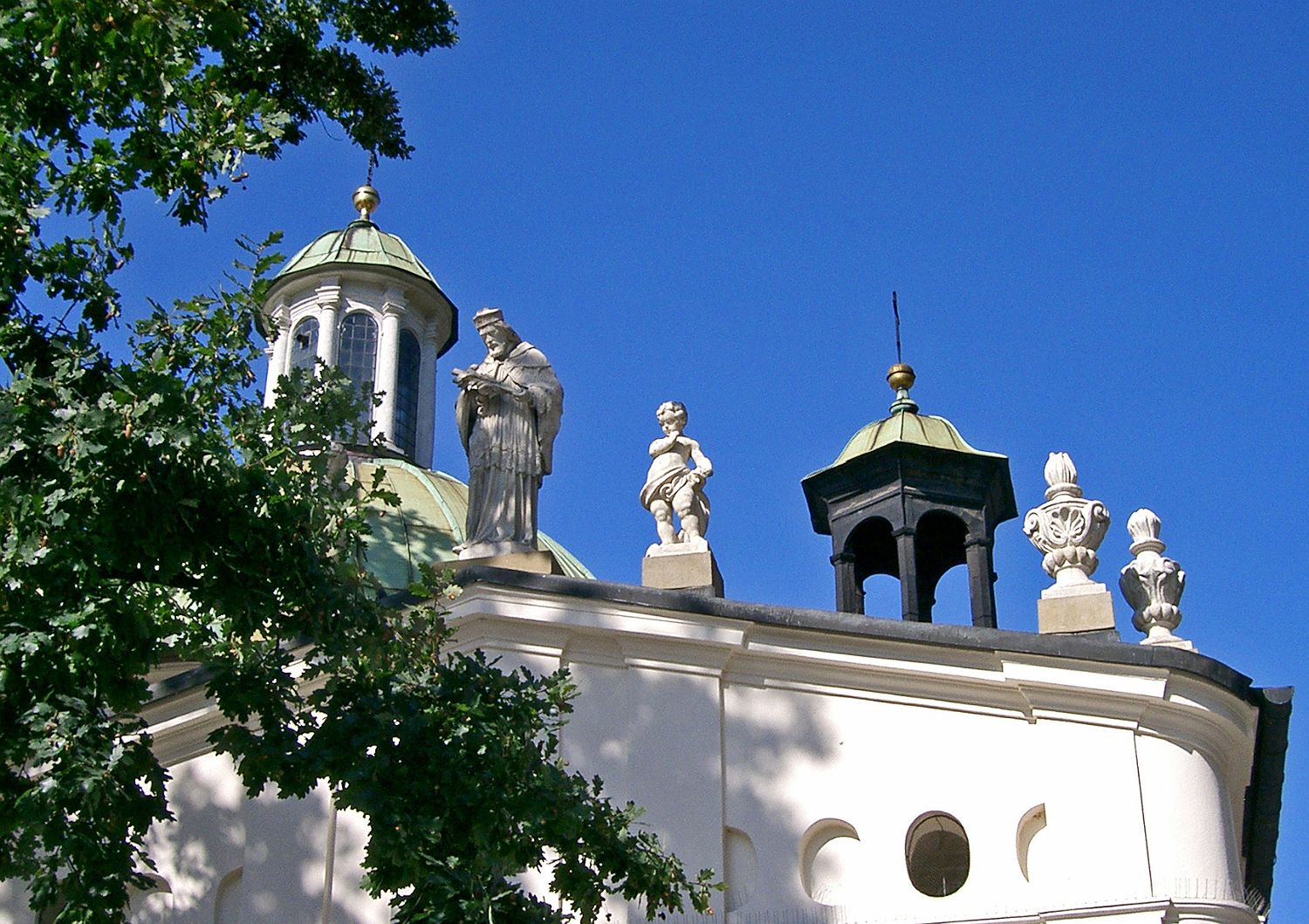 Small church on the square where we met walking tours. |
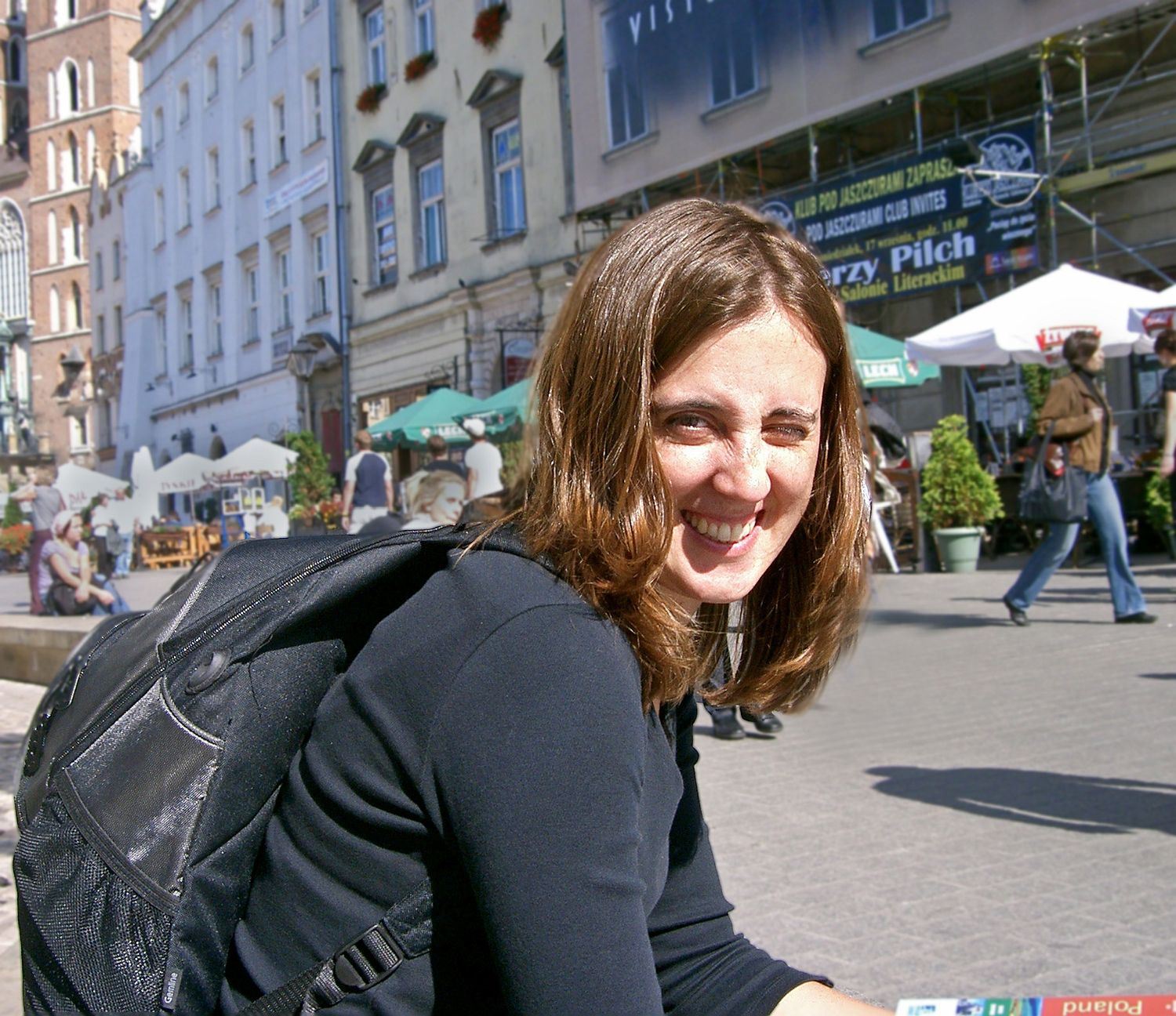 Samantha's all set for the tour listening to. . . |
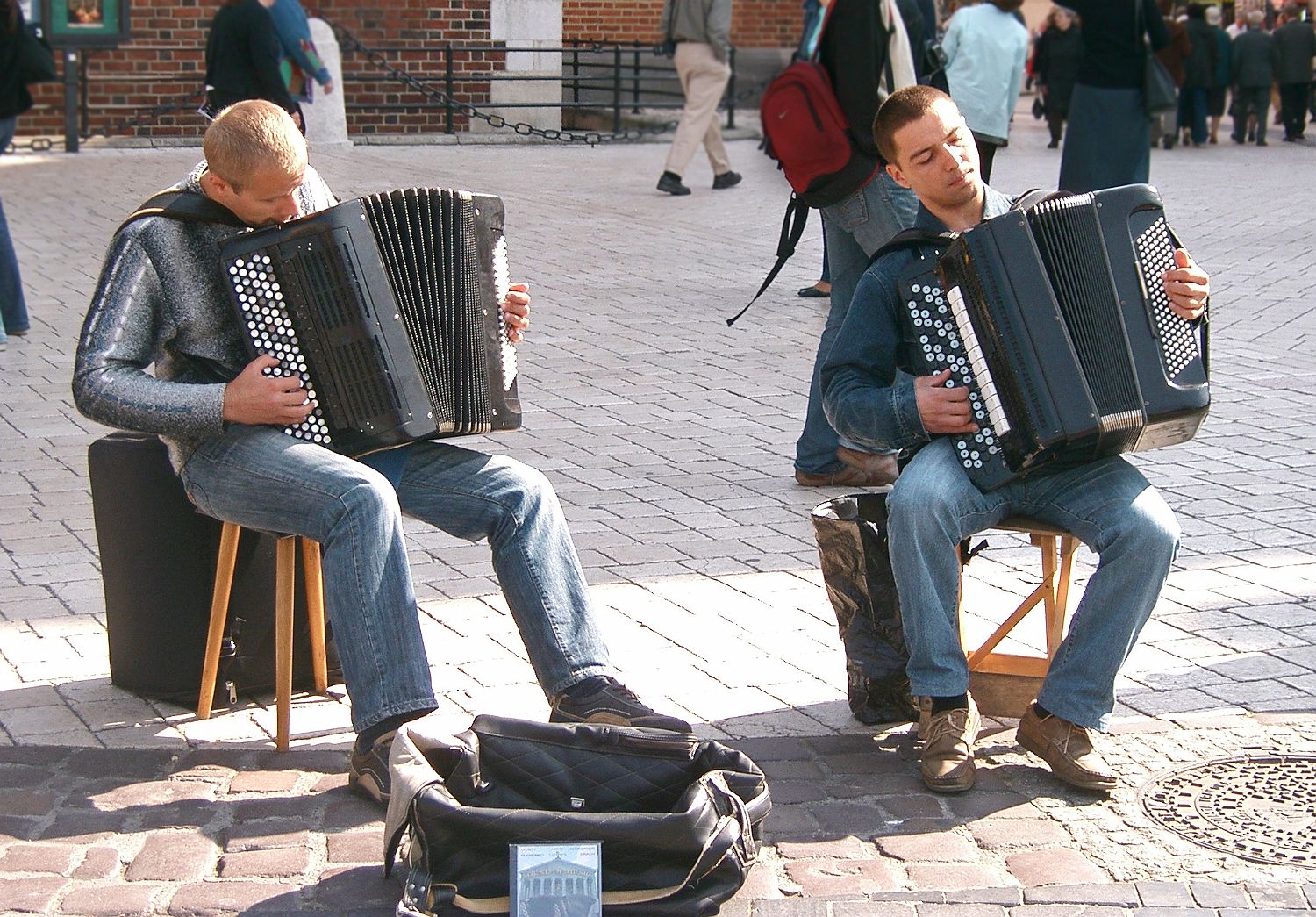 . . .these musicians taking advantage of some great weather. |
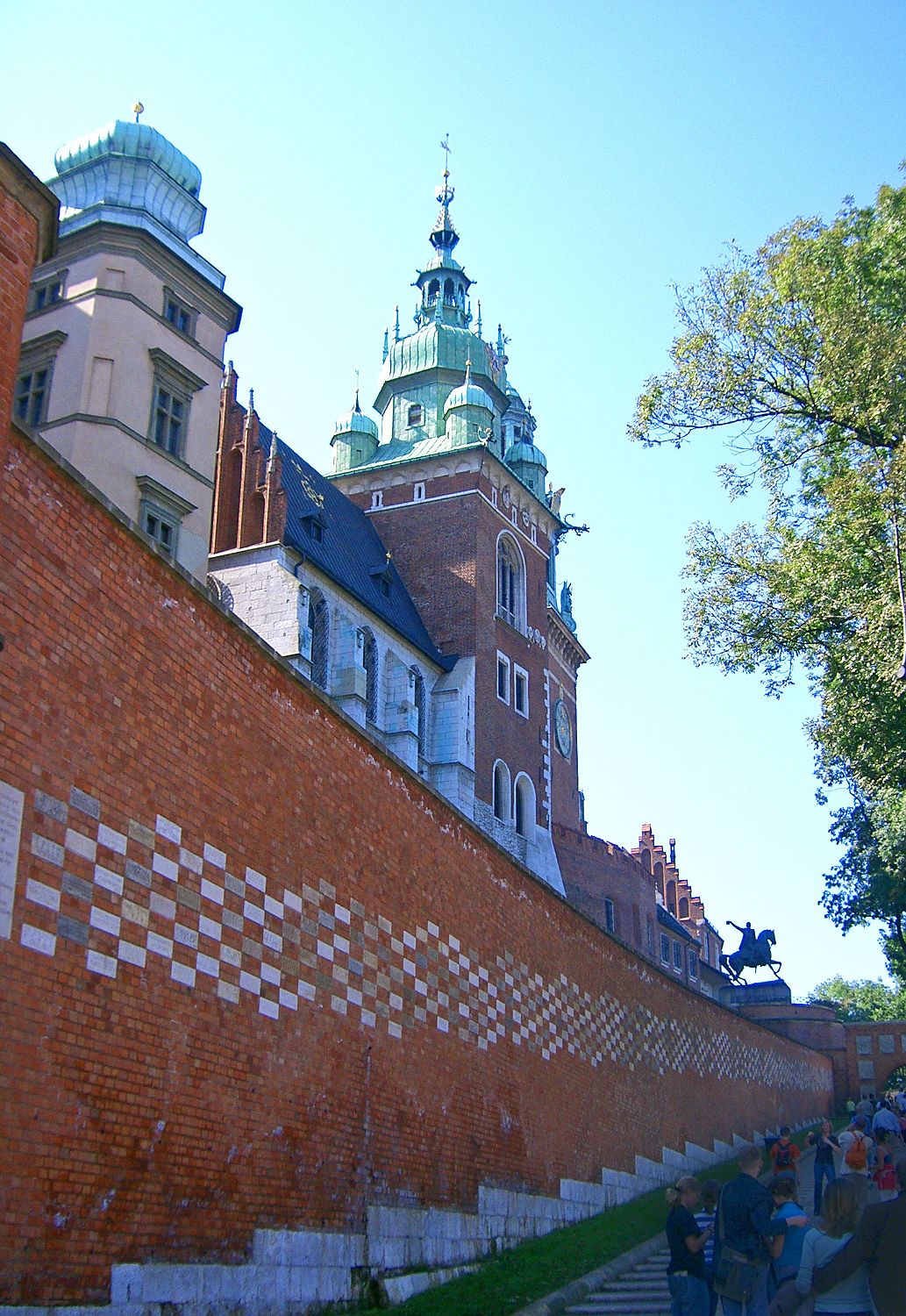 The tour heads to Wawel Castle. |
 |
 |
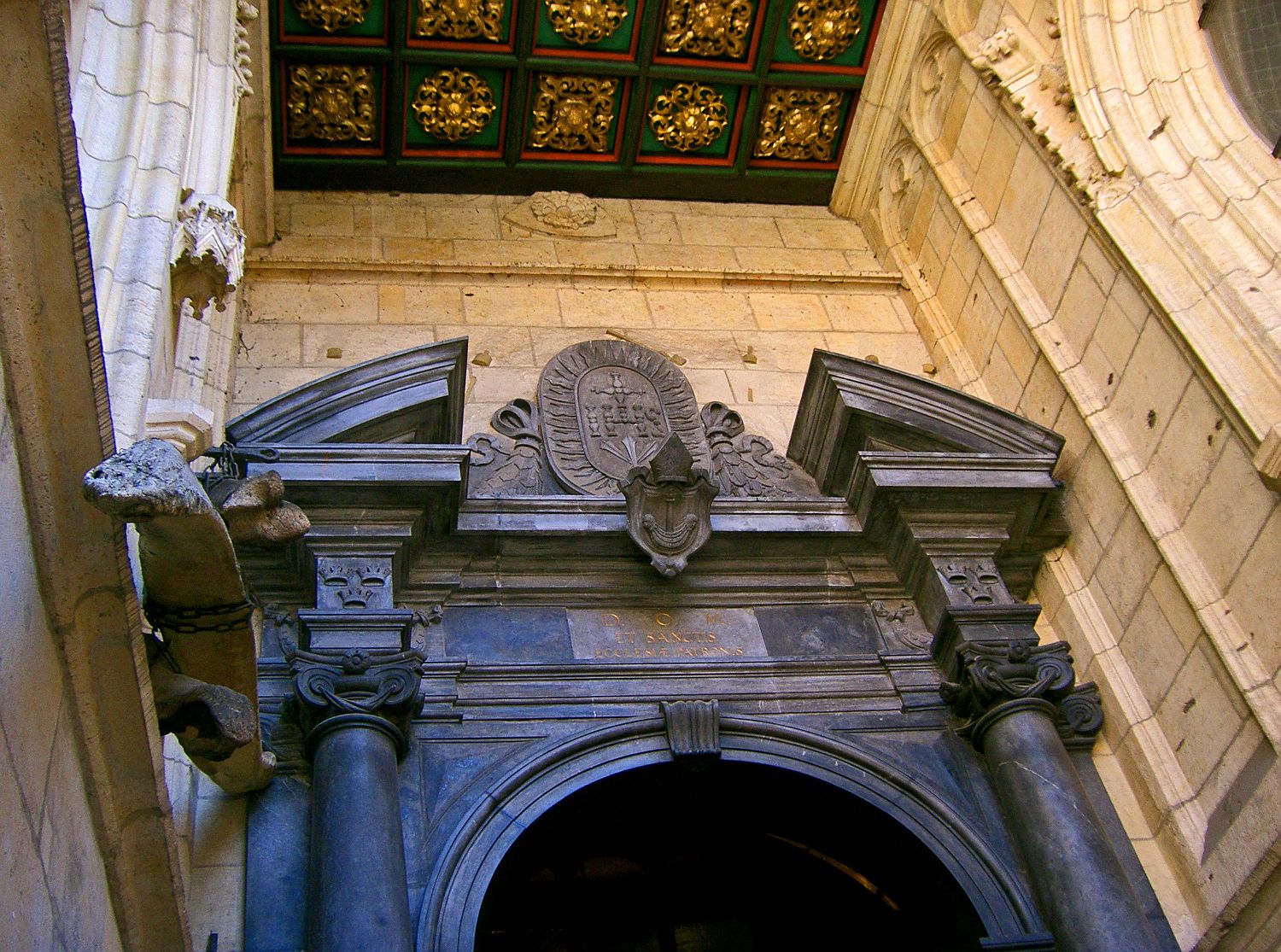 Entrance to the Wawel Castle cathedral. Folk lore has it that the bones on the left will fall at the end of the world. These bones were originally thought to be from Noah's Ark but recent testing proved otherwise. |
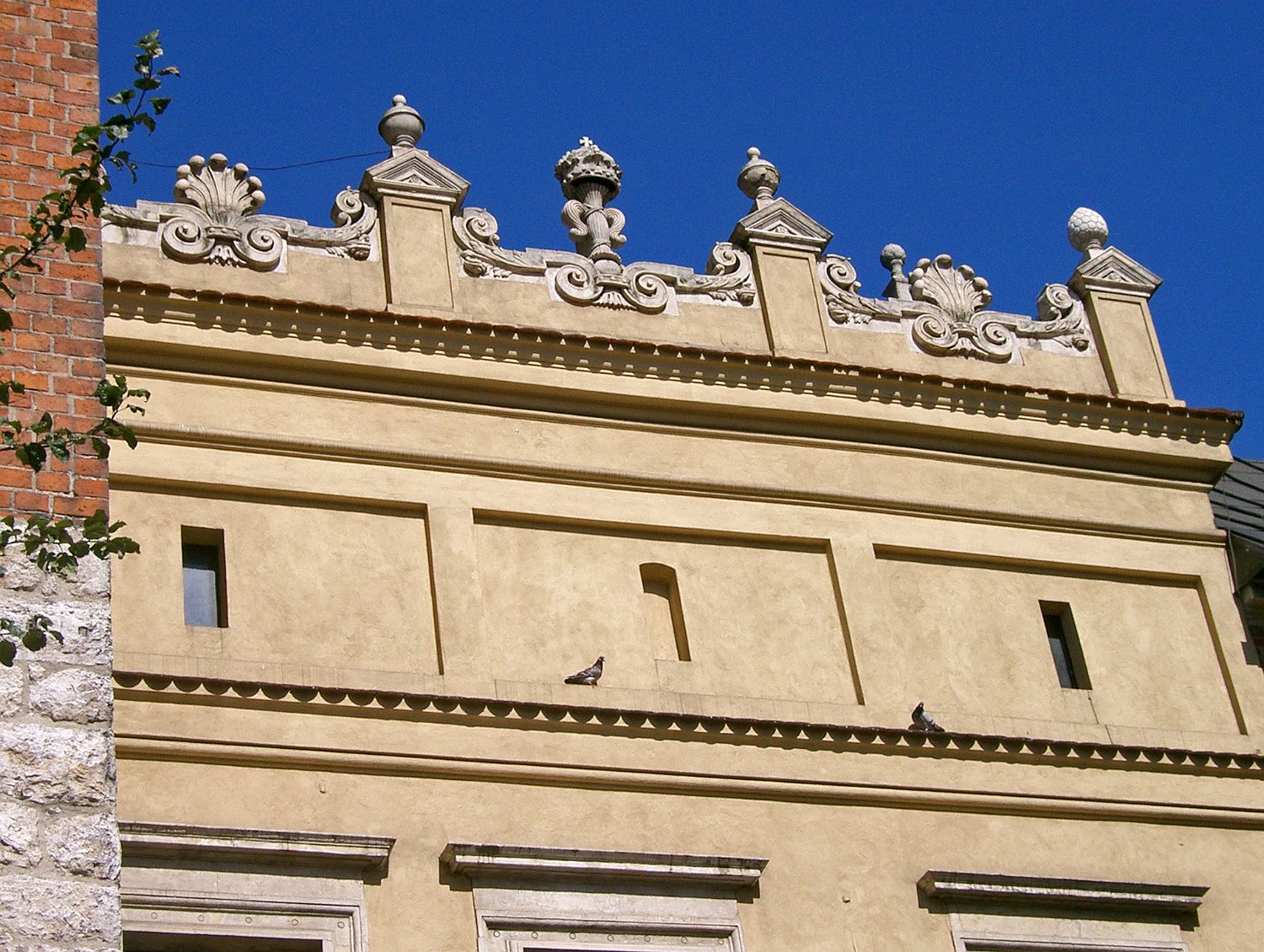 |
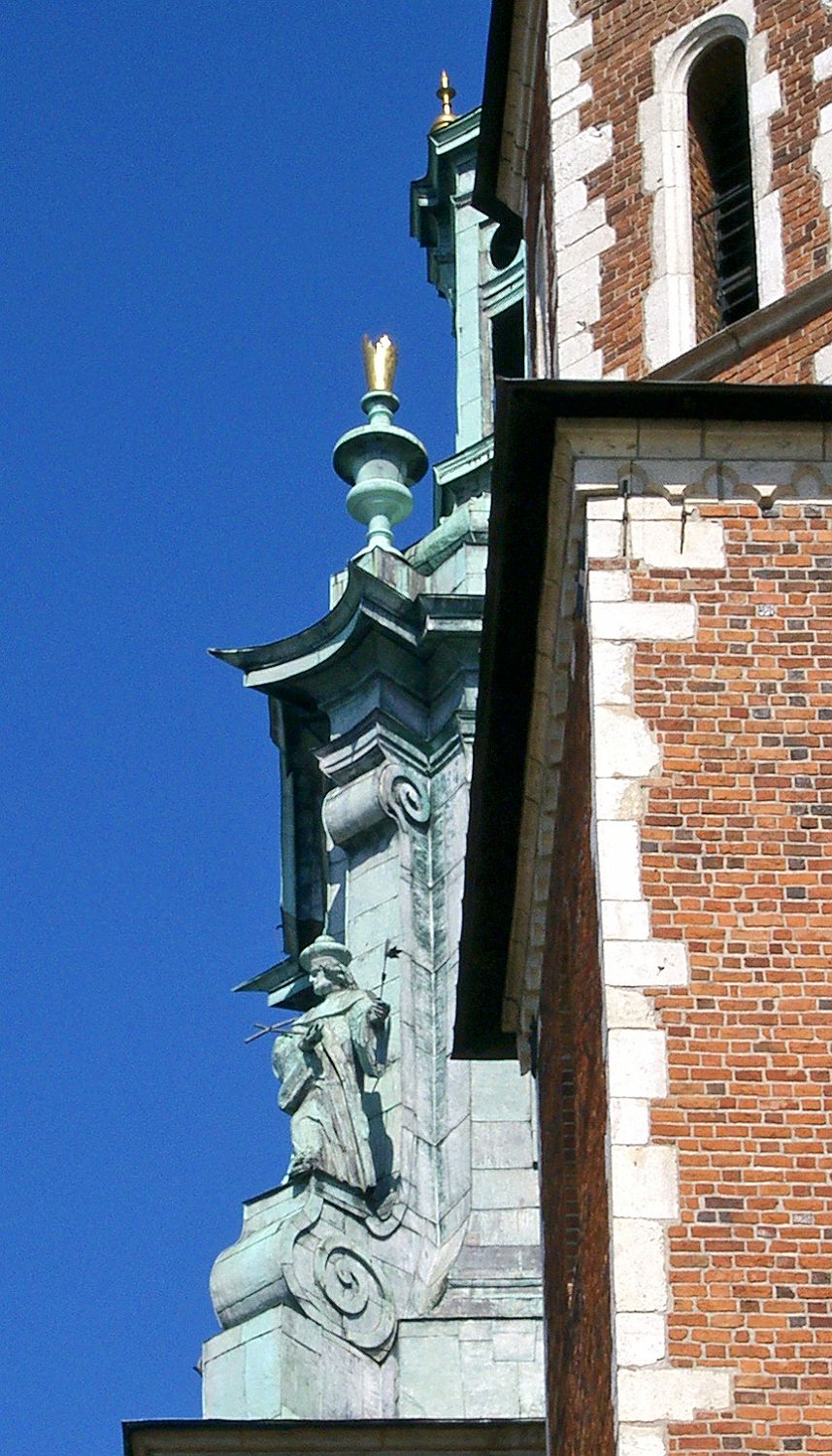
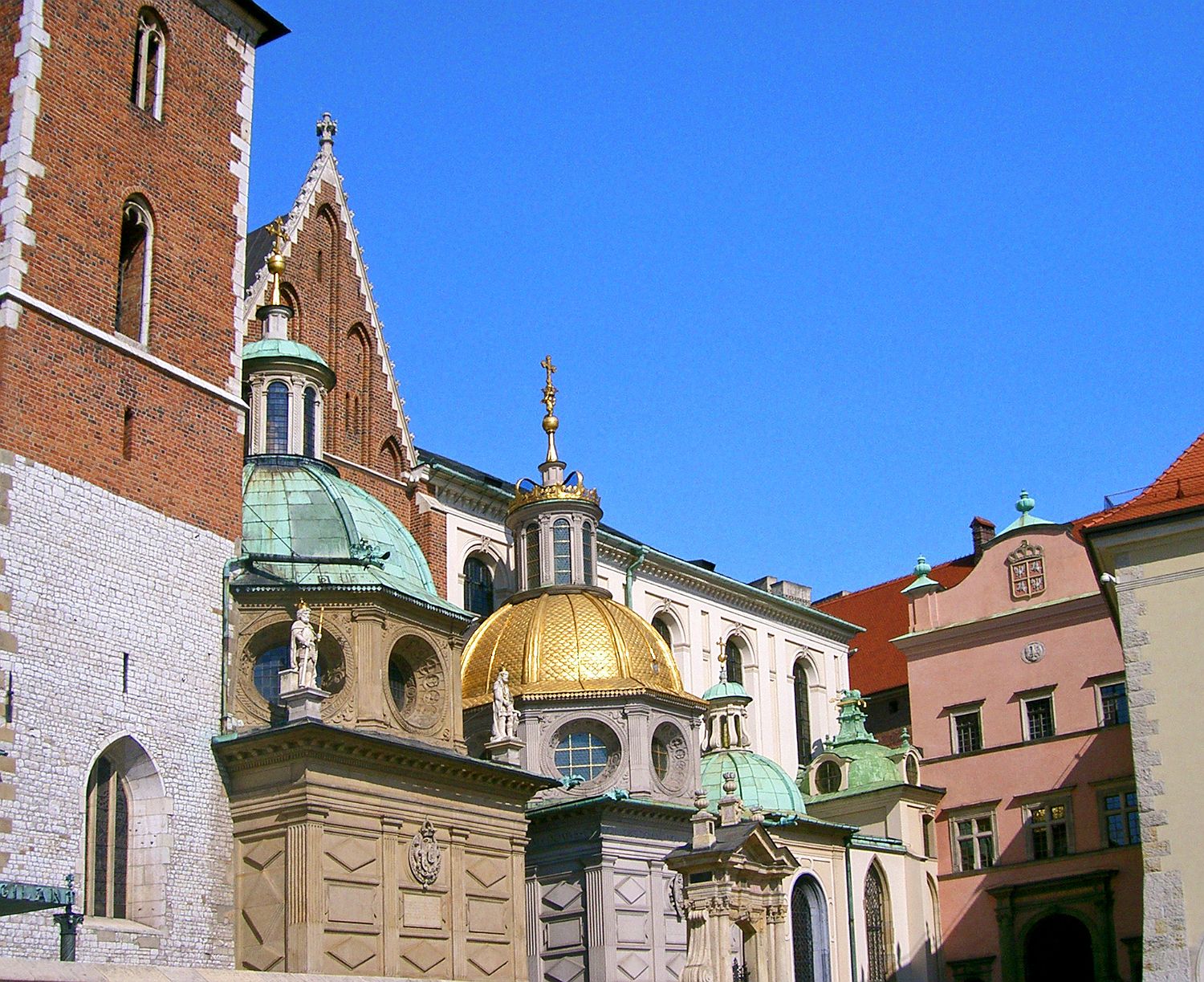 Outside of the cathedral. This gives you a clear view of the different architectural styles. Beautiful nonetheless. |
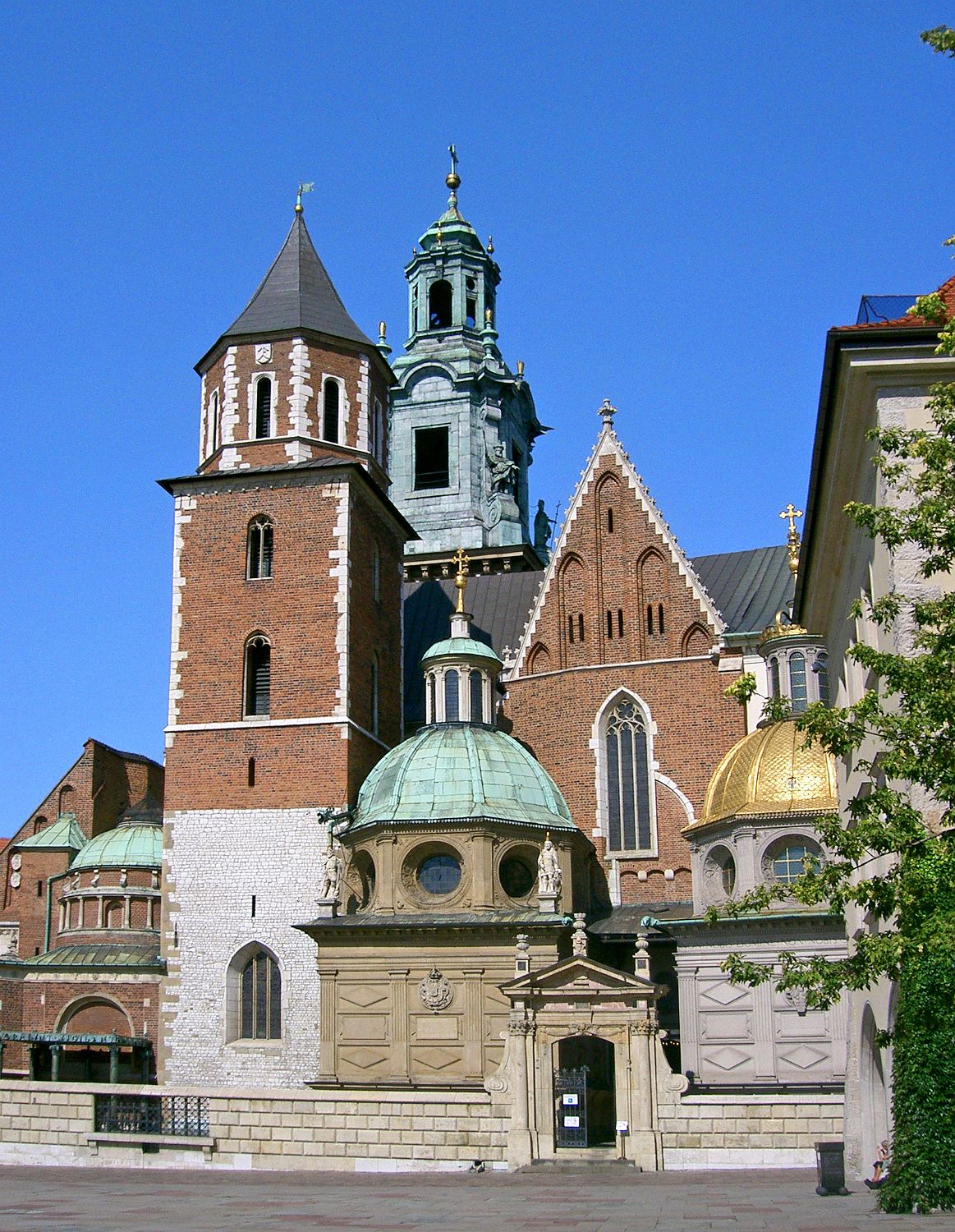 |
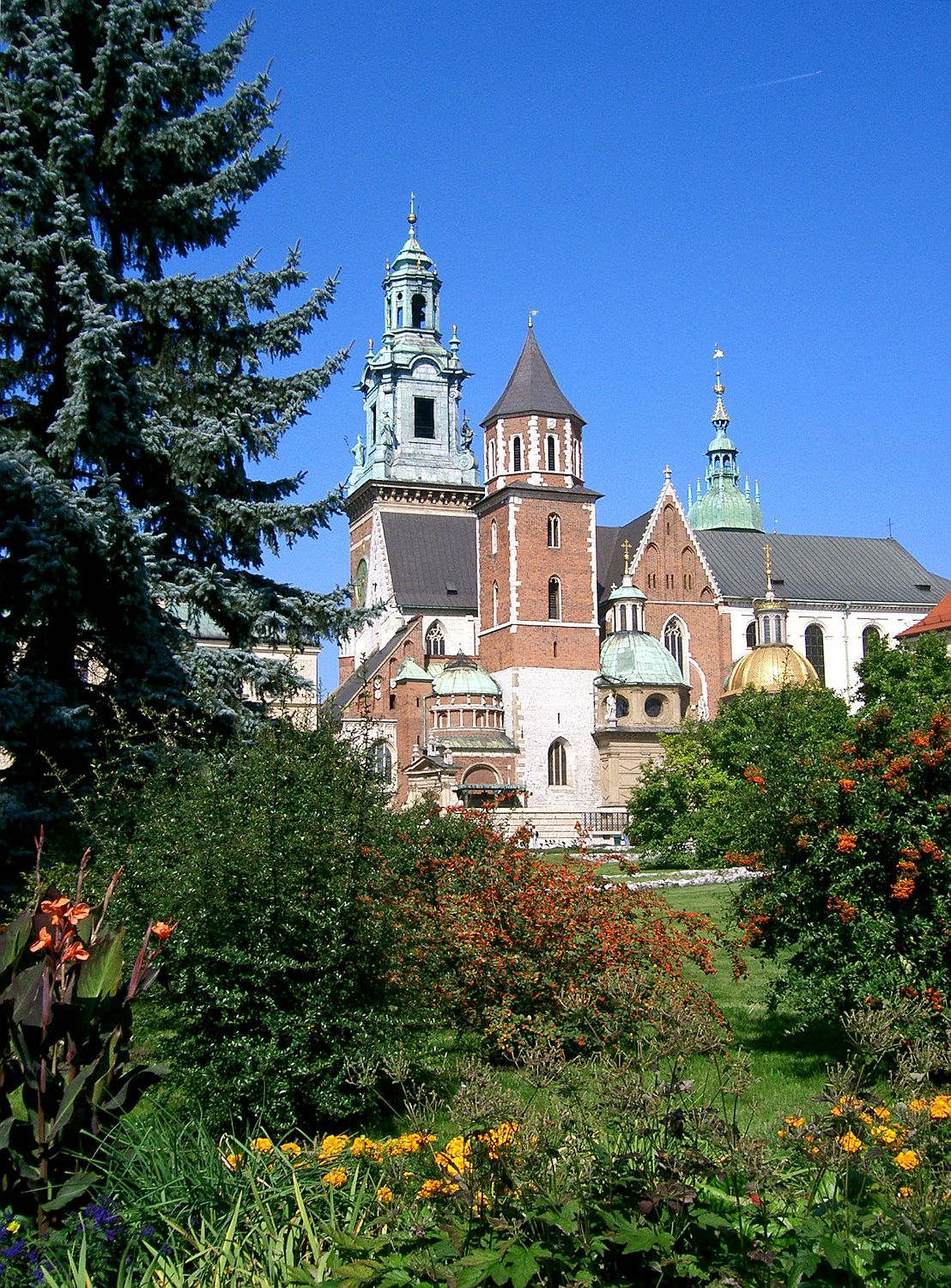 The cathedral was built in stages by different rulers and has a widely varied architecture. We climbed to the top of the bell tower. |
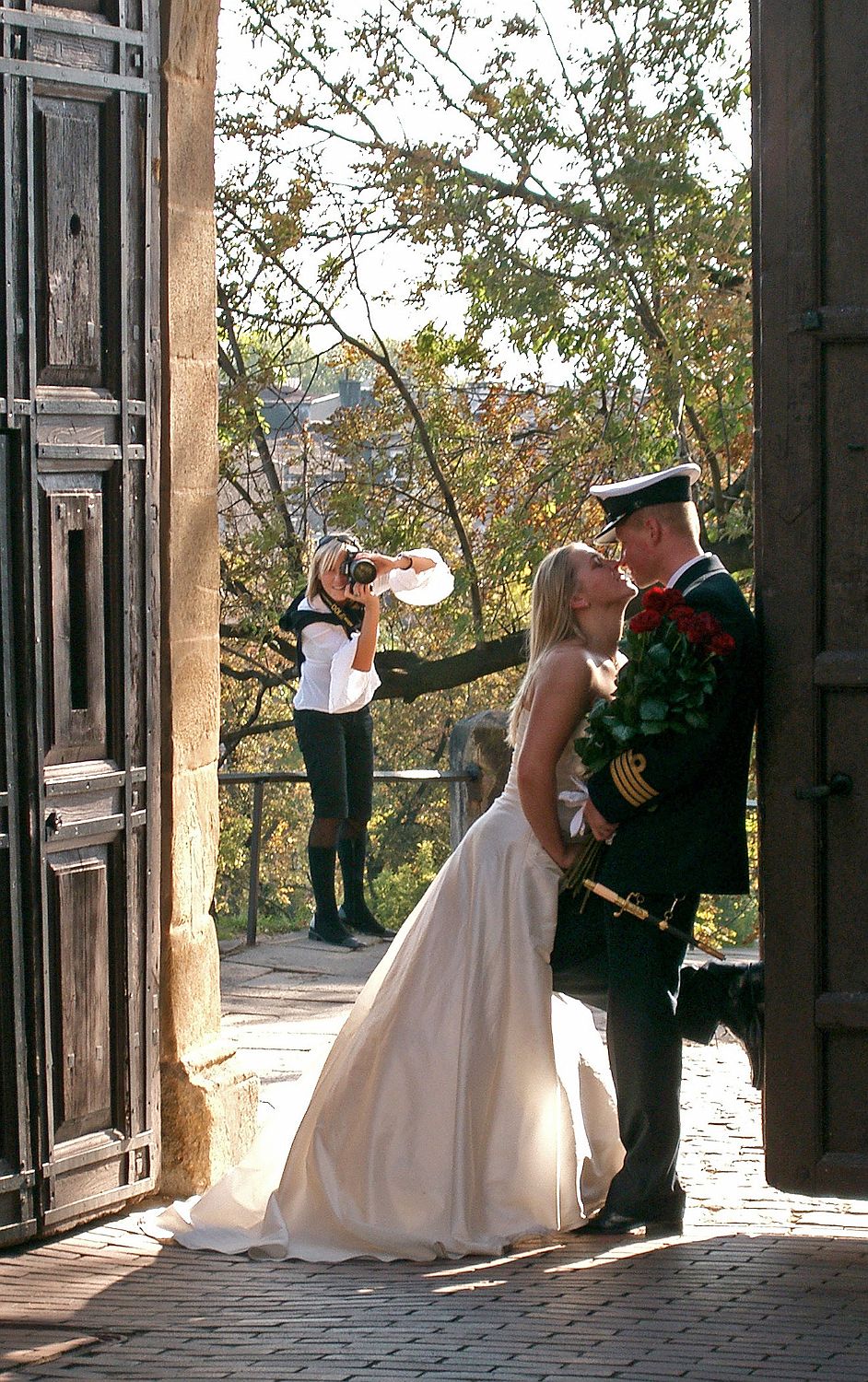 Great place for a wedding shoot. |
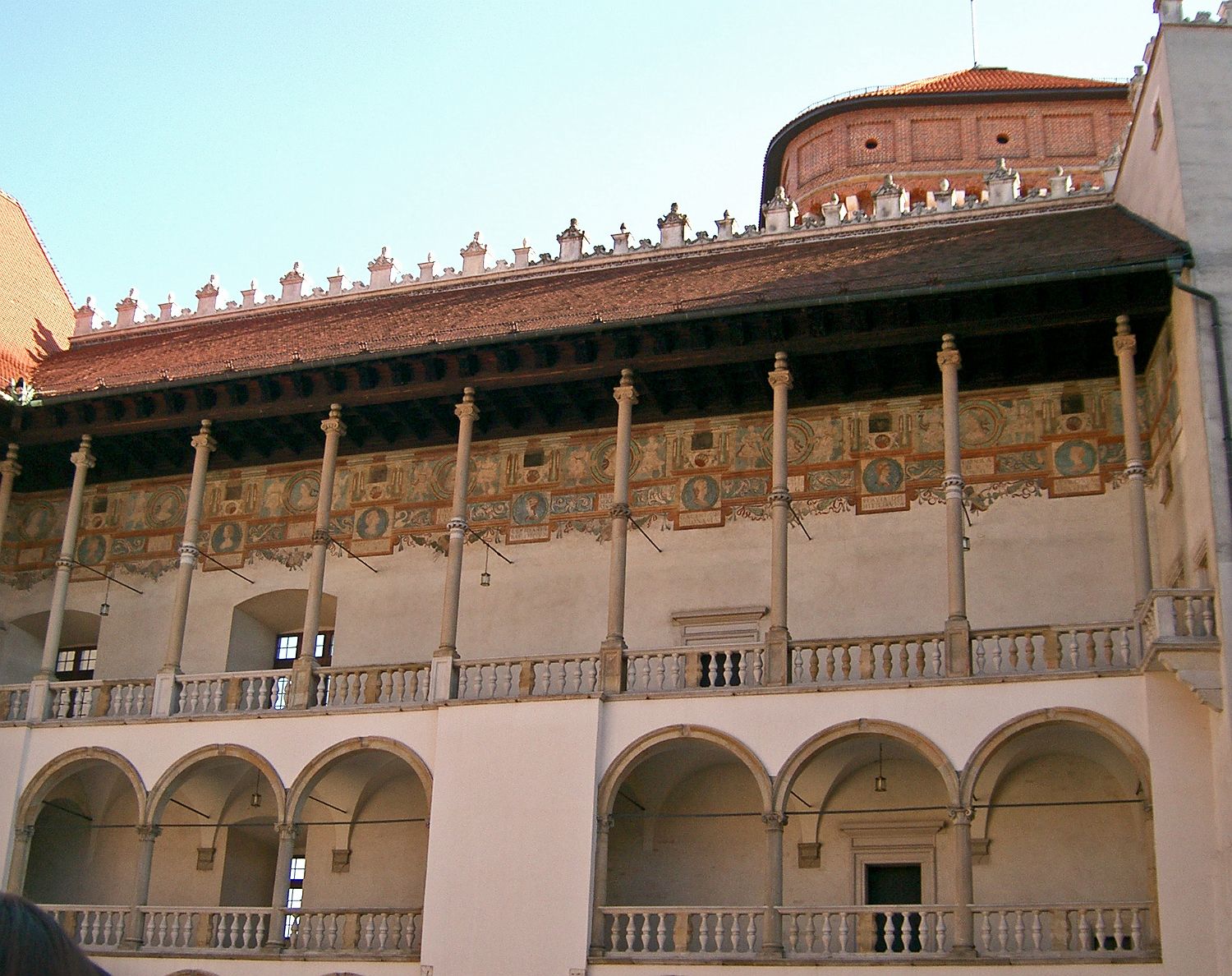 Courtyard of the royal residence. |
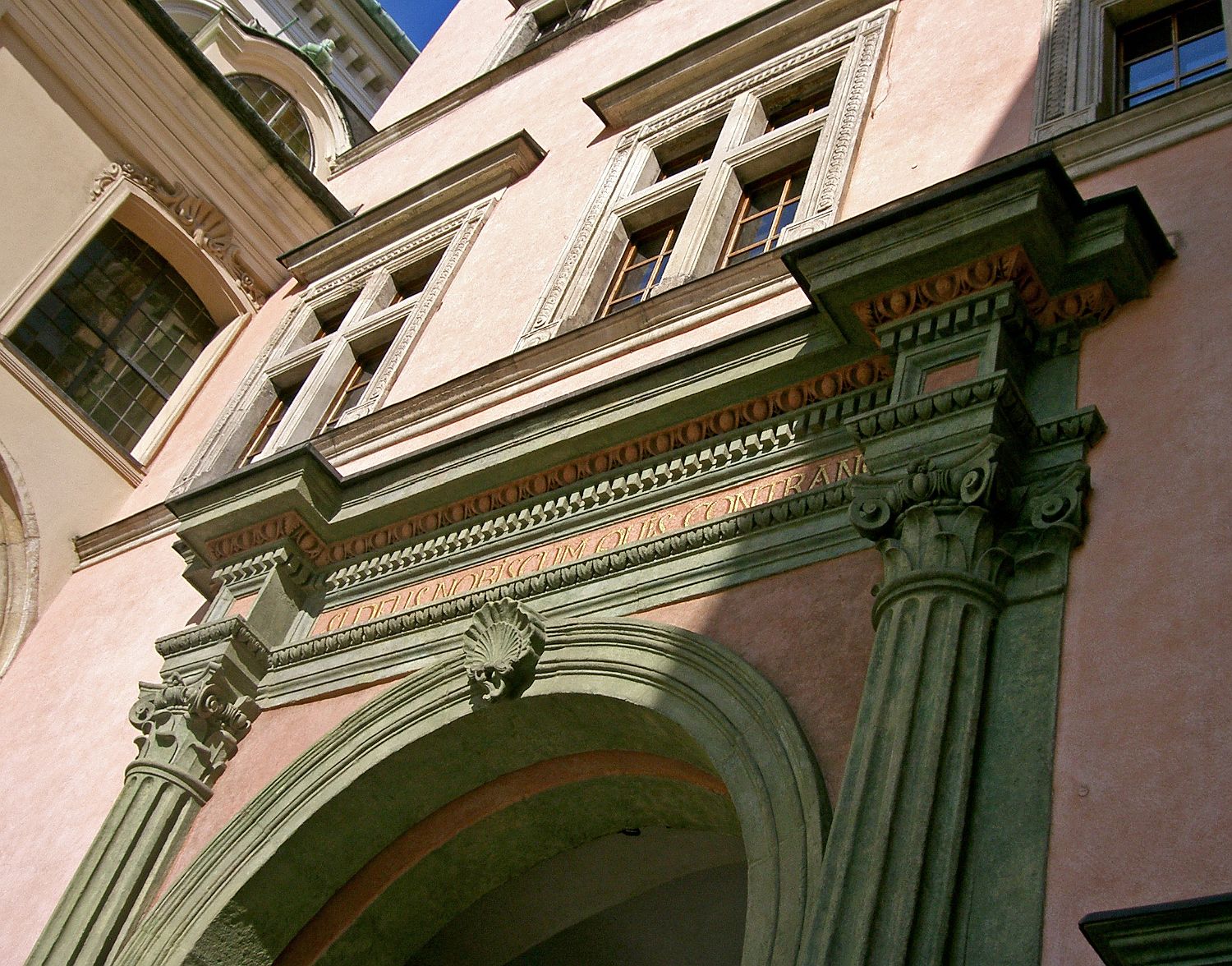 |
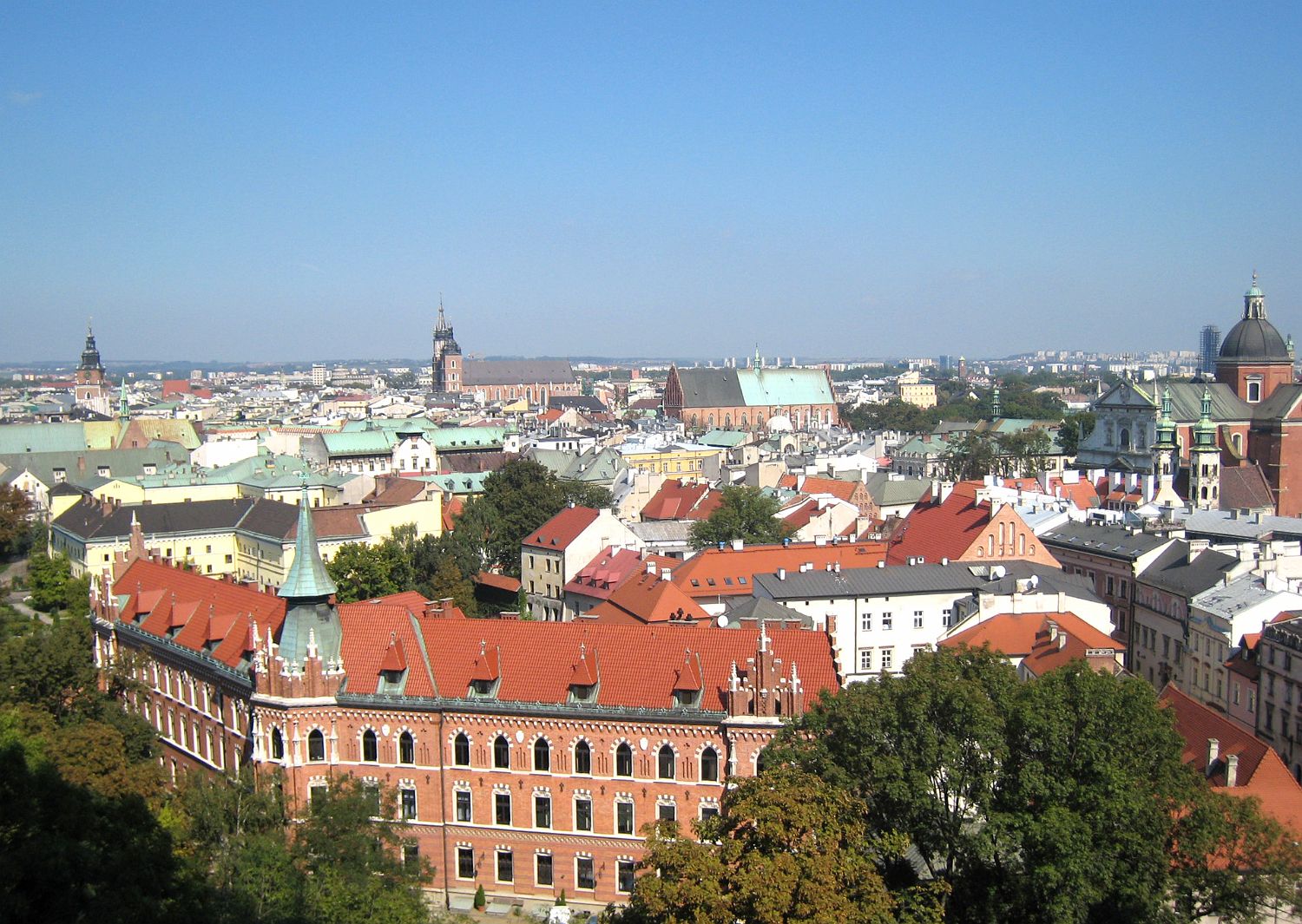 View of Krakow from the bell tower of the Wawel Cathedral. |
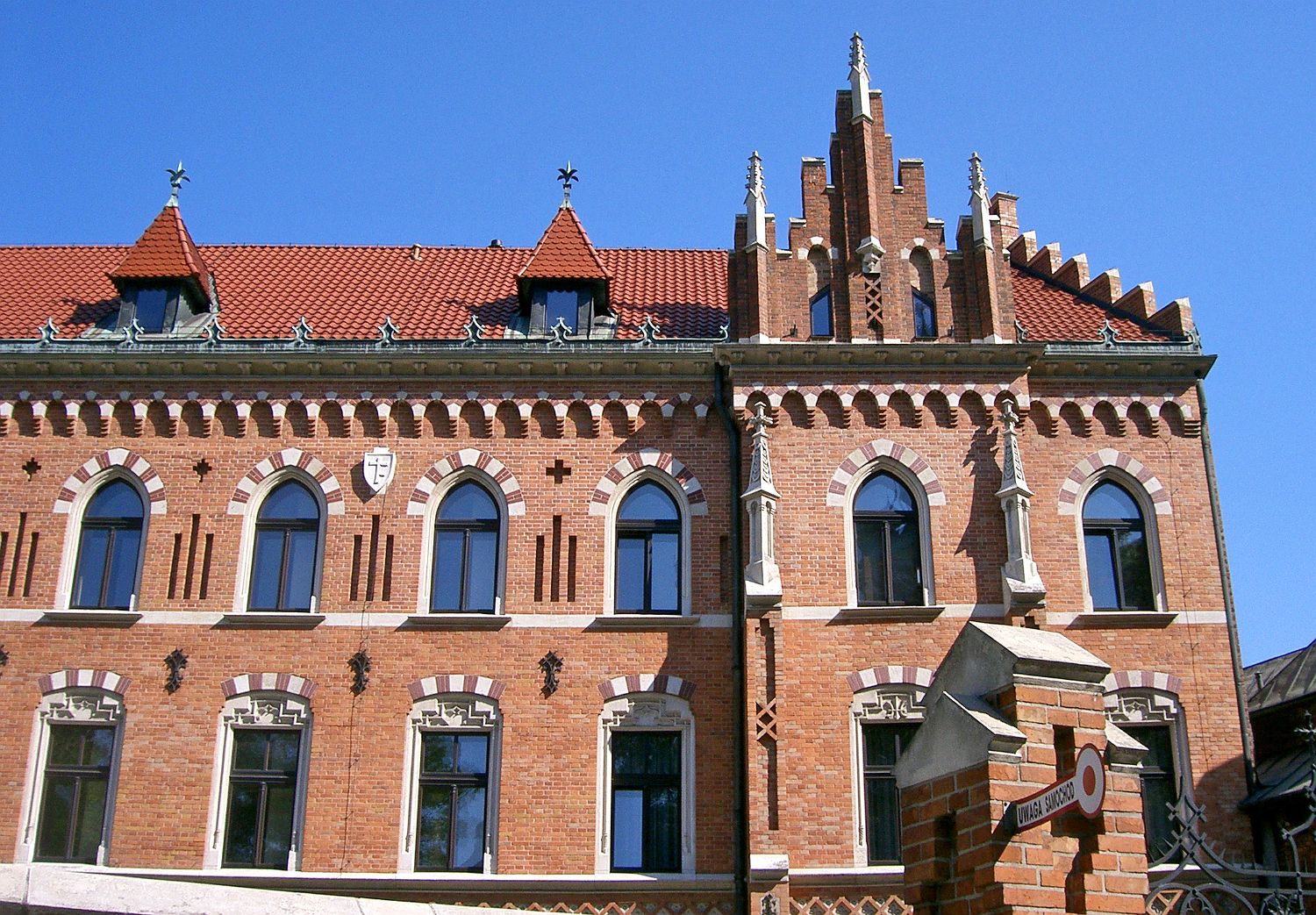
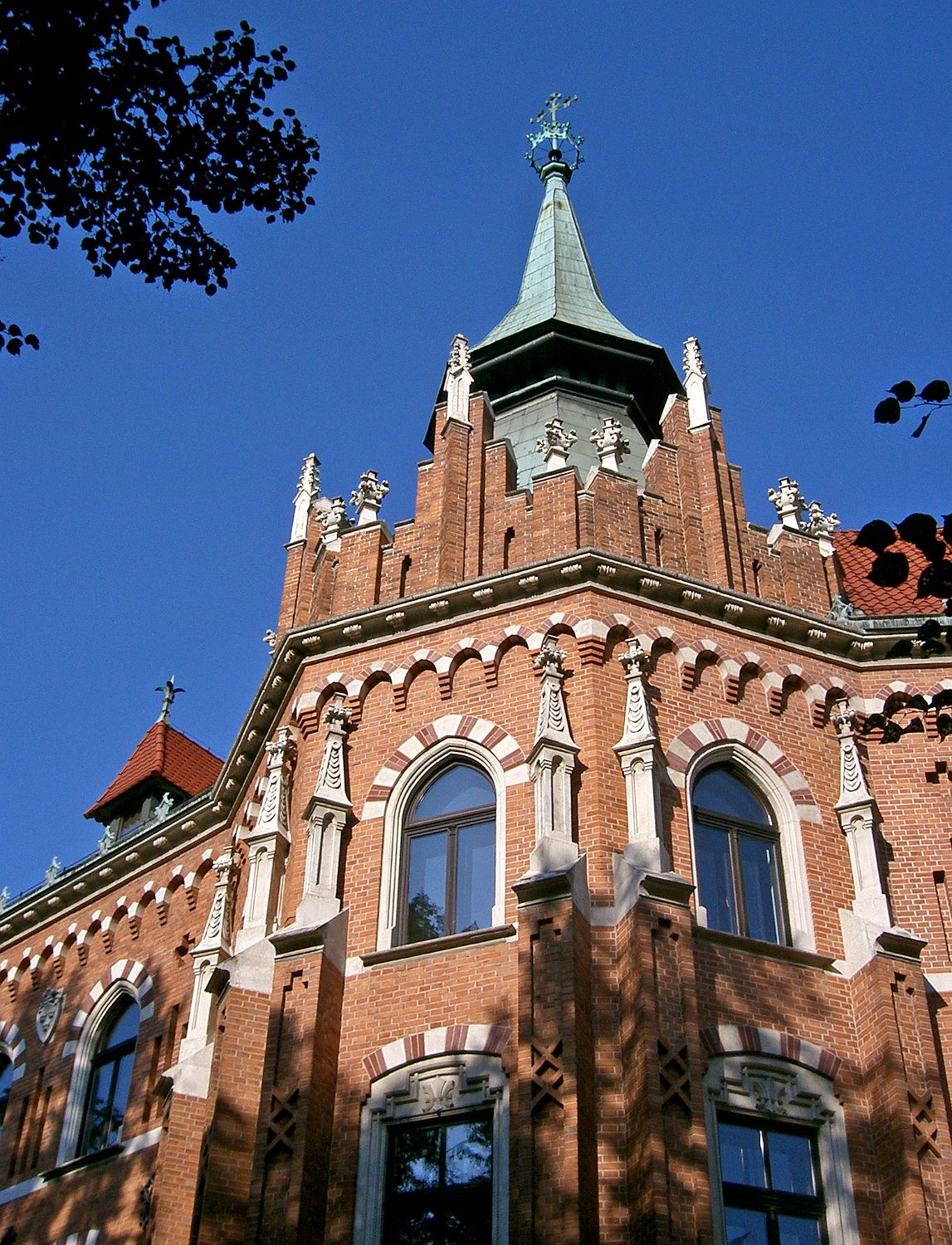
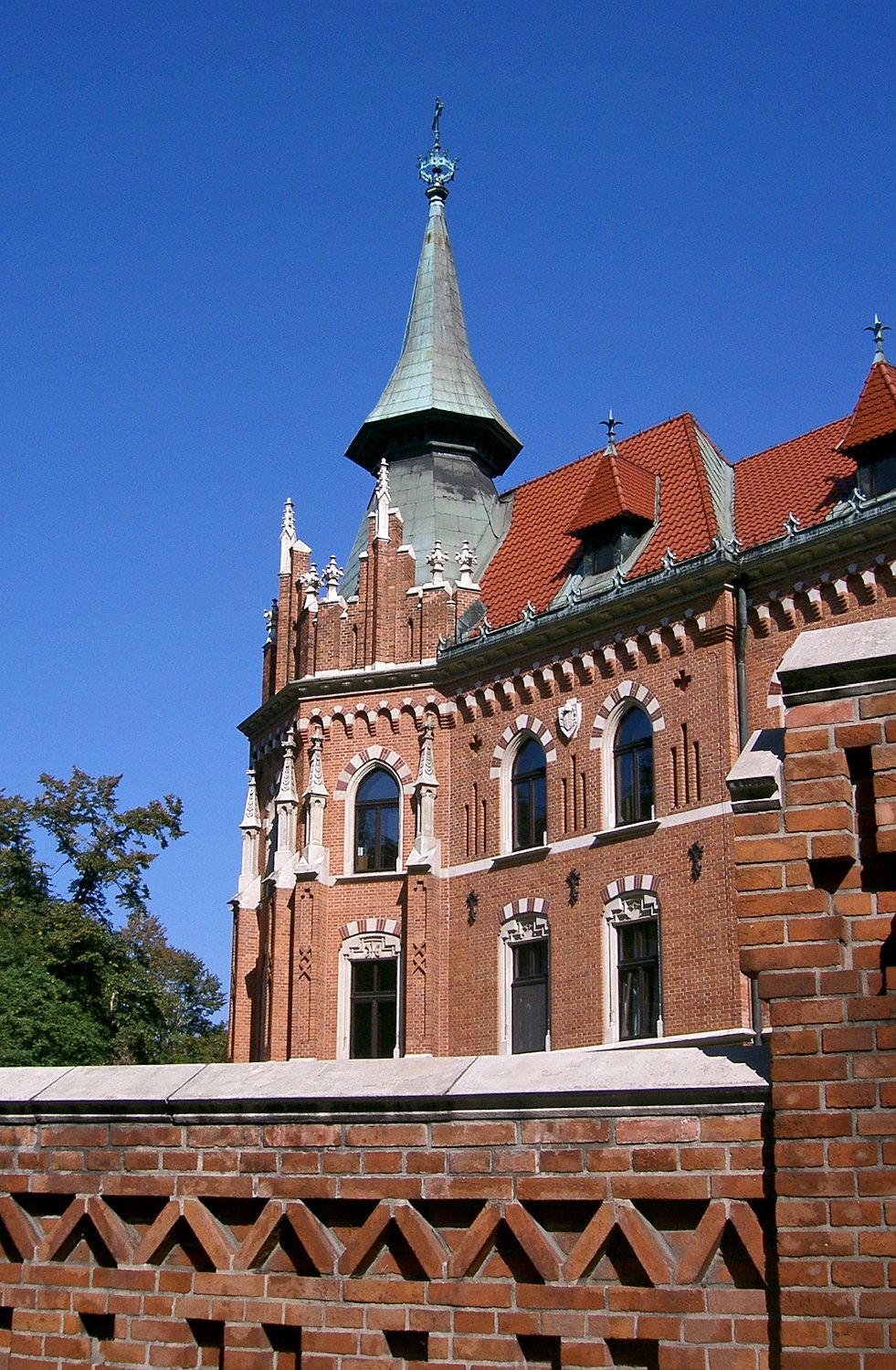 Seminary near Wawel Castle. The locals call this the "priest factory." |
 |
 |
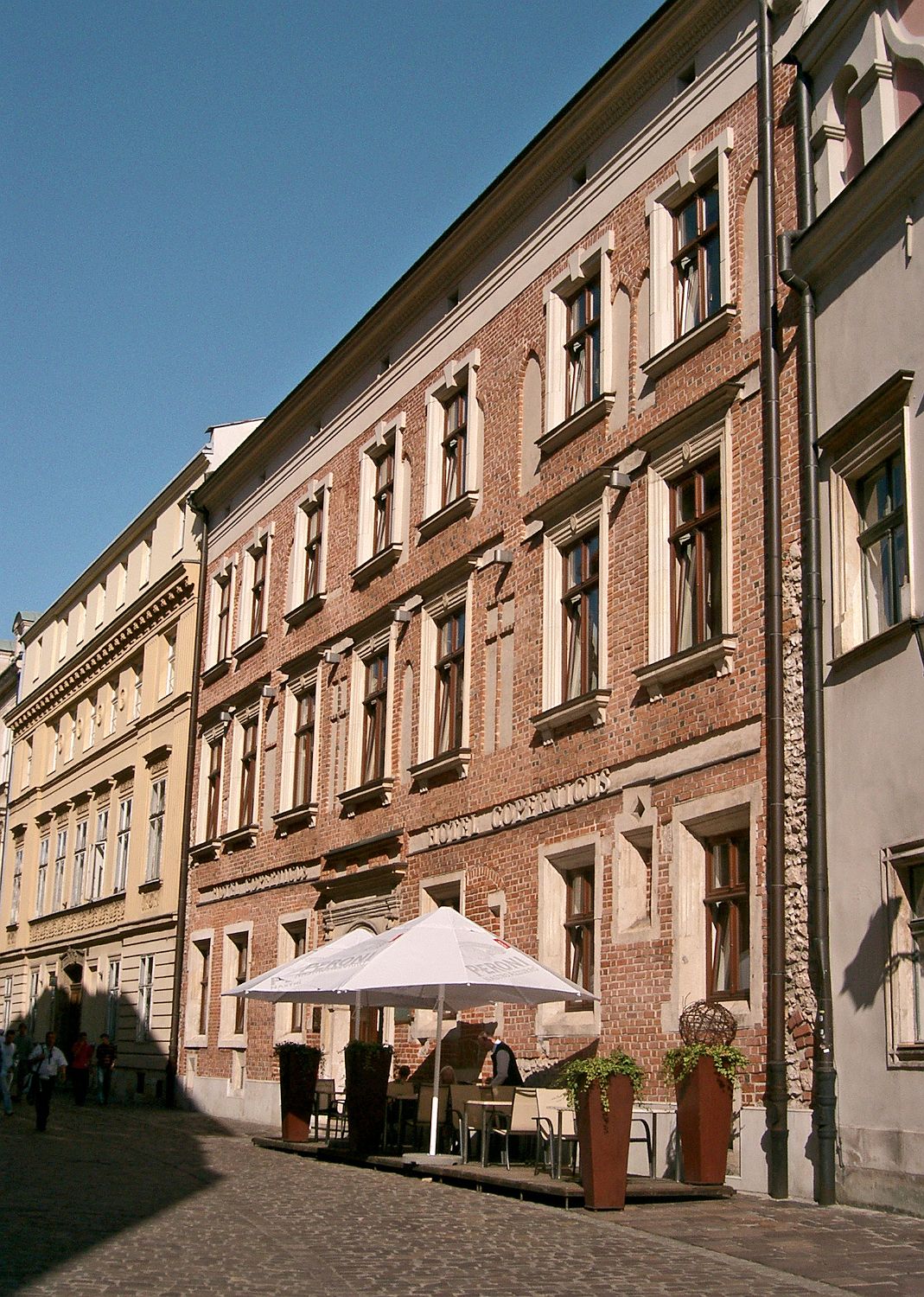 George Bush and Tony Blair met in this hotel last year. |
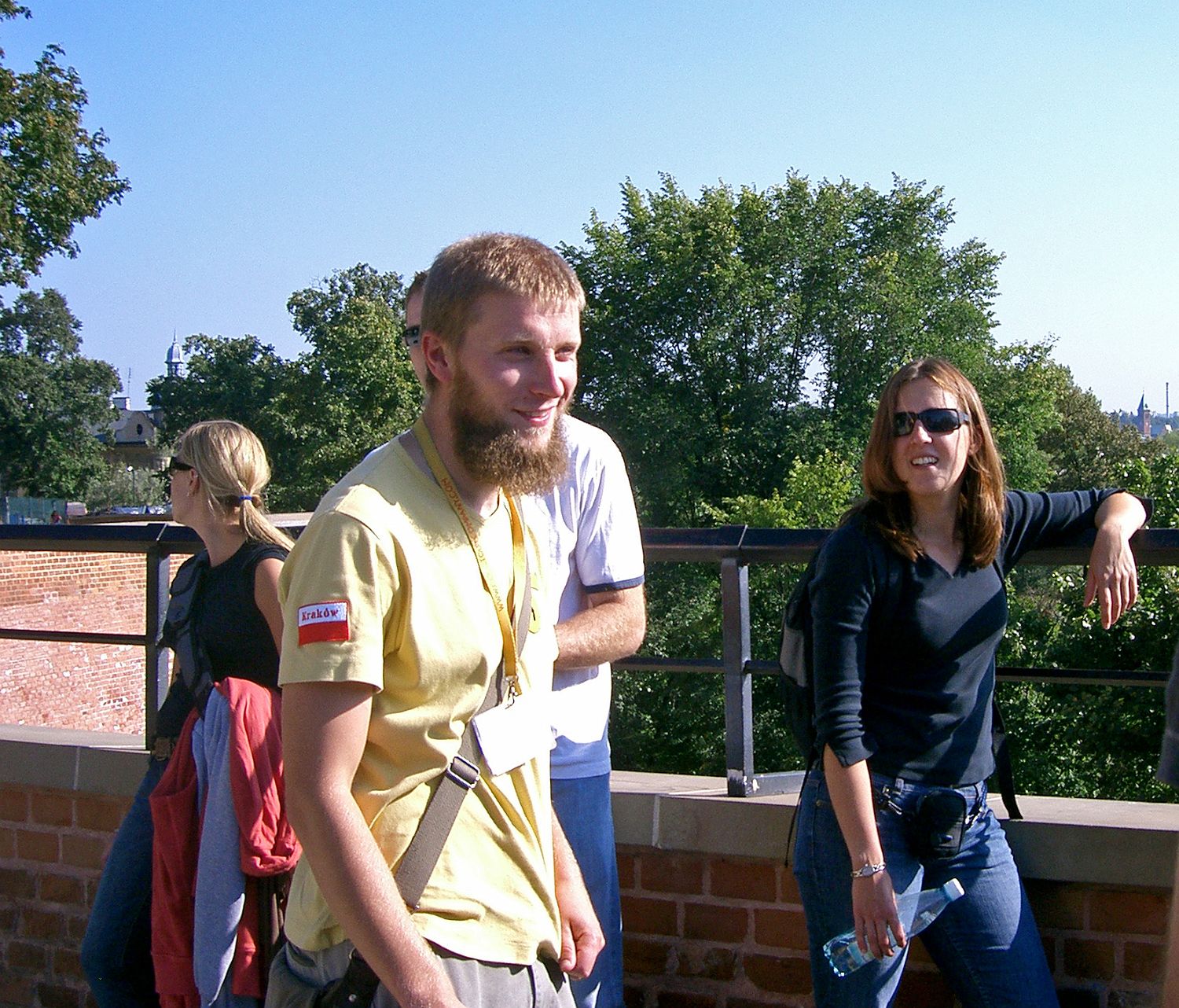 Great walking tour guide from Latvia. |
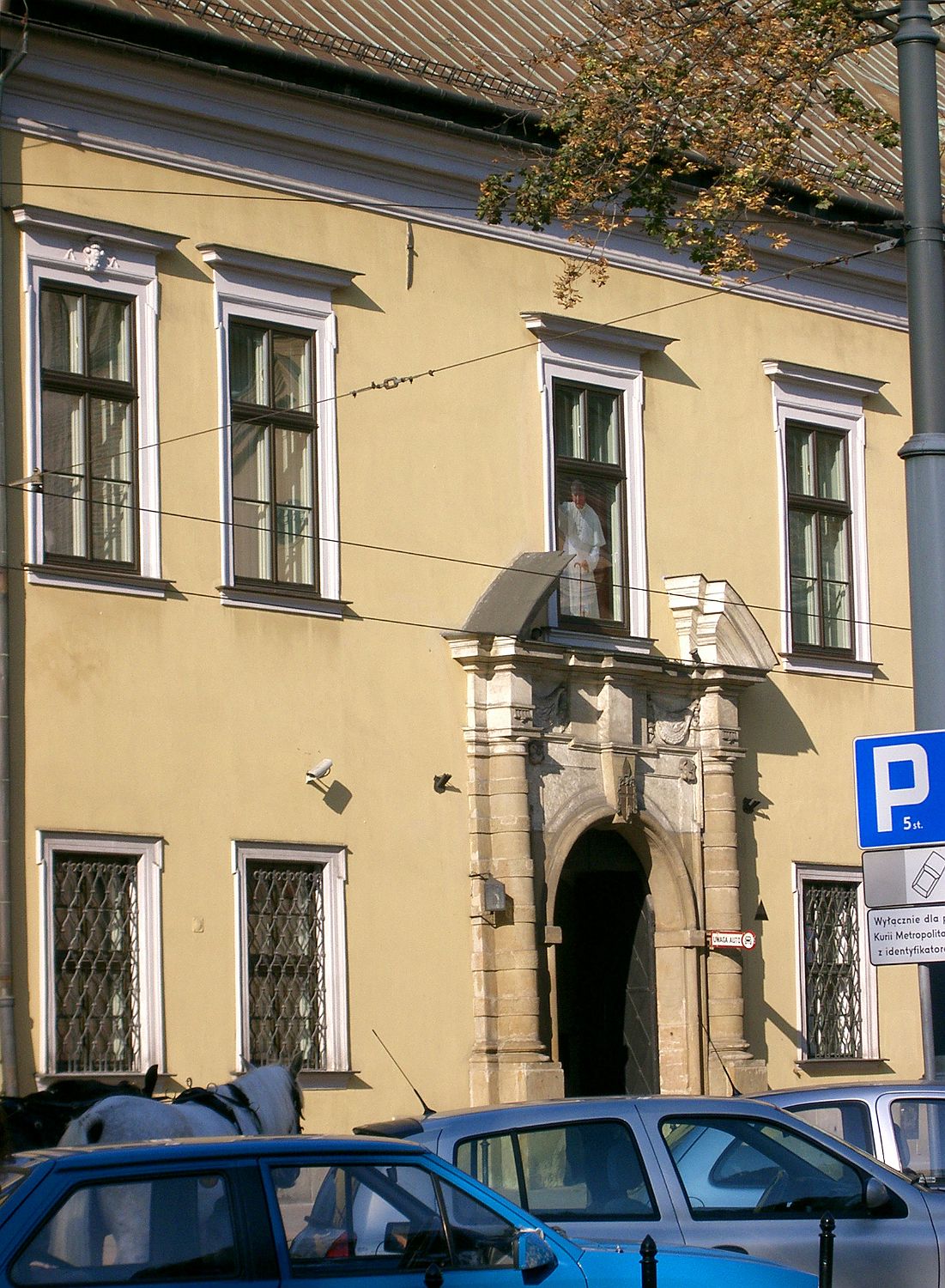 One of the places Pope John Paul II lived while he was a bishop. See his photo in window above doorway. |
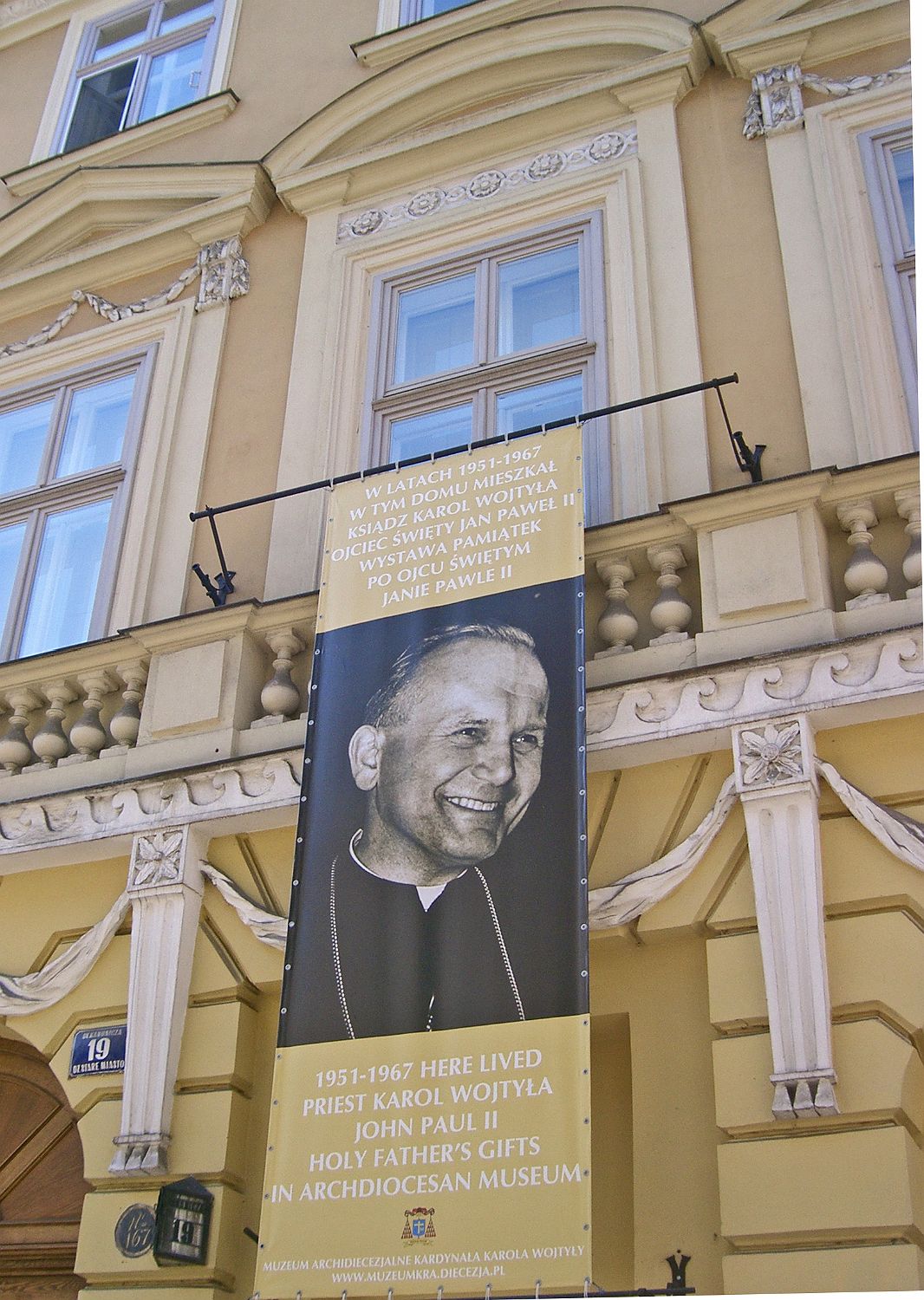 Within an hour of the announcement of the pope's death, the street in front of this building where he lived as cardinal was covered with candles. Even rival sports fans pledged peace, which lasted one month. |
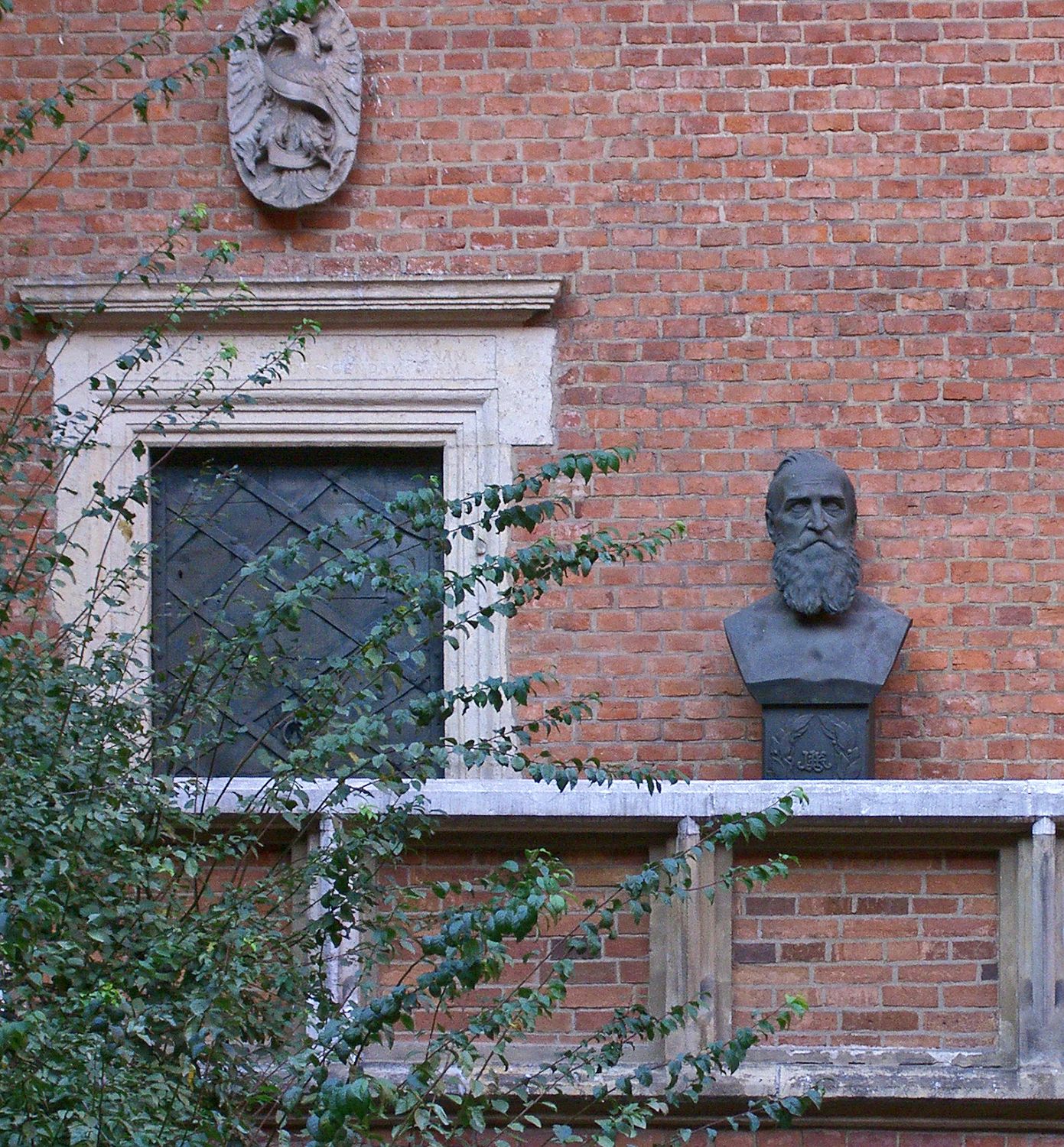 The instruments that Copernica used to prove that the sun was the center of the solar system were in Collegium Maius, the oldest university of Poland. We didn't see the instruments but saw his bust. Maybe next time. |
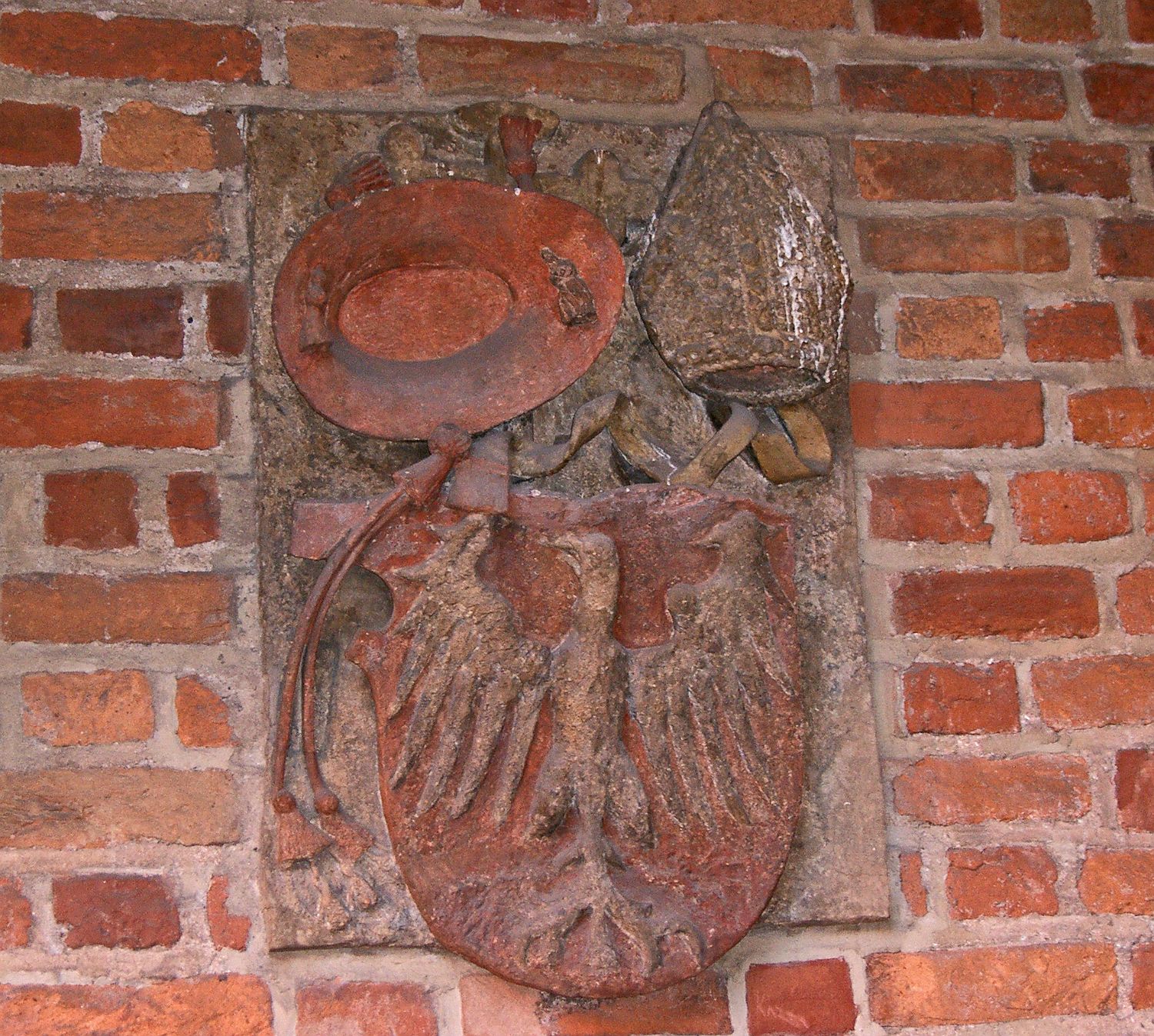
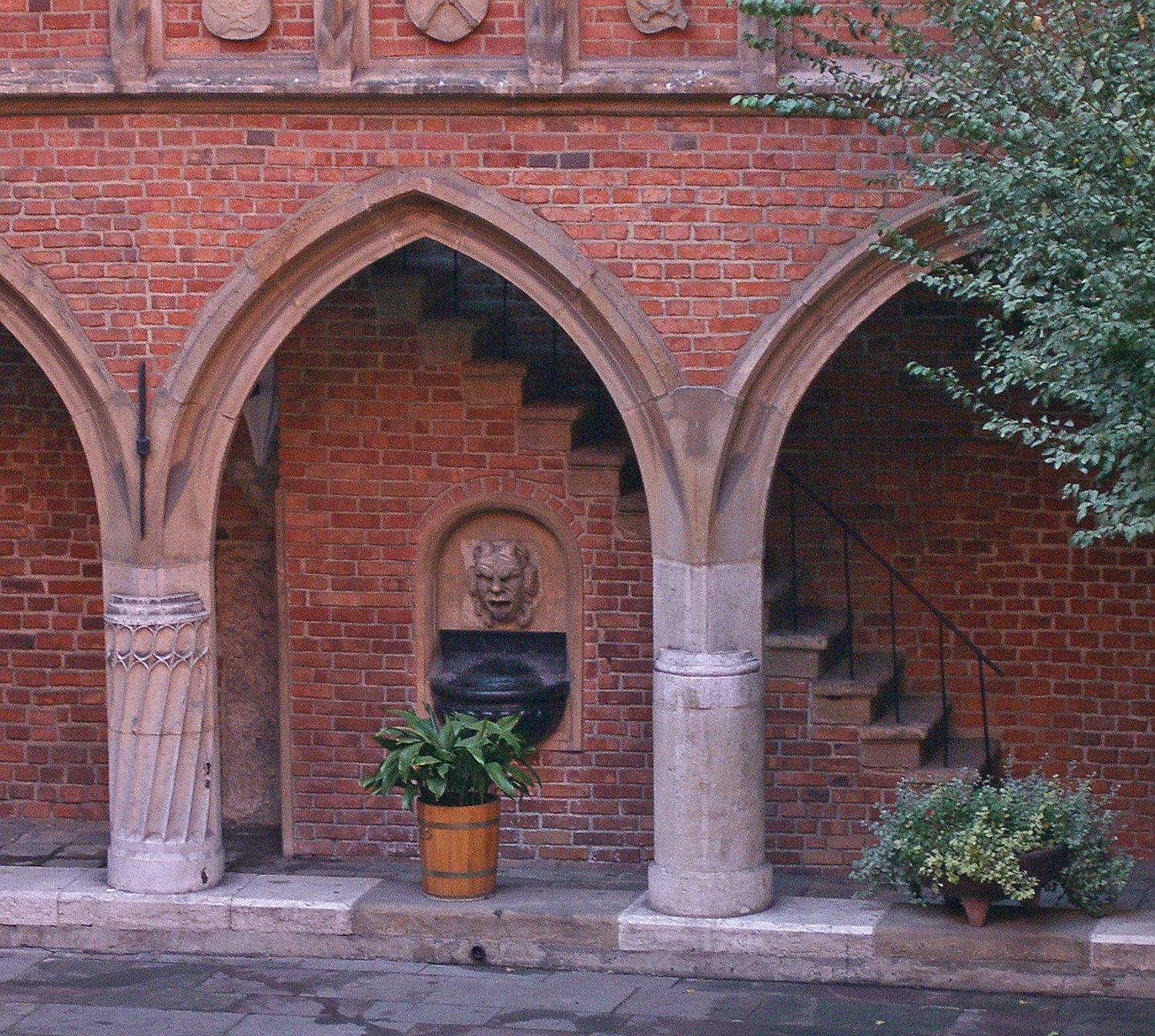 More courtyard views. |
 |
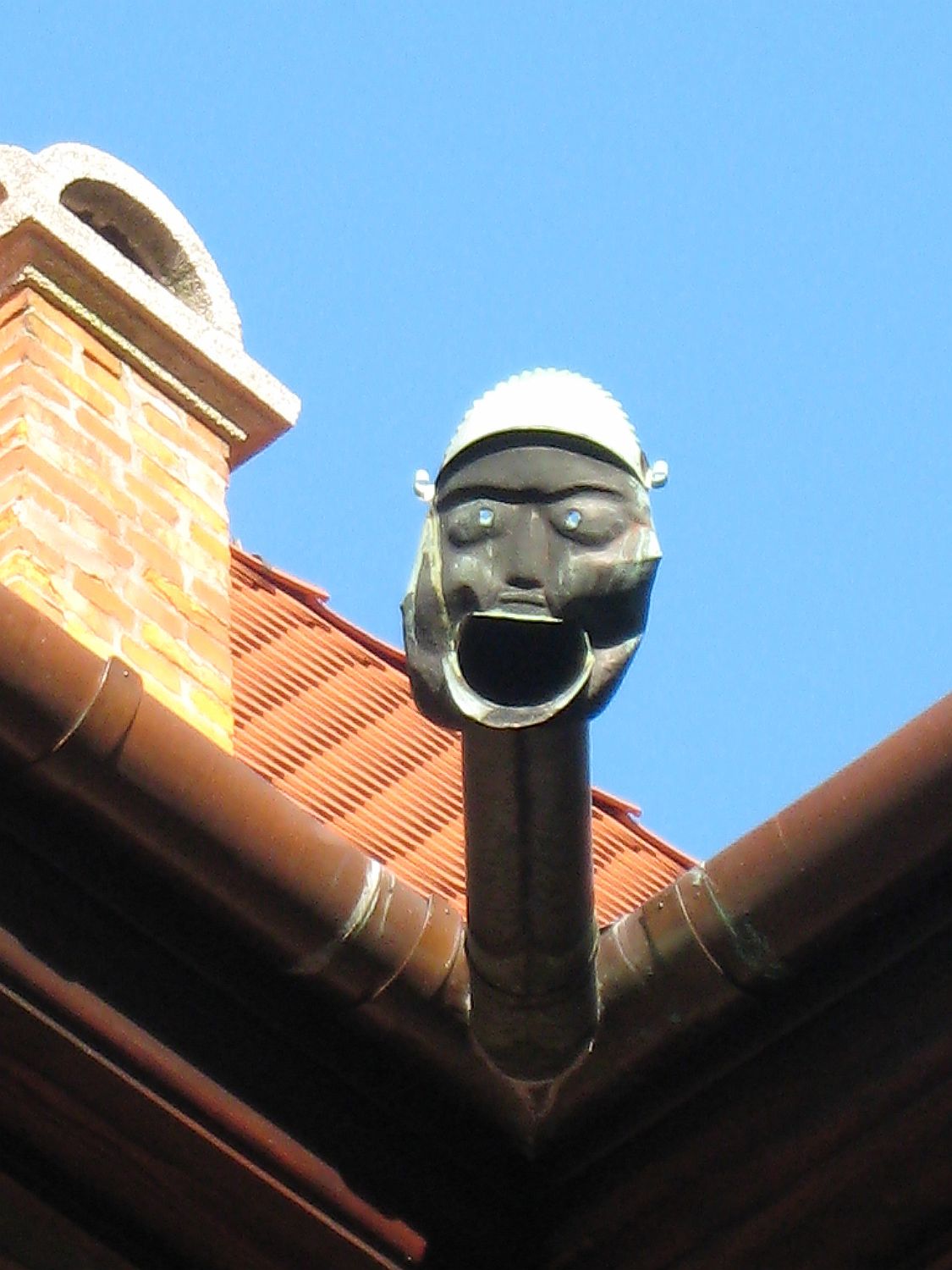 Even the gutters have class! |
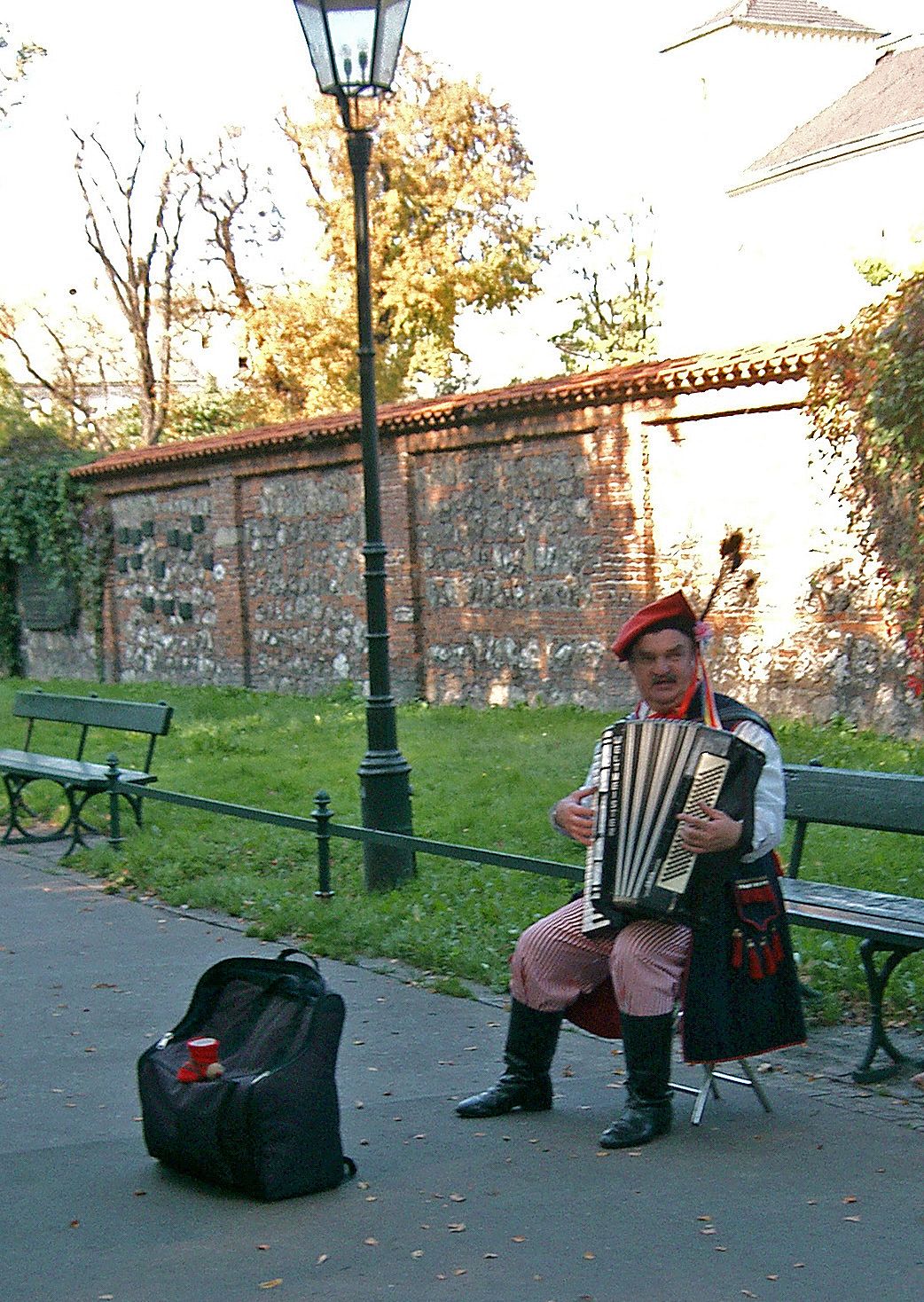
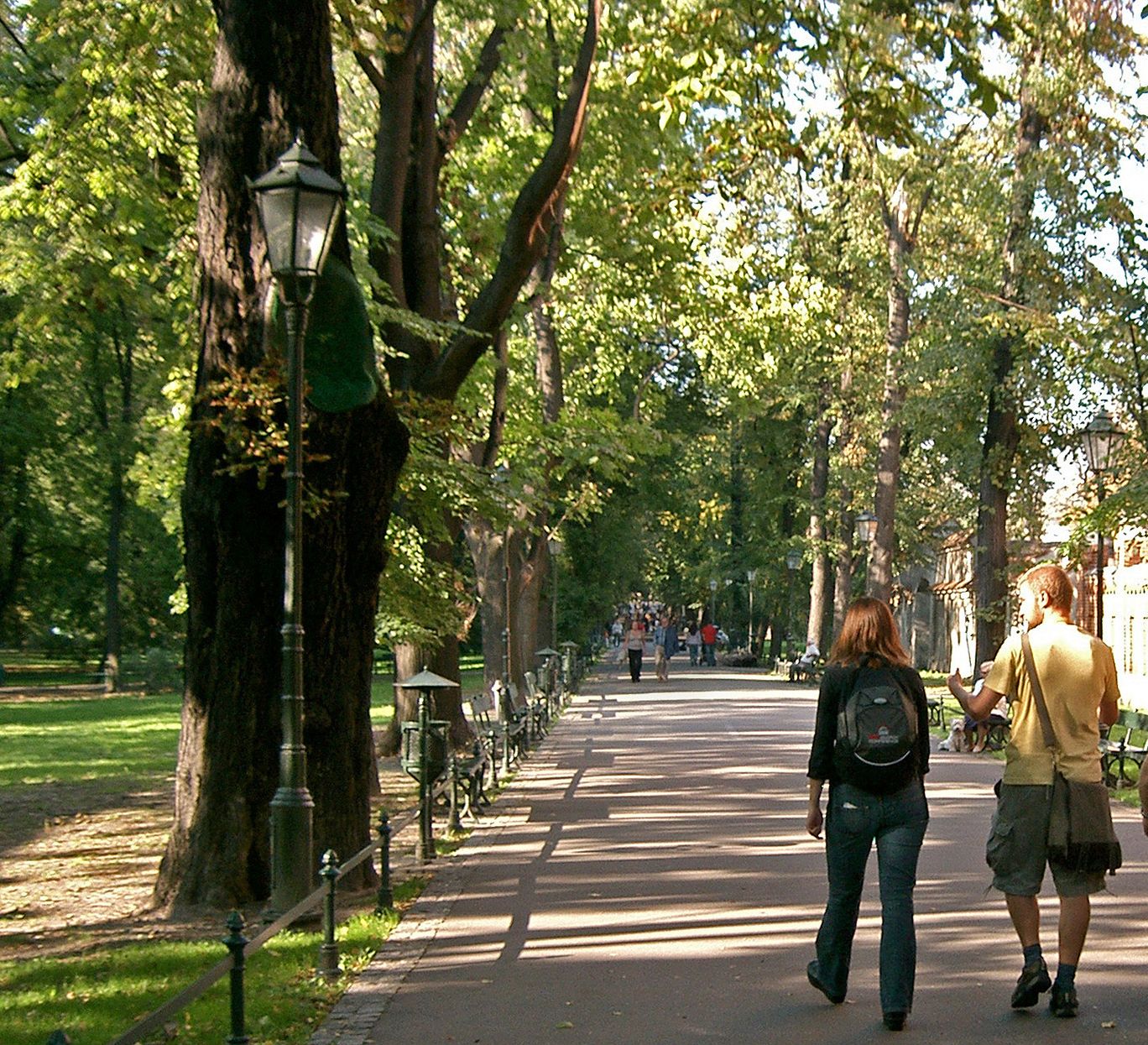 The medival wall surrounding Krakow was replaced by this tree-lined park (Planty Garden Ring). Samantha and our tour guide have a lively conversation. |
 |
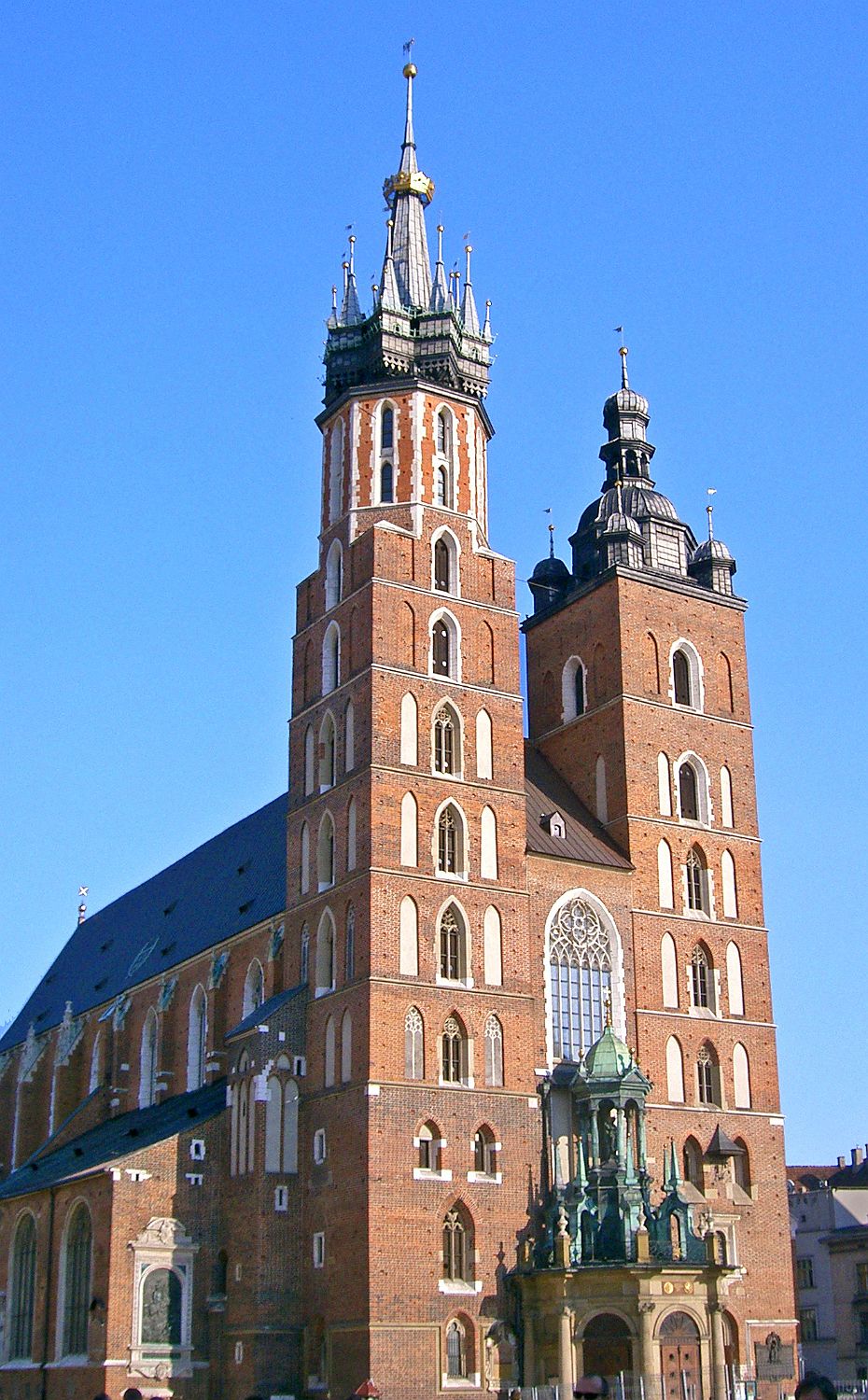 St. Mary's Basilica was built in the 14th century. Every hour a trumpet is played from the top of the taller of the two towers. The tune stops mid-stream to commemorate a trumpeter who was shot in the throat with an arrow while sounding the alarm before an attack on the city. Those familar with the Newbery Awards for children's book will remember the "Trumpeter of Krakow," the winner for 1929. |
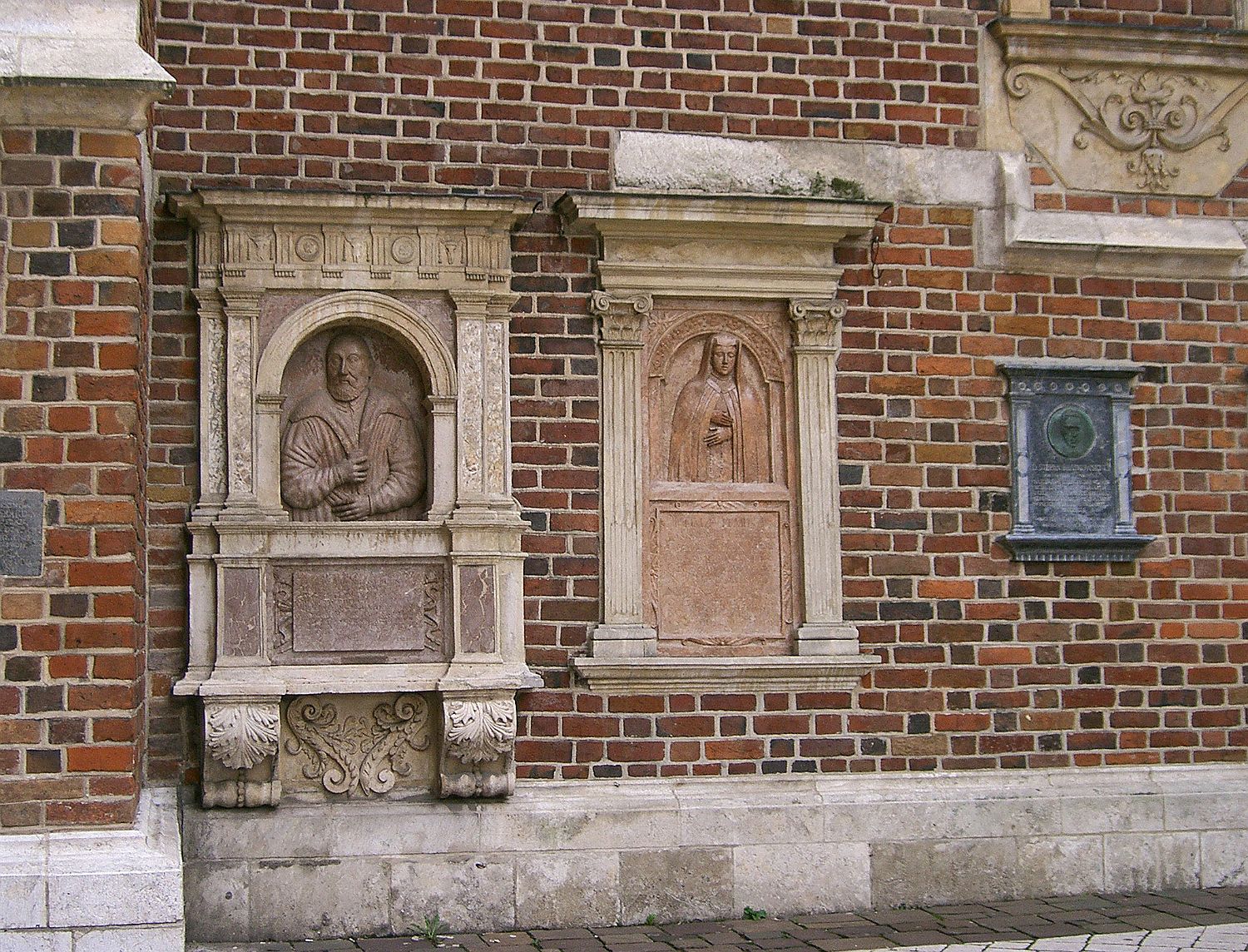 Side features of Basilica. Inside is an elaborate carved wooden altar and panels. These are slowly opened each morning by a nun at 11:50 using a long pole. This church served as architecural model for two Chicago churches: St. Michael's (82nd and South Shore Dr) and St. John Cantius ( 825 N Carpenter St, Milwaukee and Chicago Aves) which has copy of the wooden panels. |
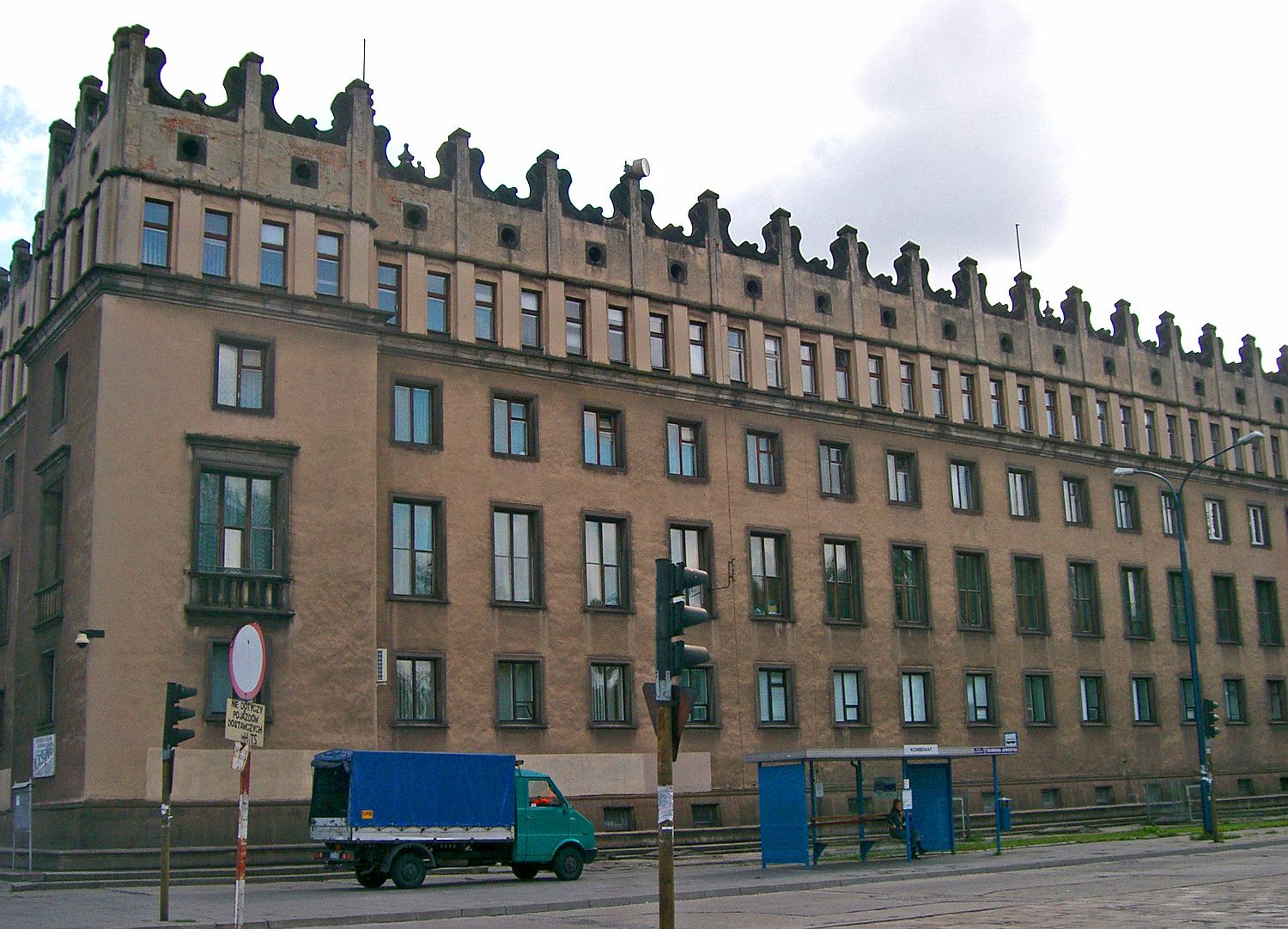 We joined a walking tour of the communist develpment Nowa Huta (new steel foundry). Many people from southeast Poland, maybe even some of our relatives, made up this community of 100,000. |
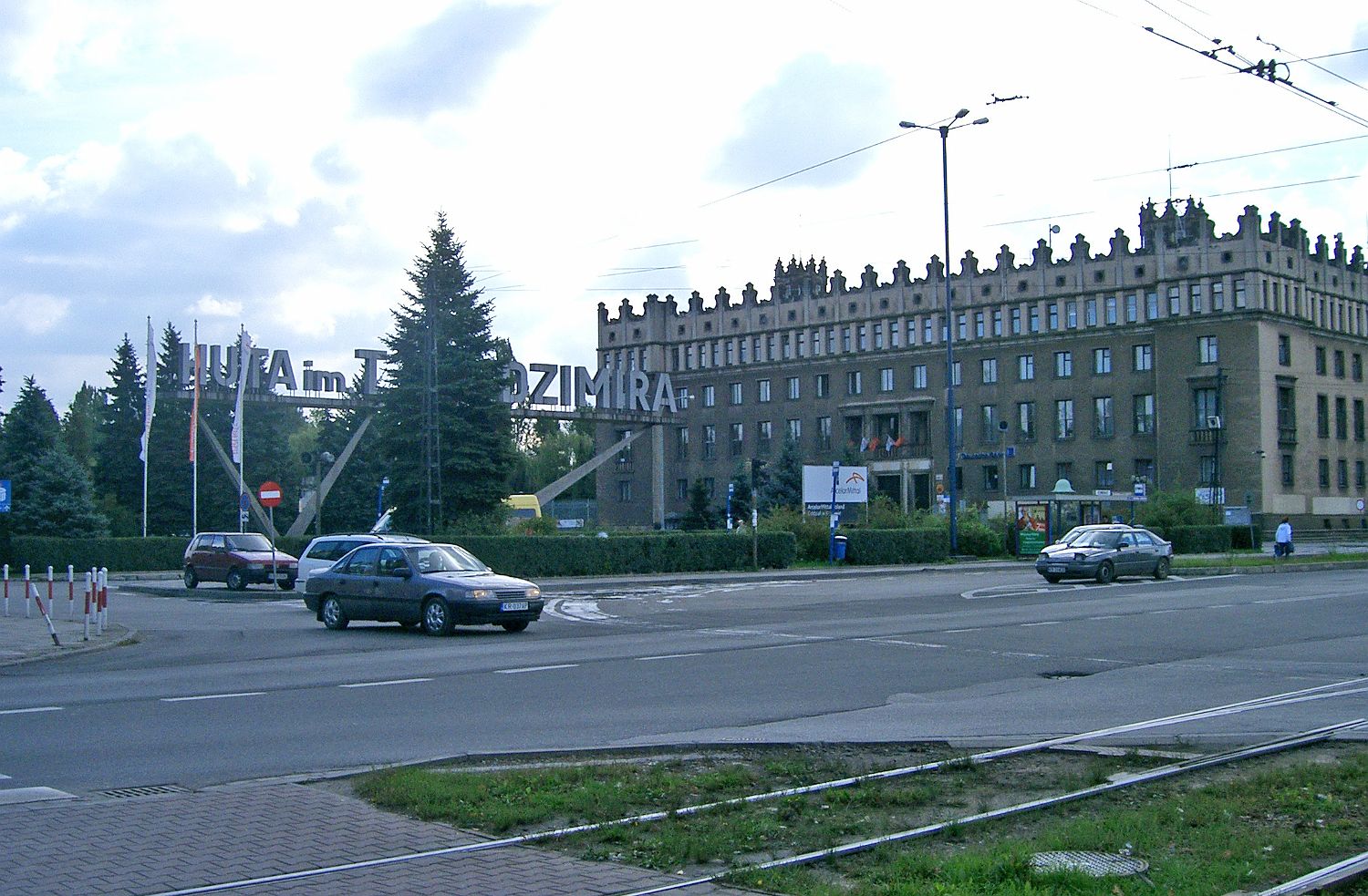 The factory was intended to undercut the influence of the Catholic Church and local universities in Krakow, the religious and intellectual center of Poland. No churches were allowed to be built in the community for over 20 years. |
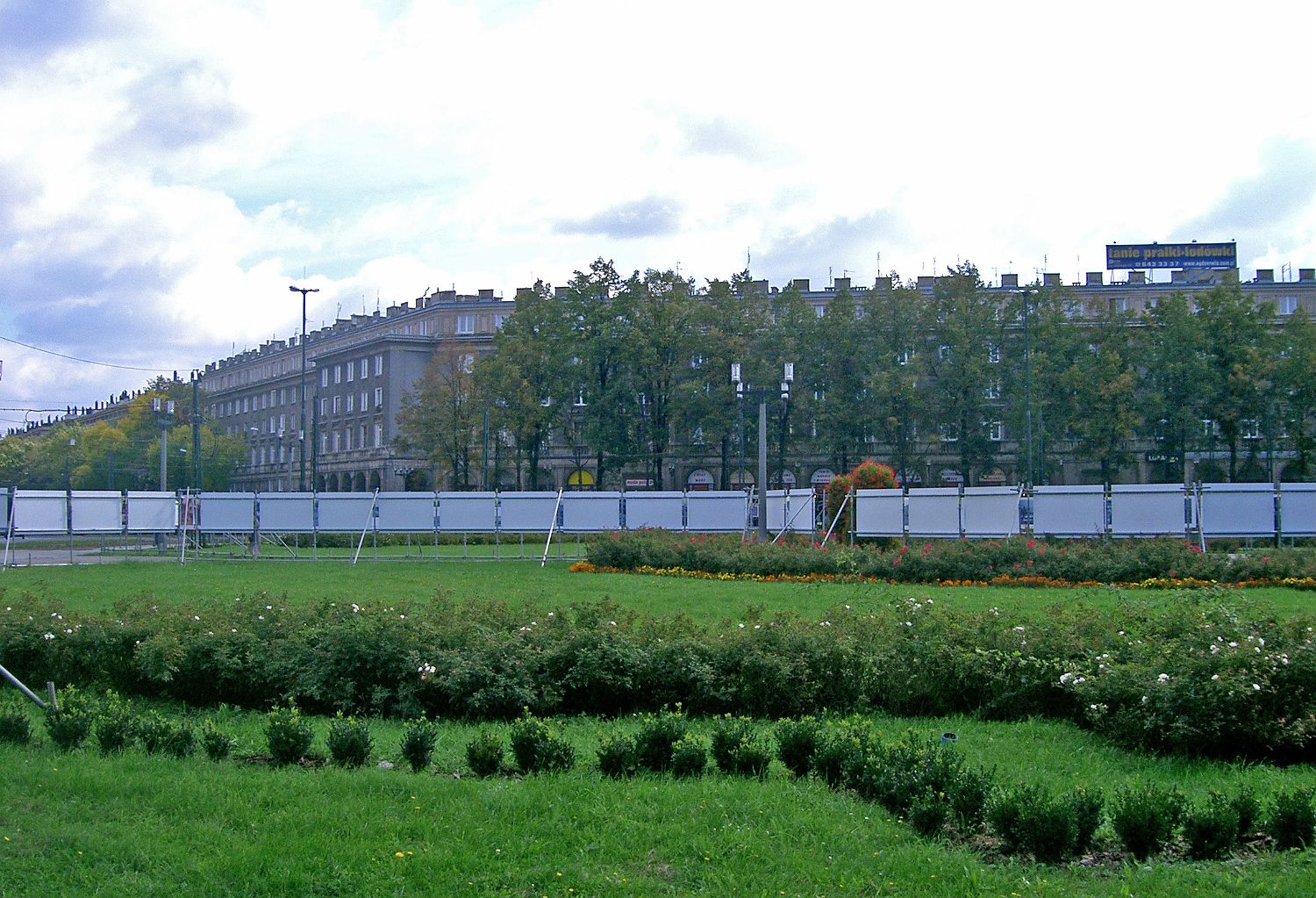 Expecting mostly unattractive buildings, we were surprised that this development had many green spaces. |
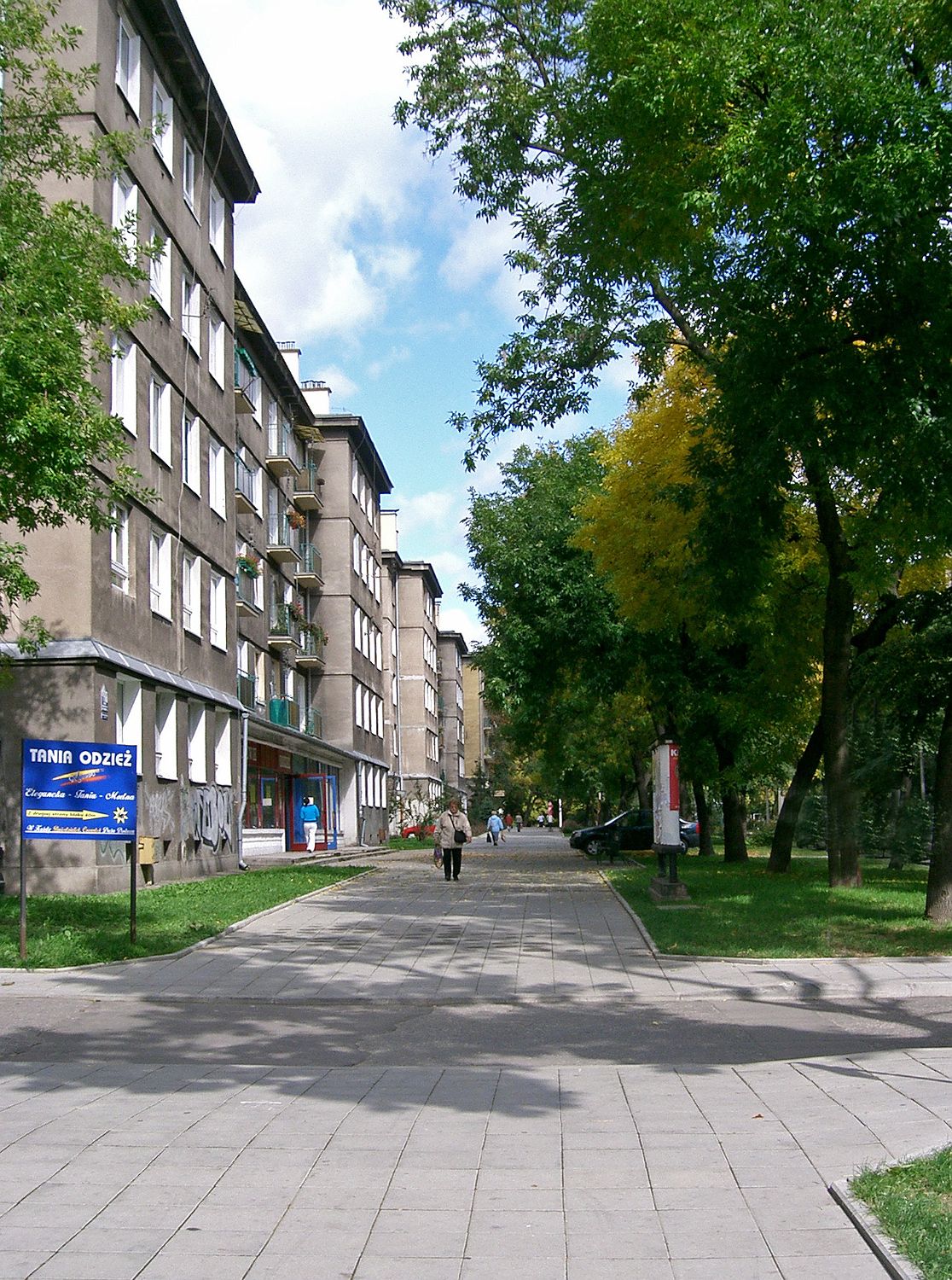 Typical apartments with wide, tree-lined boulevards. |
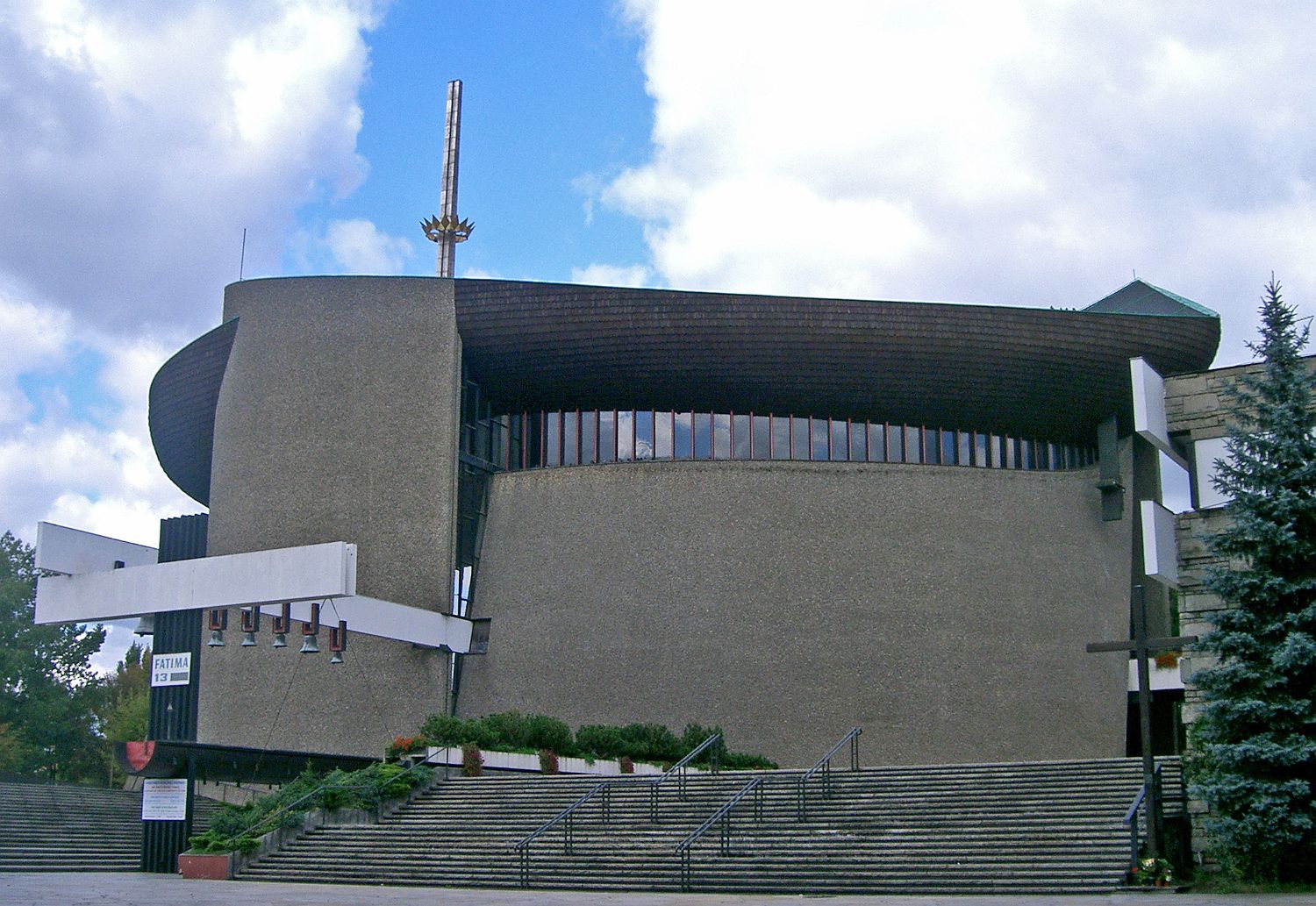 The highlight of this tour was this ship-like catholic church, The Church of Our Lady Queen of Poland, consecrated in 1977 by Karol Wojtyla, then the local archbishop (later Pope John Paul II). Before this church was built, Wojtyla celebrated Mass in open fields whatever the weather. Without Communist help, the church was bulit mainly from community donations of bags of cement, stones, etc. |
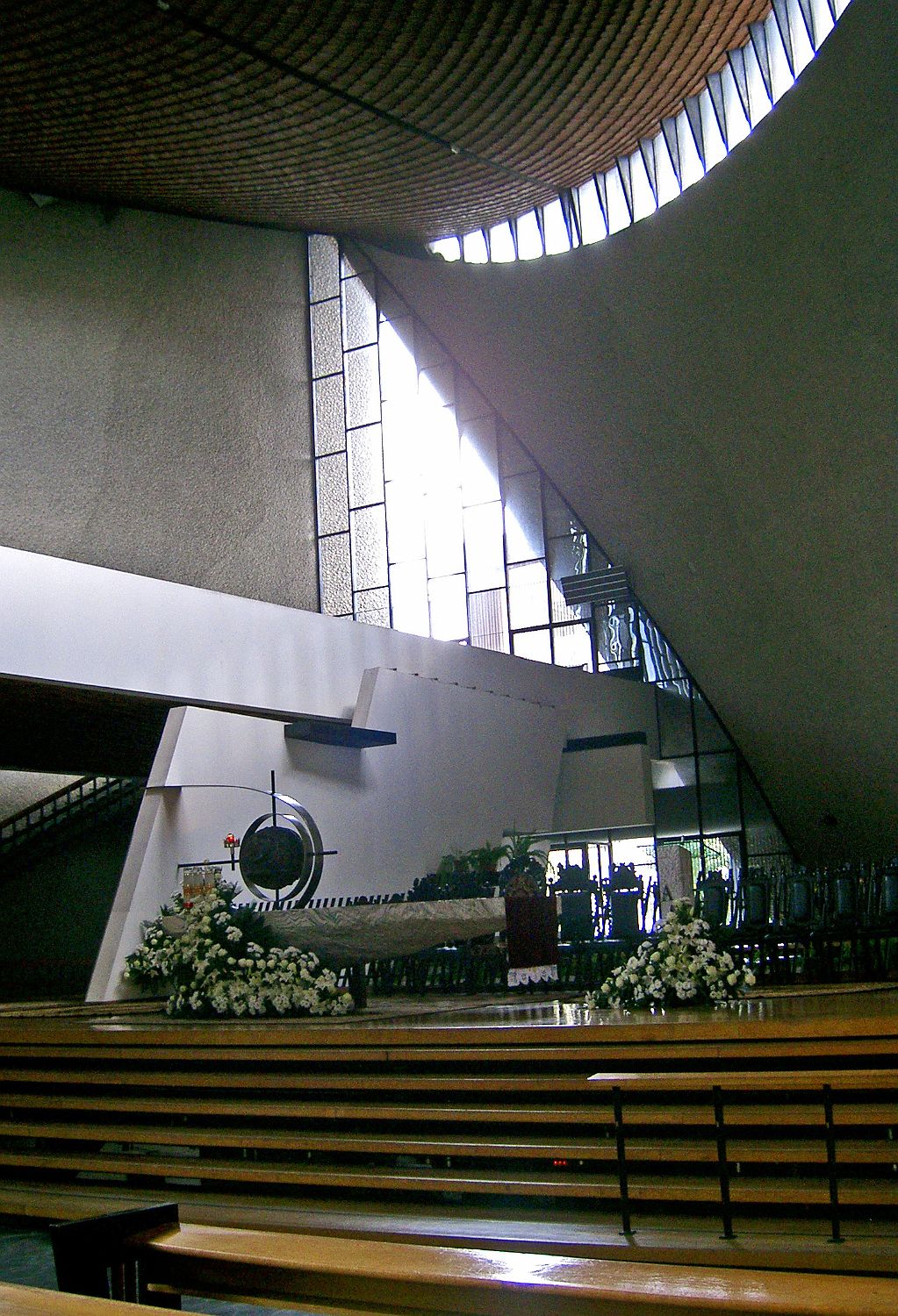 Building the church was a two-decade struggle with Communist leaders who had fought vigorously to keep this industrial suburb of Krakow free of organized religion. Many KGB members think that John Paul II’s 1979 trip (to Poland) that was the fulcrum of revolution which led to the collapse of Communism. |
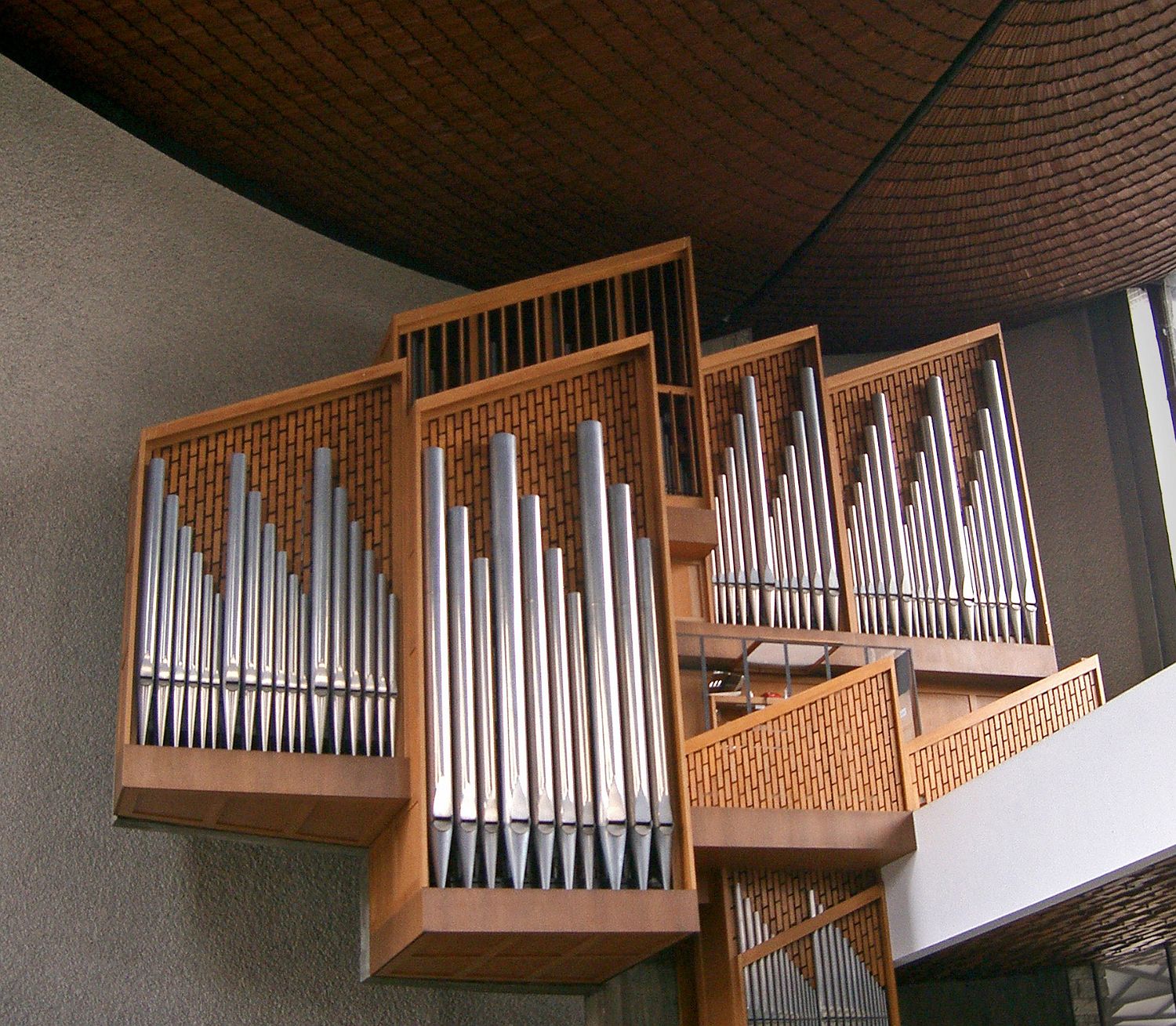 News of this struggle prompted many communities from Western Europe to donate items, like this organ. |
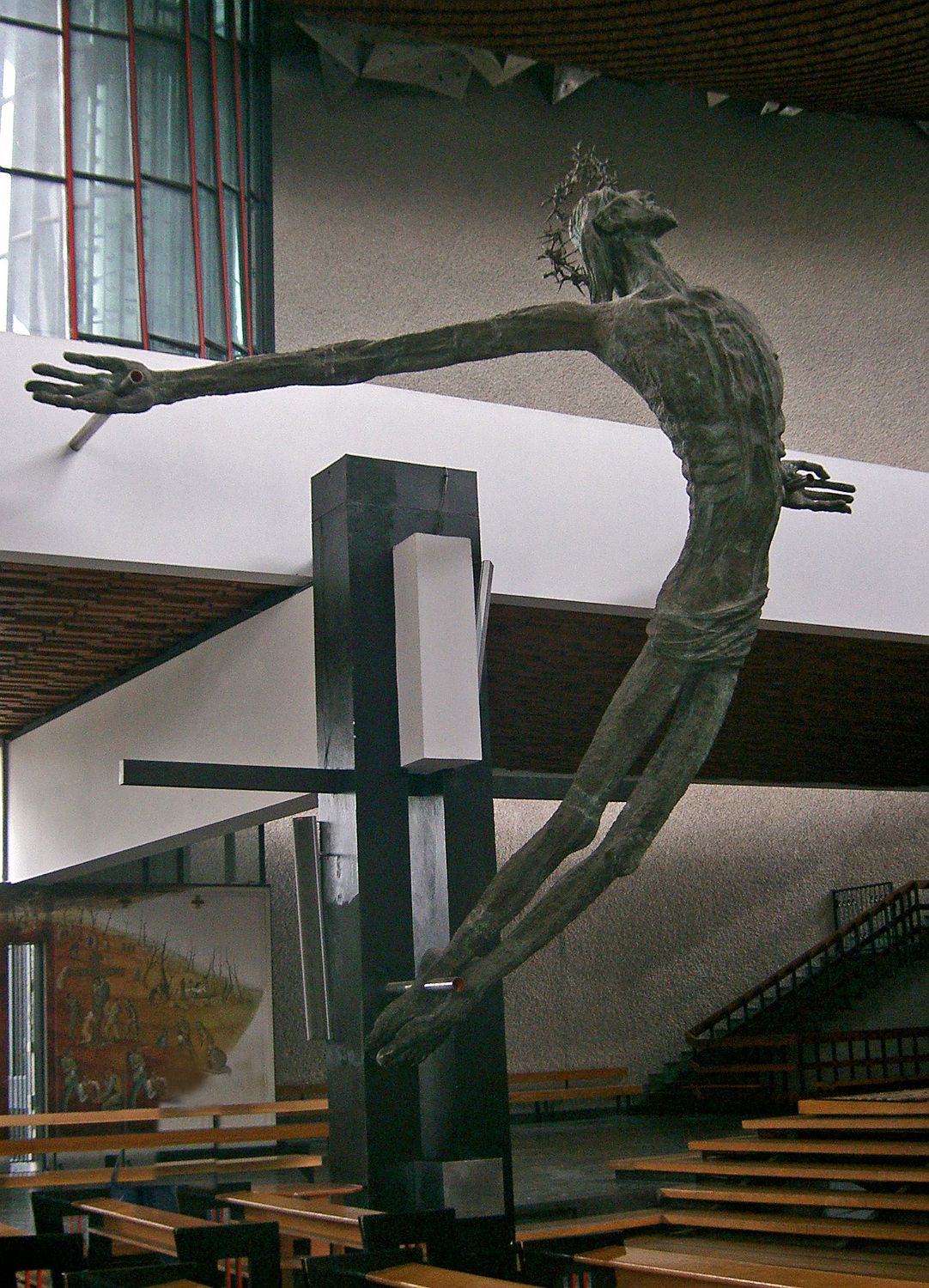 This gigantic crucifix consists of shrapnel taken from the wounds of Polish soldiers, collected and sent from around the country. |
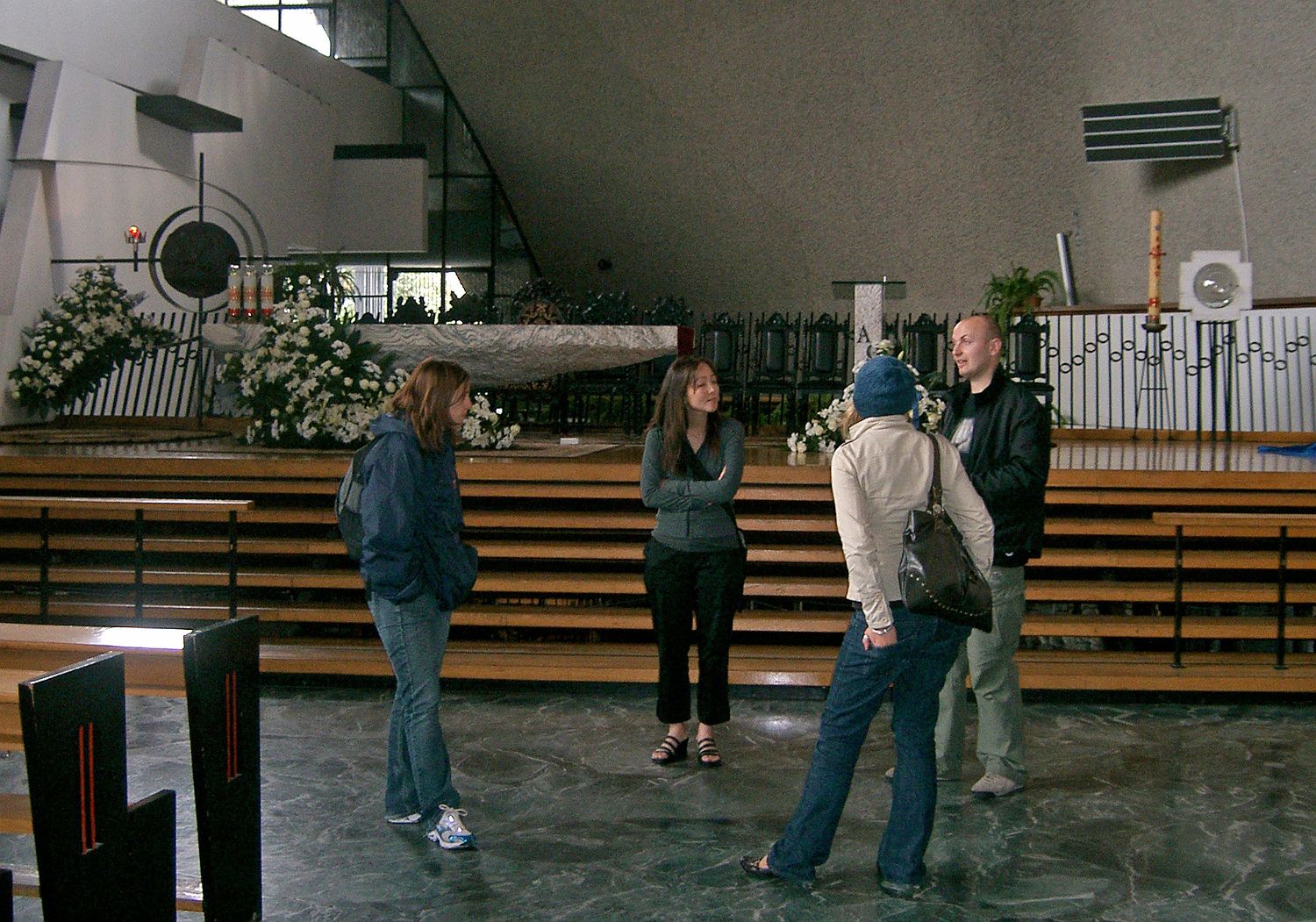 Our tour guide with Samantha, a girl from Seattle, and a female friend of the guide. A moon rock sits in the globe-like structure at the far left. |
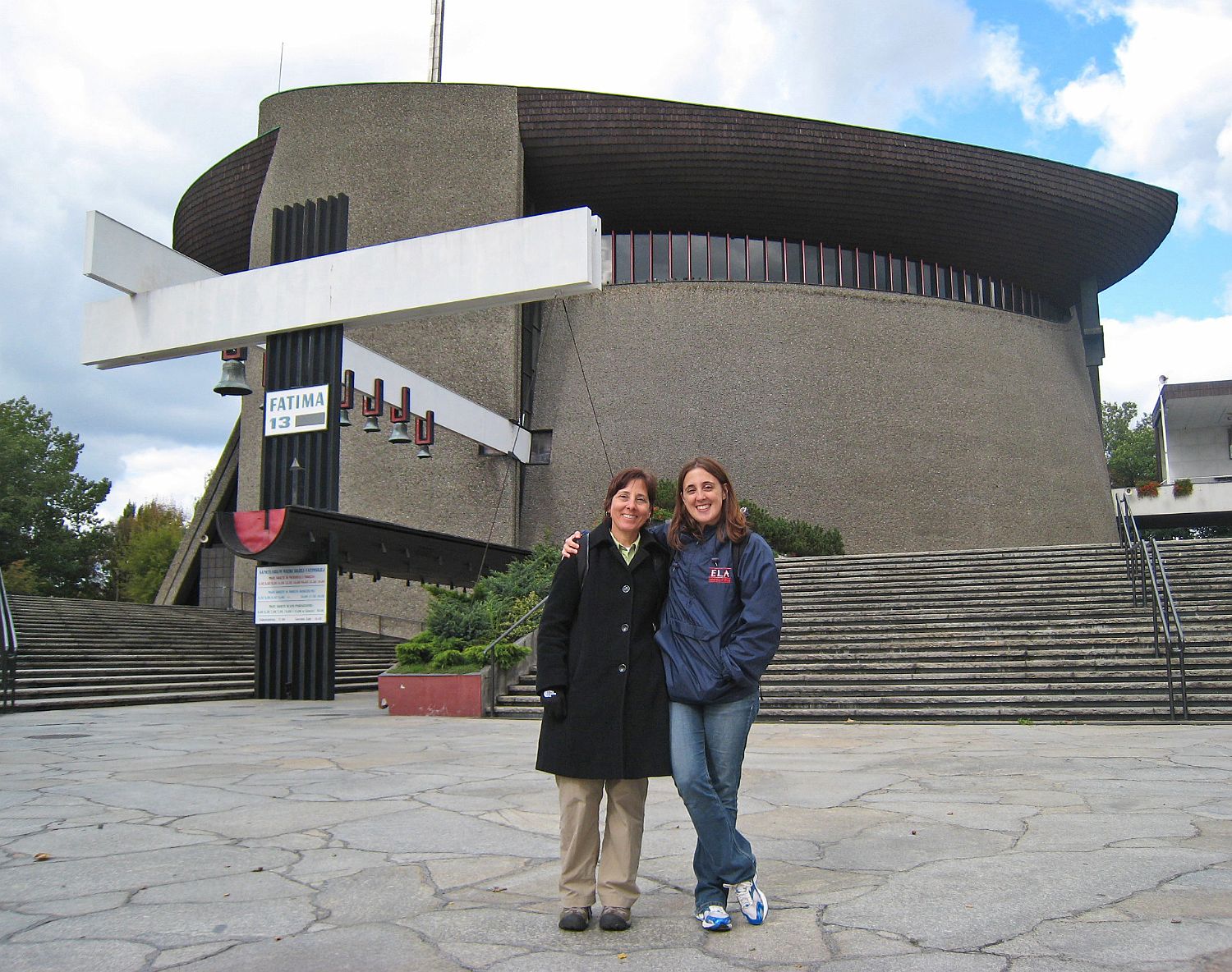 The end of a really, really good tour. |
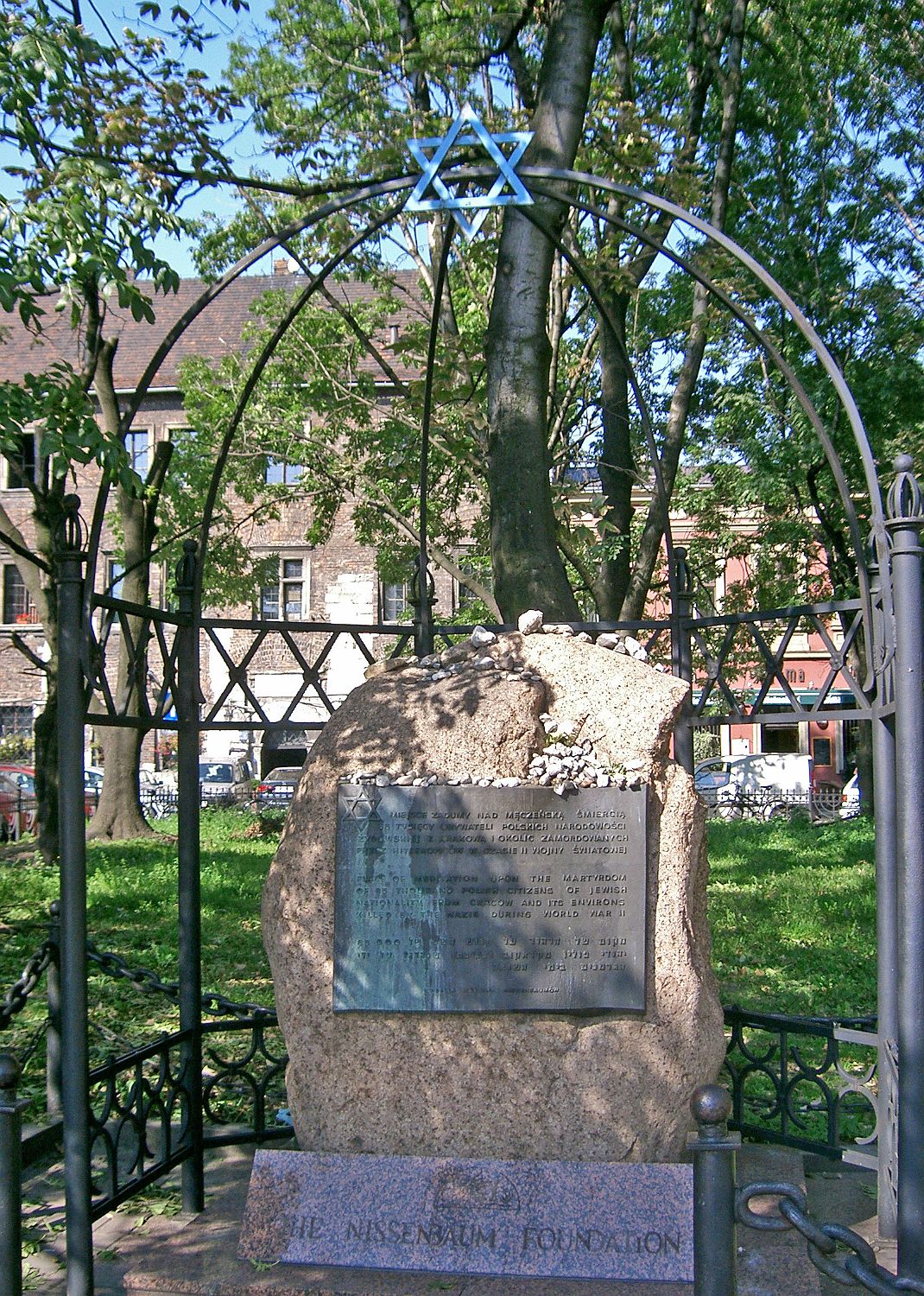
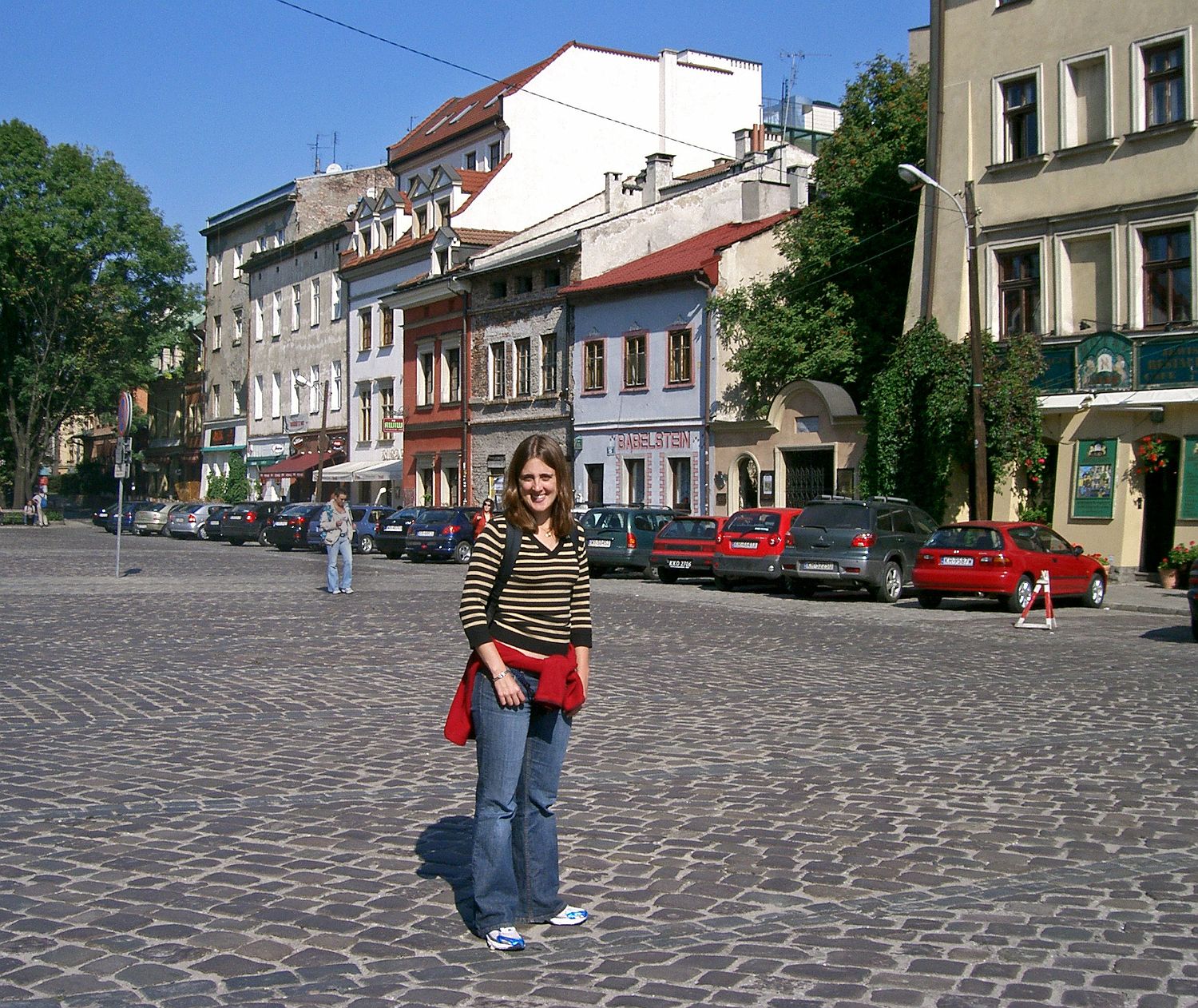 Back in Krakow after our farm stay, we walked the Jewish community of Krakow, Kazimierz. |
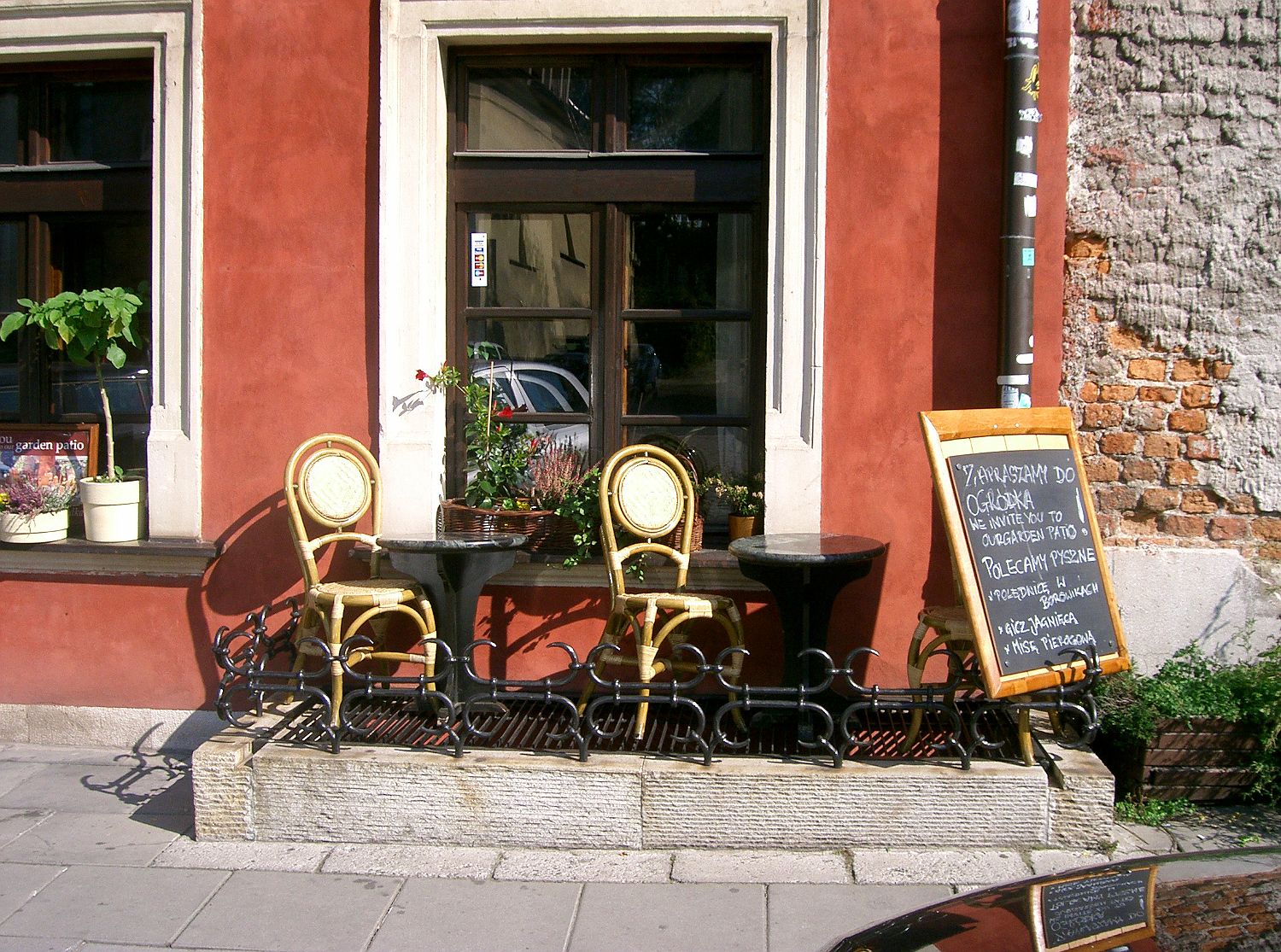 Lunch at a small cafe in Kazimierz. |
 |
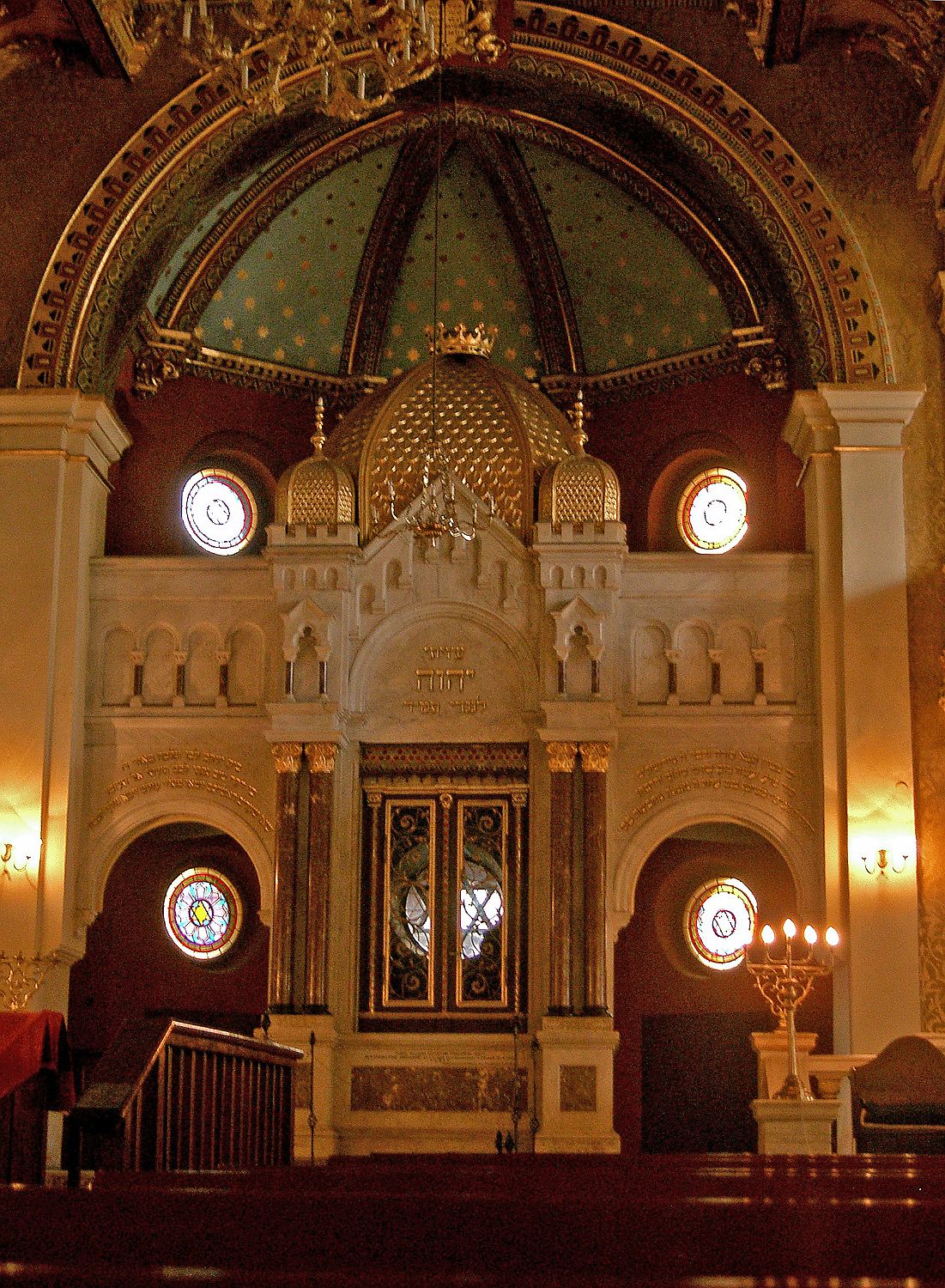 We visit one of the few practicing synagogues open to the public. |
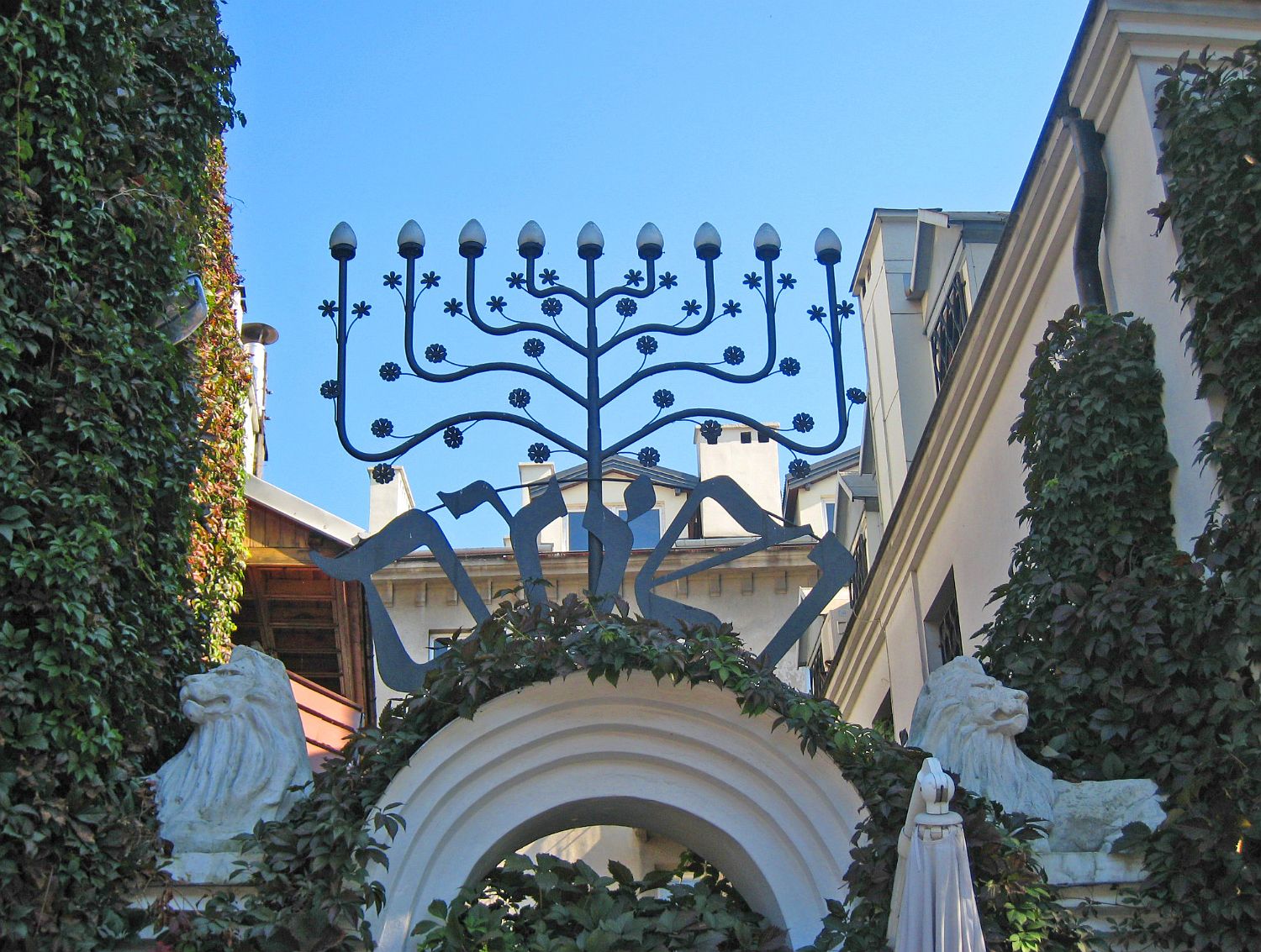
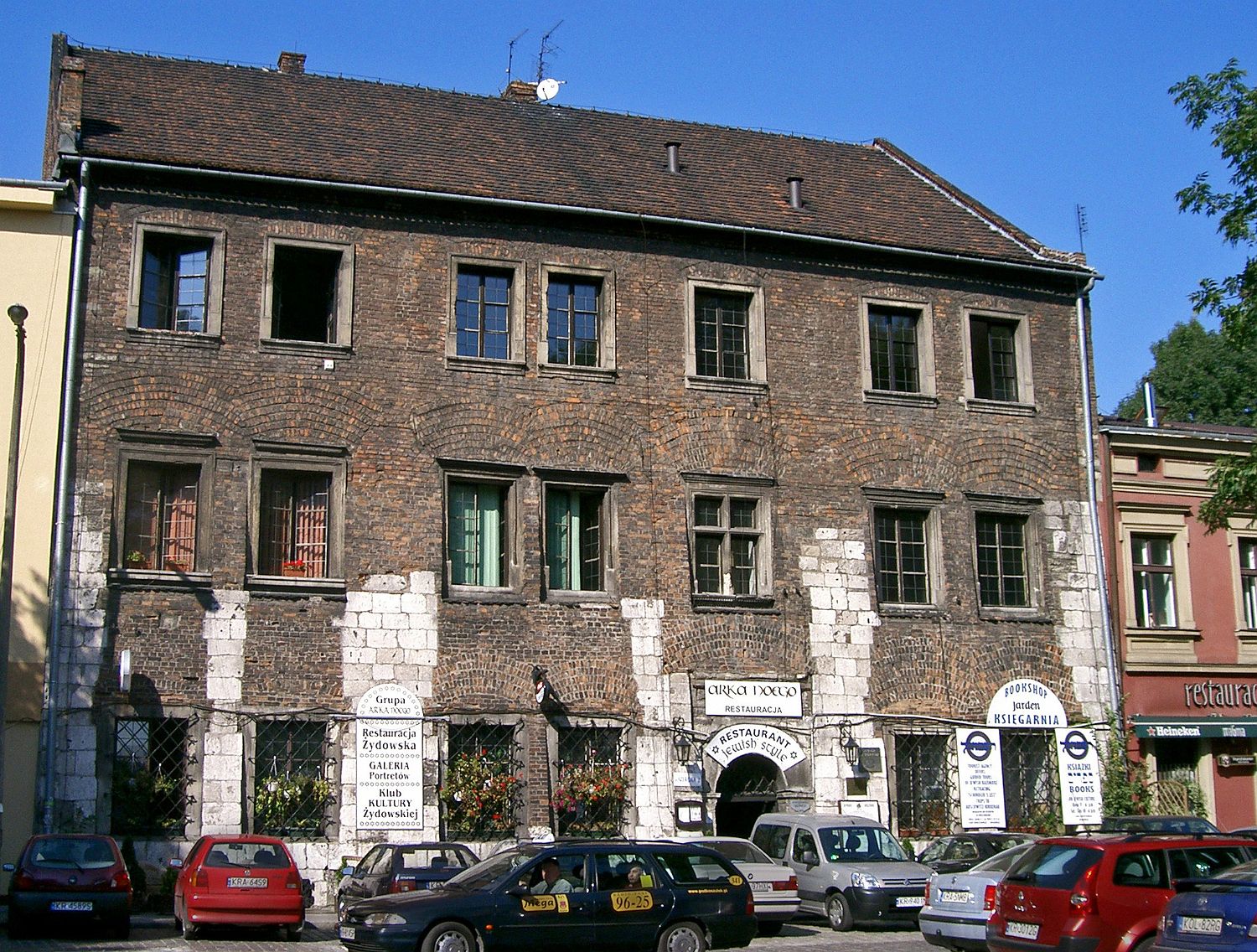 A style typical in the Jewish quarter. |
 |
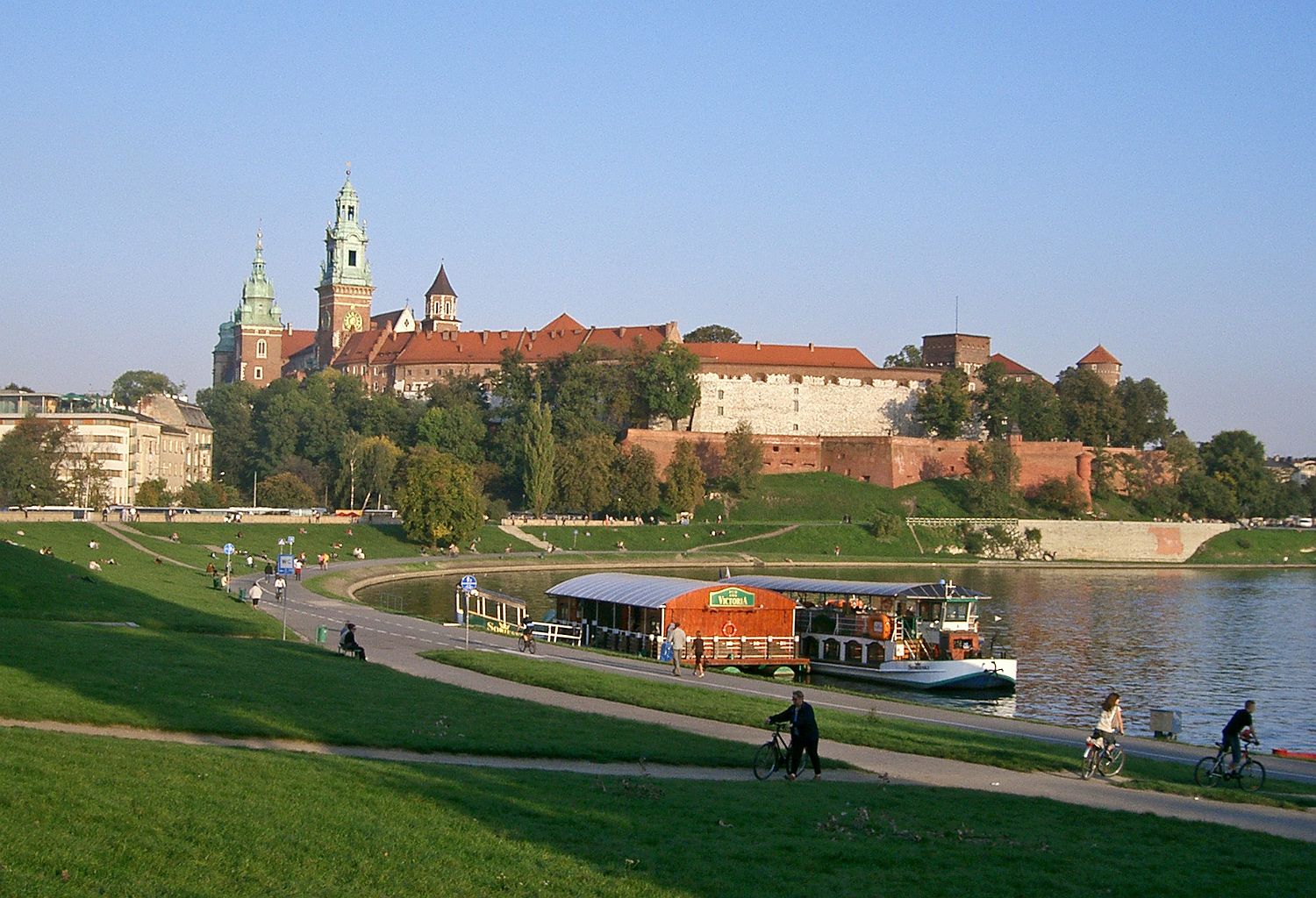
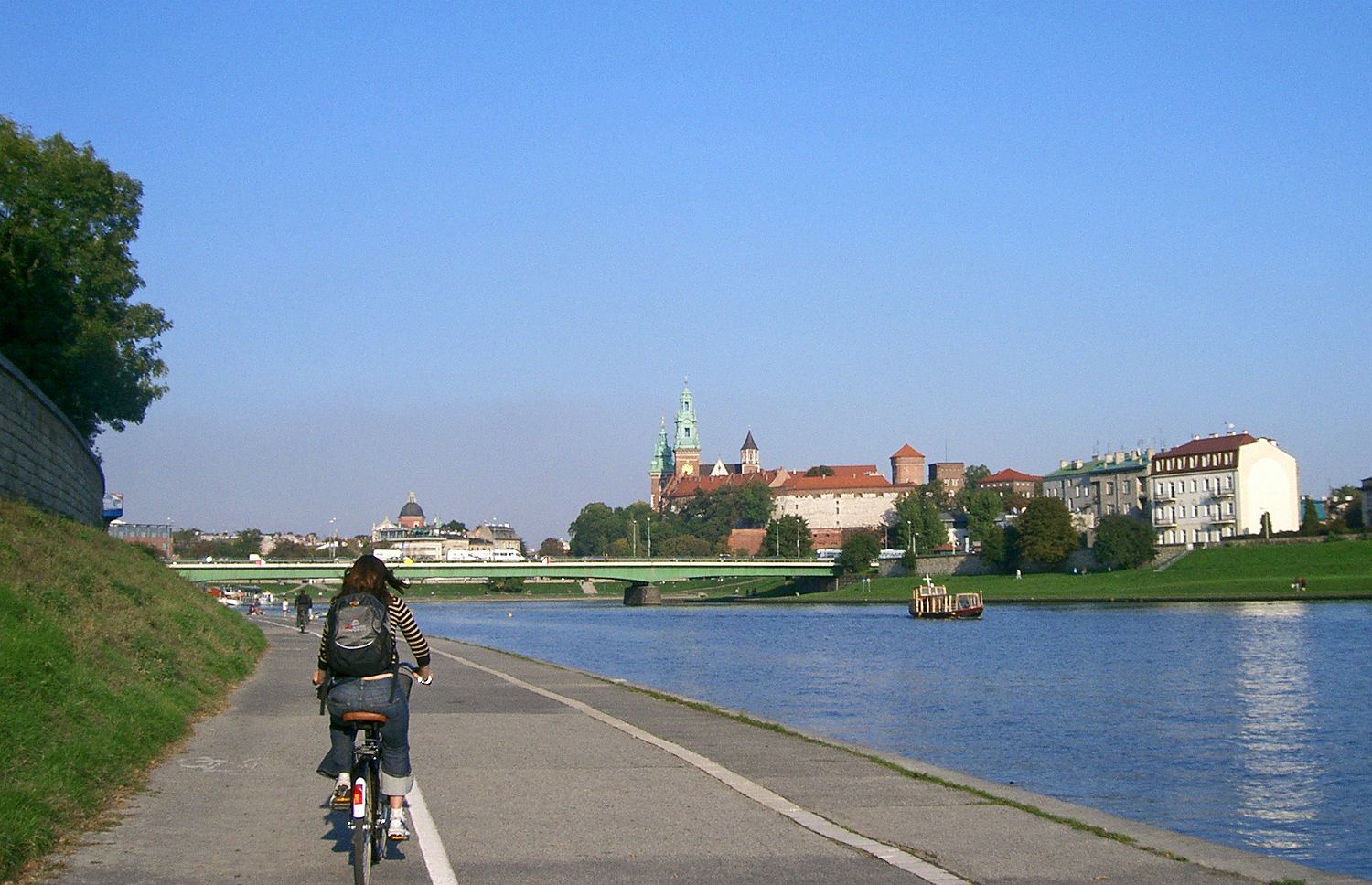 On our last day in Krakow we biked along the Vistula river near Wawel Hill. |
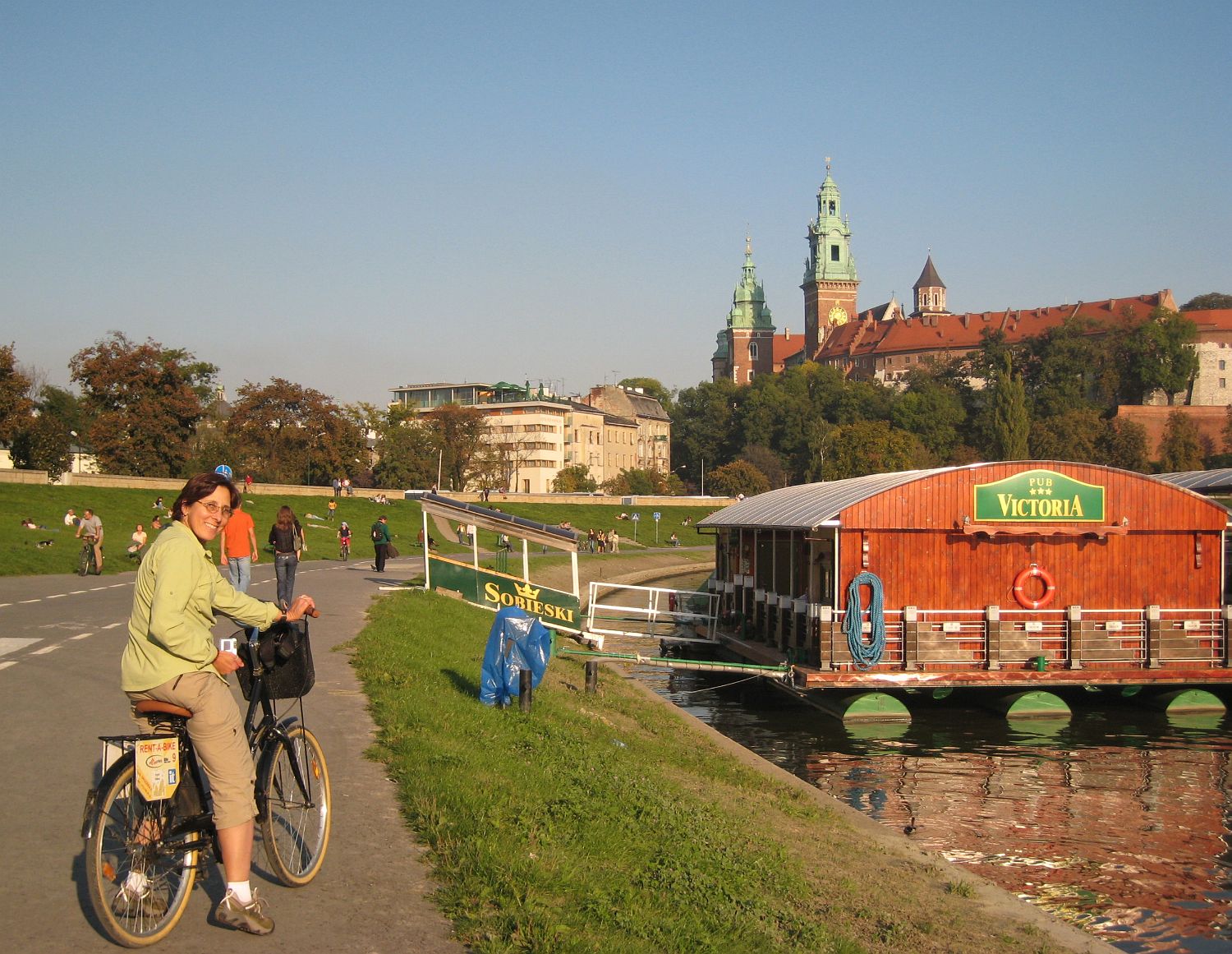 Steph finally got to turn her North Face pants into capris. Here she poses beside dinner cruise boats. |
 |
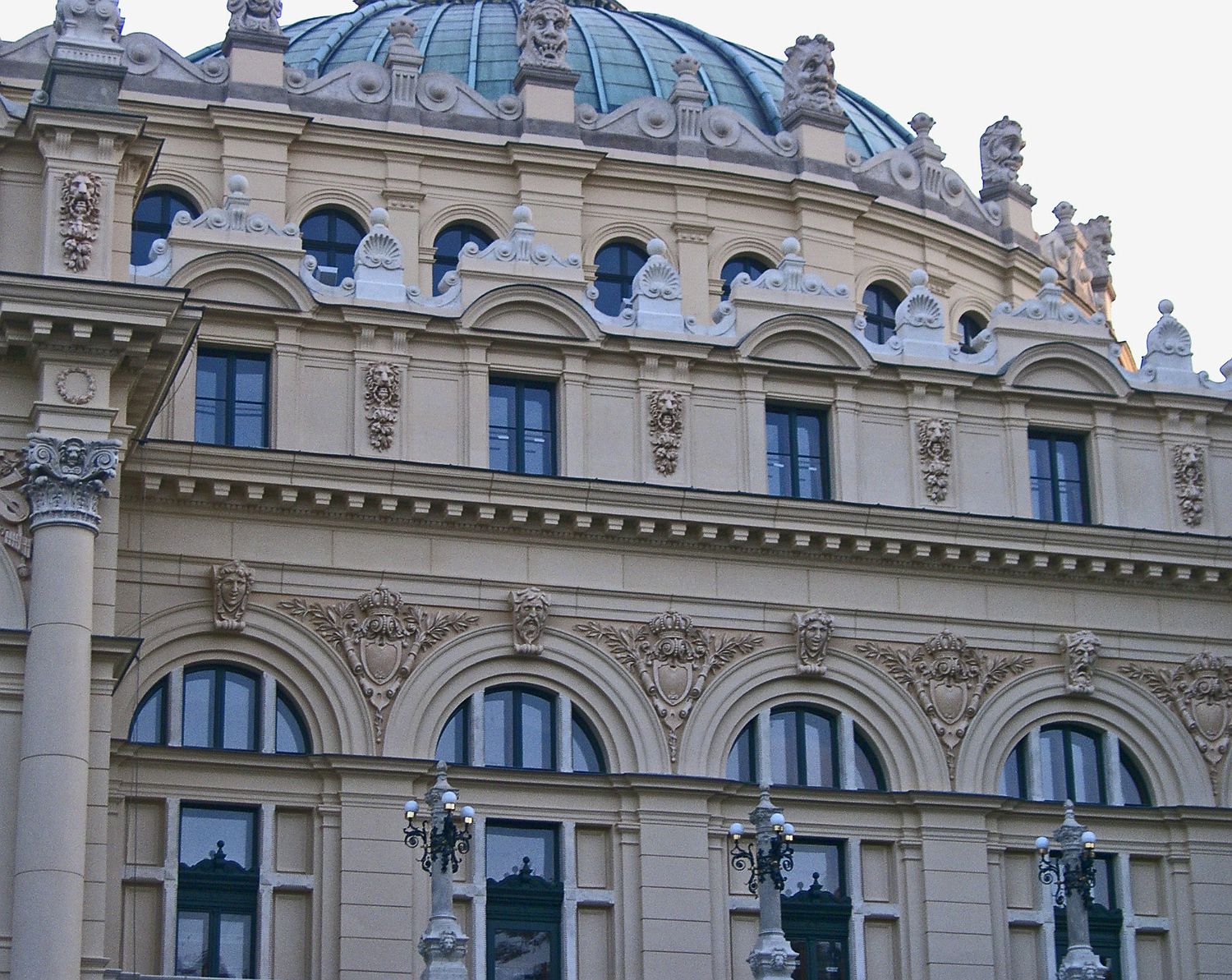 A final trip around the Planty Garden Ring to see some ornate buildings. |
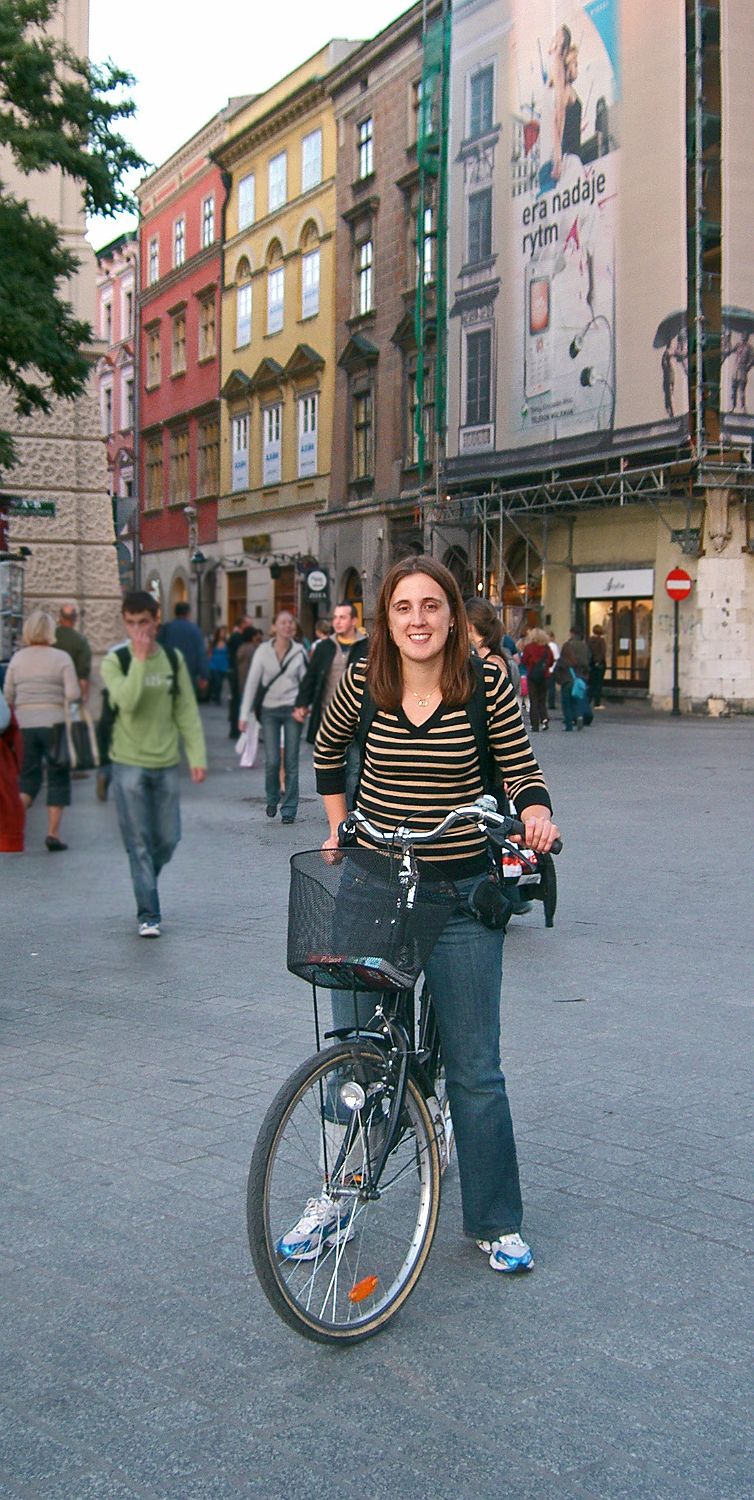 Time to turn in the bikes and head back to Kazimierz for dinner and music at a Jewish restaurant. Early flight the next morning to Munich and Oktoberfest. |